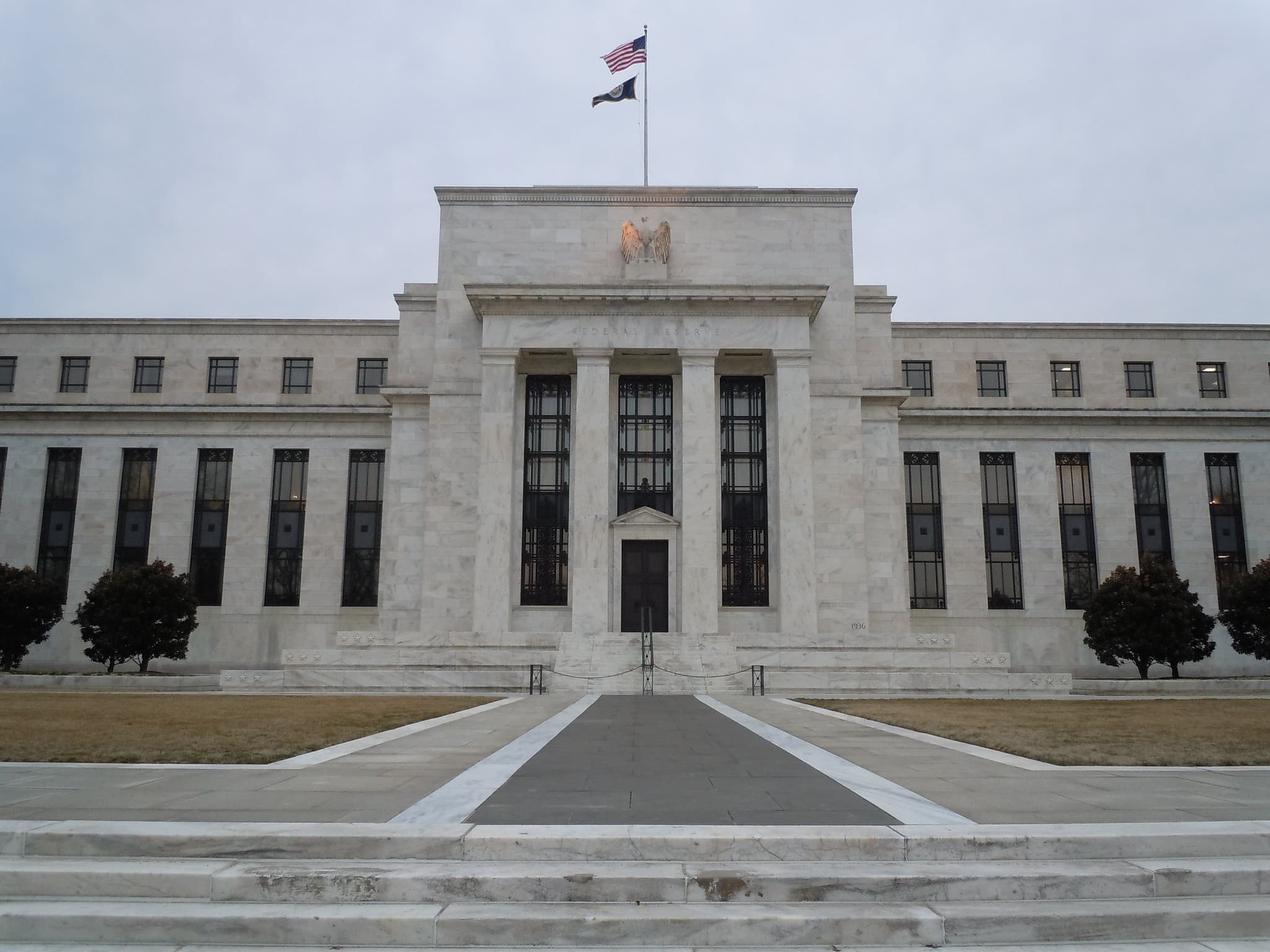
NEW YORK — John C. Williams, president of the Federal Reserve Bank of New York, assessed the U.S. economy as "solid and even showing signs of strengthening," despite major shocks and high uncertainty. Williams projects inflation will slow to just above two percent next year, reaching the Federal Reserve's longer-run two percent goal in 2028.
His remarks, delivered at the University at Buffalo, reflect his individual perspective and do not necessarily represent the views of the Federal Open Market Committee or the broader Federal Reserve System. Williams emphasized the totality of economic data.
Real gross domestic product (GDP) has expanded at approximately two percent over the past year. Productivity growth currently runs above pre-pandemic levels, registering just above two percent in recent years. This contrasts with the internet boom period of the late 1990s, when GDP growth averaged more than four percent annually and productivity averaged three percent.
Business investment has surged, primarily driven by artificial intelligence infrastructure expansion. Expectations of sustained growth and high productivity have, in turn, fueled stock market gains. These gains have supported robust consumer spending, particularly among higher-income households and homeowners.
Williams attributed the current GDP growth rate being half that of the late 1990s to two primary reasons. First, the labor force contributes minimally to the economy's underlying growth due to evolving immigration policy and the aging population.
Consequently, real GDP growth is almost entirely propelled by productivity gains. During the internet boom, the labor force expanded by more than one percent annually, providing greater impetus to economic output.
Second, while annual productivity growth has improved to just above two percent, it has not yet matched the three percent average seen during the last major productivity boom. This gap points to a different economic structure than the late 1990s.
The current inflation rate stands at 3.5 percent this year, according to Williams' projections. His forecast for inflation to reach the two percent target by 2028 suggests a prolonged disinflationary period, gradually approaching the Federal Reserve's mandate.
Bond market participants will assess these projections against current yield curve positioning. A gradual disinflationary path could imply a longer duration for the current rate cycle, impacting bond portfolio strategy and potentially compressing credit spreads as rate cut expectations remain tempered by slow progress toward the two percent target.