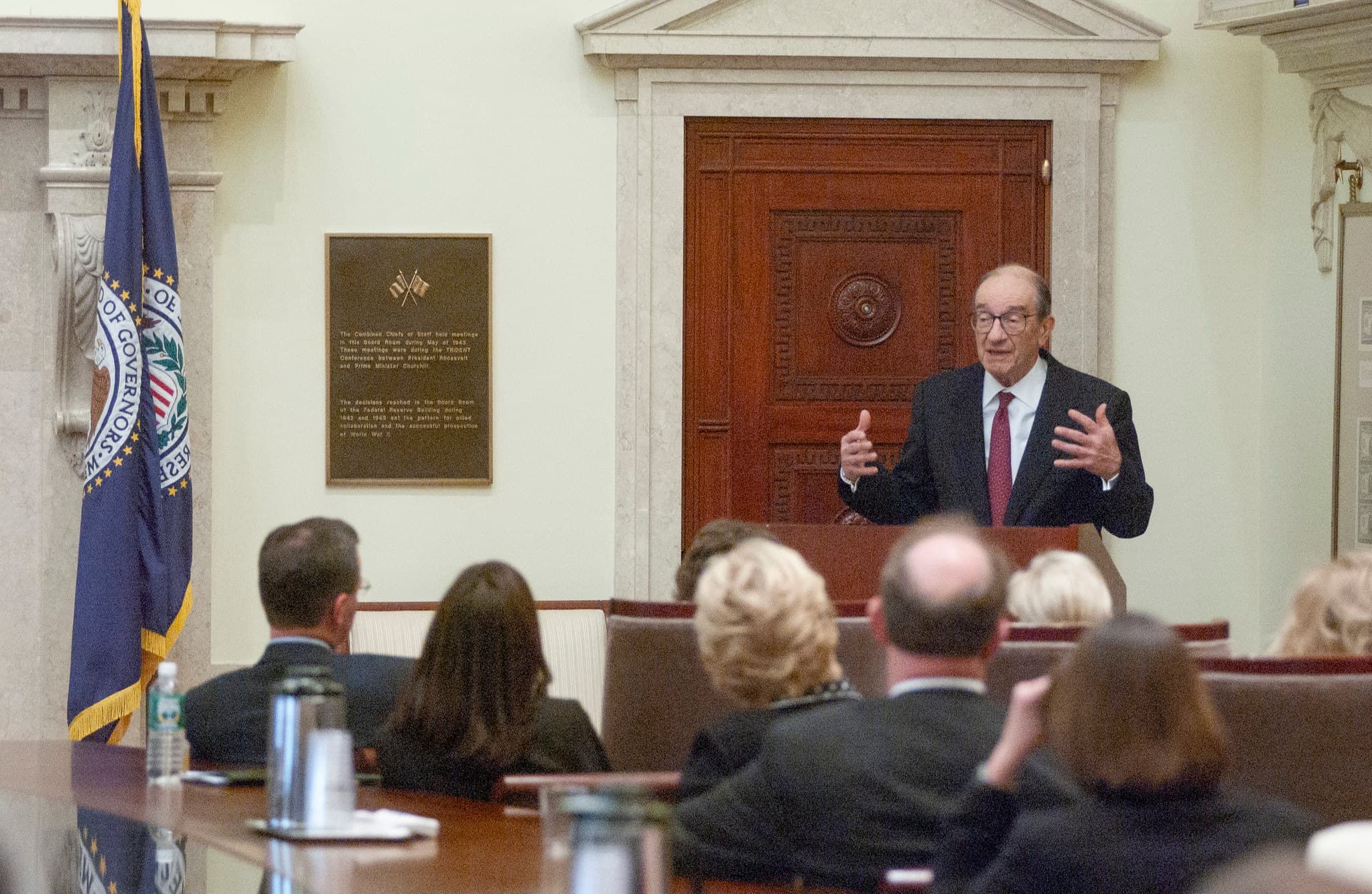
Federal Reserve Chair Kevin Warsh told the Jackson Hole audience on Aug. 28 that the central bank must be confident that underlying inflation is "moving to our objective, clearly and at sufficient speed." Markets took the message at face value. By Aug. 31, fed funds futures were pricing a 57 to 60 percent probability of a rate hike at the September meeting, up from roughly 34 to 35 percent before the speech.
The two-year Treasury yield — the maturity most sensitive to near-term Fed policy — pushed to 4.33 to 4.34 percent, a direct reflection of the market repricing the terminal rate above the current 3.50 to 3.75 percent policy band. At 4.33 percent, the two-year is telling you the market sees the Fed moving at least one more time, and the front end of the yield curve is now priced for tighter financial conditions than Warsh himself says exist today.
Warsh's case for continued tightening rests on a specific set of numbers. July's personal consumption expenditures index — the Fed's preferred inflation measure — came in at 3.7 percent year-over-year, nearly double the 2 percent target. He noted that half of the PCE index's components were running above a 3 percent annualized rate. With the policy rate at 3.50 to 3.75 percent and inflation at 3.7 percent, the real policy rate is barely positive — Warsh's point that financial conditions are not genuinely restrictive yet carries clear mathematical support.
The MSCI emerging-market equity gauge dropped 1.4 percent on Aug. 31, its steepest decline since Aug. 24. South Korea and Taiwan led the selloff, dragging the broader index lower. The decline broke what had been a nine-session winning streak in developing-nation currencies, with a basket of those currencies slipping 0.1 percent on the day.
The Indonesian rupiah stood out among currency underperformers. The dollar climbed to two-week highs, supported both by Warsh's rate rhetoric and weak Chinese purchasing managers' index data released the same day. Soft Chinese PMI readings added a second layer of risk-off pressure on top of the Fed repricing, leaving emerging-market assets with no obvious near-term bid.
In sovereign bond markets, Egypt's longer-dated bonds fell 1.2 cents on the dollar. Qatar, Saudi Arabia and the UAE each dropped more than 1 cent. Those price declines widen sovereign credit spreads — the extra yield a government must pay over benchmark U.S. Treasuries — even when the underlying fiscal position of those governments has not changed. The selloff is mechanical: when U.S. risk-free rates move higher, every spread product must reprice to maintain its relative attractiveness.
Geopolitical tension in the Middle East compounded the selling pressure on Aug. 31, giving risk-off positioning additional justification beyond the Fed repricing. Haven assets drew flows as a result, reinforcing the dollar's climb and adding to pressure on emerging-market currencies that were already retreating.
For emerging-market central banks, the path ahead is uncomfortable. A September Fed hike would require them to choose between defending their currencies — potentially through rate hikes of their own that weigh on domestic growth — or accepting further depreciation and the imported inflation that follows. Indonesia's rupiah performance on Aug. 31 suggests currency defense is already a live concern in at least one major developing economy.
The September Fed meeting is now the dominant event on the global macro calendar. Between Aug. 31 and the decision, at least one additional jobs report and one more CPI print are scheduled. Either release carries the potential to shift implied hike probability back below 50 percent or push it toward 70 percent. The market is in a data-dependency loop with a very short fuse.
Warsh has not closed the door on a pause — the 57 to 60 percent implied probability leaves roughly 40 percent of the market positioned for no move in September. But his Jackson Hole remarks removed the floor from the dovish case. Traders who had been leaning on expectations of rate cuts are now operating without that support, and the nine-session currency rally that preceded Aug. 31 suggests those positions were real and are now unwinding.