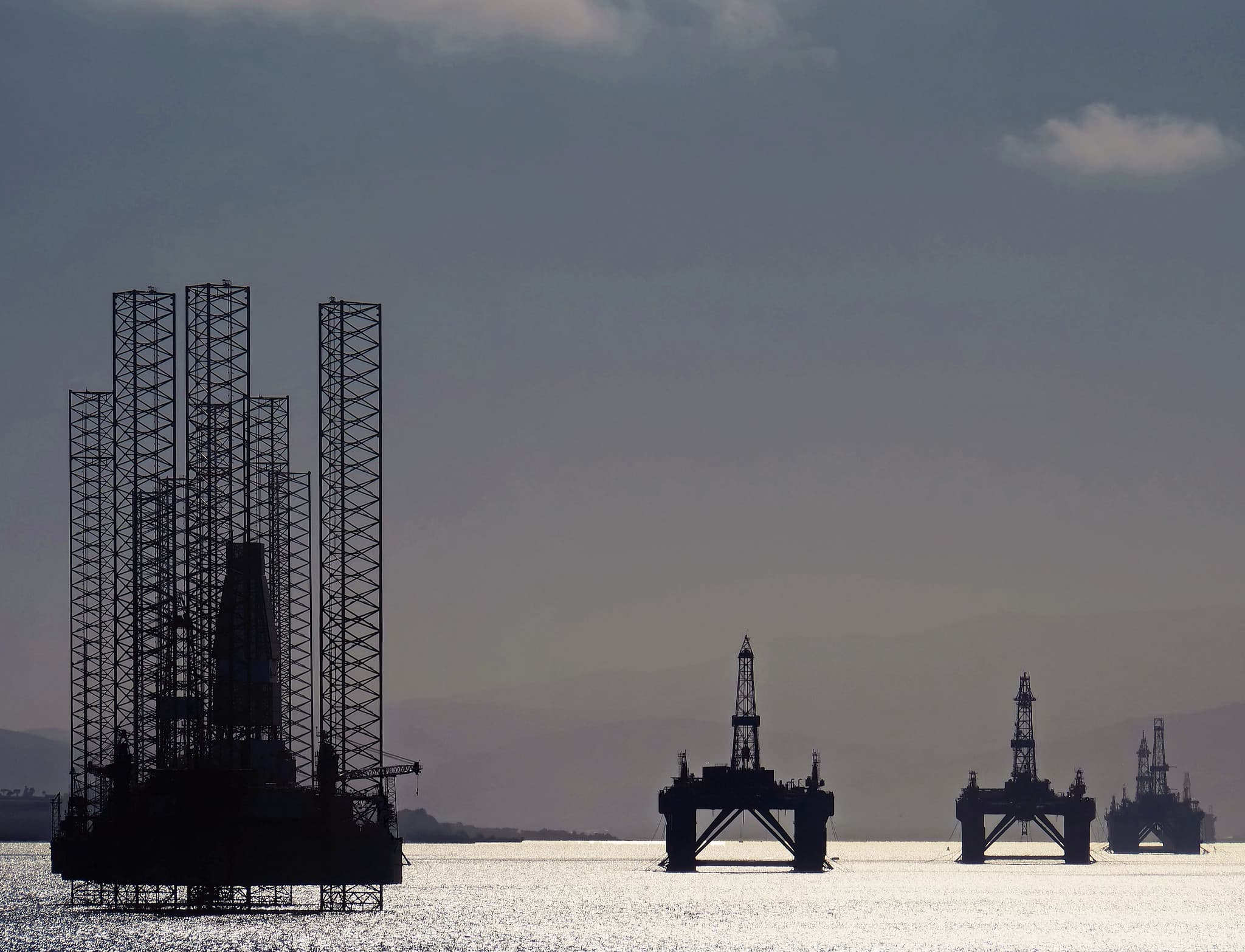
Crude held at $106 a barrel Tuesday as traders assessed Middle East geopolitical risks, offering bond markets temporary relief from duration uncertainty.
From the fixed-income desk, the inflection matters more than the absolute price. Oil stability at elevated levels reduces the tail risk of a sudden inflation spike that would force the Fed's hand on rates. That removes pressure from the front end of the yield curve, where two-year forwards are already pricing limited near-term cuts.
The real risk has been volatility. Swings in oil prices create unpredictable inflation paths, forcing portfolio managers to widen duration hedges and compress credit spreads as geopolitical premiums widen. Energy-sector credit spreads have already bled wider this cycle—a pause in crude moves alleviates that pressure.
Geopolitical risk typically widens high-yield spreads across energy producers and related sectors. If Tuesday's stability signals a temporary de-escalation in Middle East tensions, that compression could reverse some recent widening, particularly in energy-linked credit.
At $106, oil remains elevated enough to keep input-cost inflation on the Fed's radar, but flat enough to allow businesses to model forward costs without catastrophic hedge adjustments. That matters: sudden demand destruction from supply shocks—or from Fed tightening in response to energy inflation—would hit equity valuations and credit quality simultaneously.