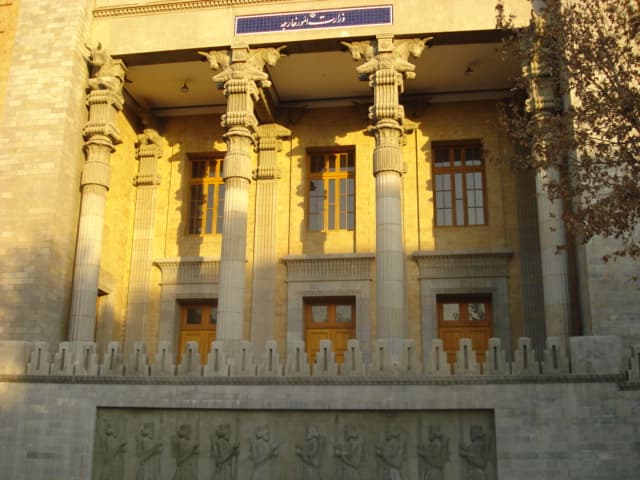
TEHRAN — Iran's Foreign Ministry warned all countries on Friday that implementing U.S. sanctions against Tehran would constitute complicity in imposing the "illegal will" of the United States. The ministry conveyed its position in a two-page letter published via Telegram.
The warning follows the White House's announcement earlier in the week of an "economic D-Day campaign" against Tehran. This U.S. initiative threatens countries that conduct business with the Islamic Republic, marking a strategic shift from military action to economic pressure after six months of regional conflict.
U.S. President Donald Trump told reporters in the Oval Office on Thursday, "We don't want to speak to them. We're not looking to meet or anything."
Despite Trump's remarks, Iran's Foreign Minister Seyed Abbas Araghchi suggested via X on Friday that "putting diplomacy back on track isn't impossible." Araghchi indicated that potential for renewed negotiations with Washington relies on the U.S. recognizing that "pressure doesn't work."
Araghchi outlined Iran's requirements for re-engagement: "The U.S. should build trust, speak respectfully, acknowledge our rights, and uphold commitments." He made these statements after discussions with Qatari officials on Thursday regarding the reopening of a safe transit route through the Strait of Hormuz.
Mohsen Rezaei, secretary of Iran's Supreme National Security Council, stated in a Thursday interview with Lebanese media outlet Al Manar TV that any understanding on the Strait of Hormuz must include an end to wars and military operations in Lebanon, Gaza, and Syria. Rezaei demanded a cessation of the conflict in Gaza, an Israeli withdrawal from Lebanon, and a halt to attacks on Syria.
Rezaei emphasized that the Strait of Hormuz cannot be separated from the broader regional conflict and that the U.S. must demonstrate seriousness in fulfilling these commitments before trust can be established between the two nations.
A return to diplomacy does not appear imminent. The Trump administration has no interest in reverting to the terms of a memorandum of understanding reached with Iran in June, according to individuals familiar with the situation. The administration is observing whether its strategy of economic pressure against Iran will yield desired results.
Iranian Deputy Minister of Foreign Affairs Kazem Gharibabadi dismissed Washington's economic pressure campaign, stating on X that it contradicts U.S. claims of dismantling Iran's military and nuclear capabilities. He said, "Your narrative doesn't add up: you say that Iran's military power has been 'dismantled,' 100% of its military factories 'destroyed' and its nuclear program 'buried.'"
Gharibabadi characterized the U.S. economic pressure as "economic warfare" and "economic terrorism." Last week, President Trump described the new campaign as "the most crushing economic operation ever taken against any country," with U.S. Treasury Secretary Scott Bessent expected to oversee its implementation.
Iran is currently allowing a temporary and limited corridor for ships to pass through the Strait of Hormuz. The future of maritime traffic through the vital waterway will depend on further developments in understandings with Washington.


