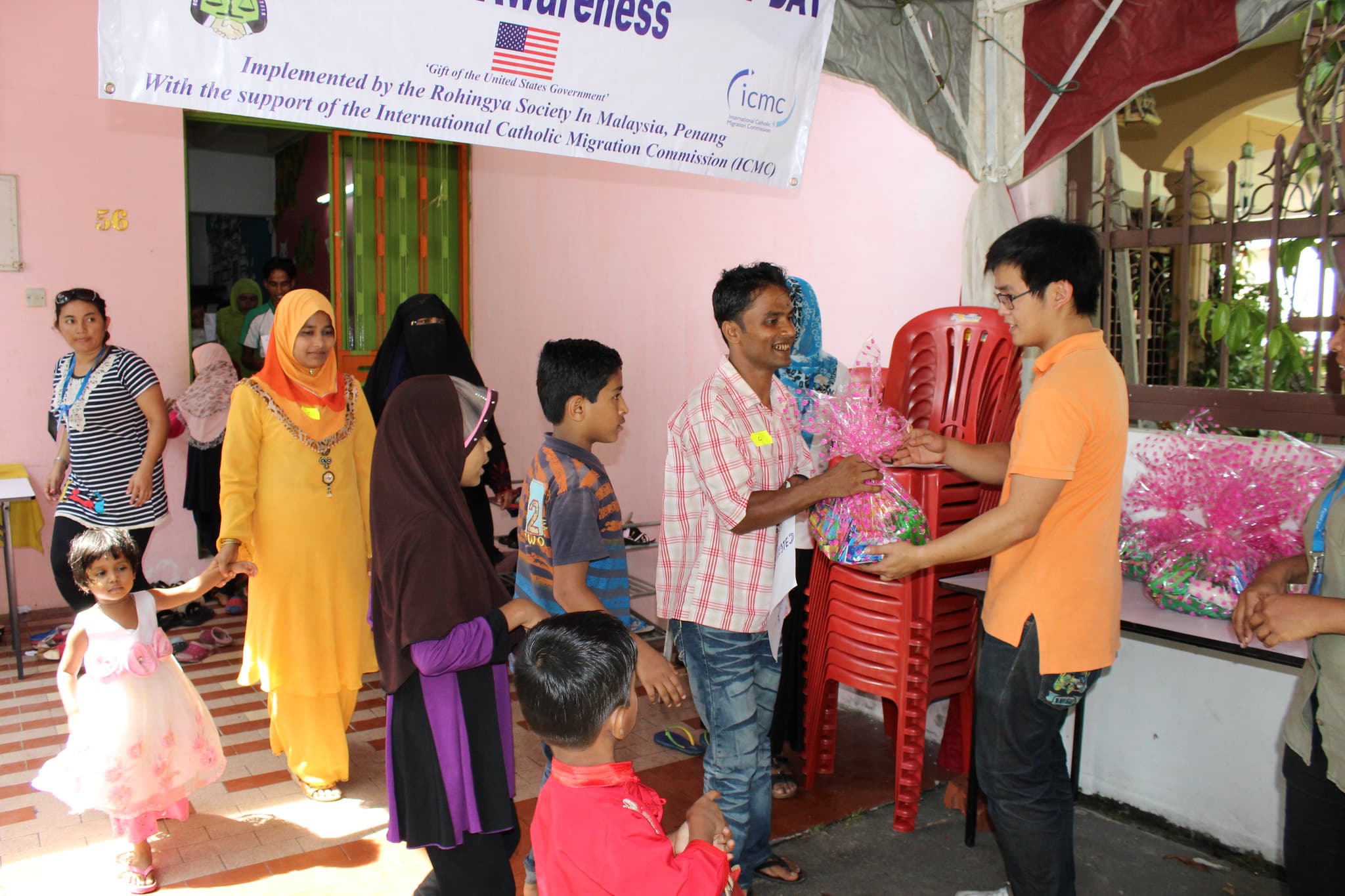
KUALA LUMPUR — More than 400,000 people signed a Change.org petition last month calling for the removal of Rohingya refugees from Malaysia, the most visible marker of a hate campaign that human rights investigators say has moved from social media into official Malaysian government language.
The Rohingya have fled decades of persecution by Myanmar's military and, most recently, renewed violence in Rakhine State by the Arakan Army. Malaysia has long served as a transit and refuge country for communities from Myanmar, including not only Rohingya but also Chin, Bamar, Karen and Rakhine people. None of those groups, investigators say, has faced hostility at the scale now directed at the Rohingya.
The campaign rests on fabricated crime allegations. Malaysia's own government statistics show only 89 Rohingya have been convicted of criminal offences since 2024, accounting for 0.02 percent of all criminal cases in the country during that period. That figure has not stopped senior officials from using language that amplifies the false narrative.
The deputy inspector-general of police publicly described the Rohingya issue as a barah—the Malay word for cancer—and said it required urgent action. Elected officials have gone further, calling for the demolition of Rohingya homes, the cutting of water and electricity to Rohingya settlements and the forced expulsion of refugees to either Myanmar or Bangladesh. Several officials have explicitly endorsed expulsion, an act that would violate the principle of non-refoulement—the binding international refugee law prohibition on returning people to a country where they face serious harm.
A Fortify Rights investigation found that refugees in Malaysian detention have been held without meaningful access to legal representation, without fair judicial review and with no realistic prospect of release. Detainees reported ill-treatment and poor conditions. Rohingya are particularly vulnerable to indefinite detention under Malaysia's existing enforcement framework, the investigation found.
A fresh wave of anti-Rohingya invective spread in May after hygiene concerns were linked online to the Muslim ritual of cattle slaughter by one Rohingya group. That social media surge ran across platforms operated by Meta Platforms and ByteDance's TikTok, and coincided with calls for the closure of Rohingya schools in Malaysia.
Prominent public figures have described Rohingya as dirty, criminal threats and intruders. Human rights monitors say that when such language comes from police officials or elected representatives rather than anonymous social media accounts, it gives the rhetoric a legal and institutional weight that increases the danger for the refugee community. Freedom of expression, investigators have argued, does not extend to incitement of discrimination, hatred or violence.
Prime Minister Anwar Ibrahim's government has largely remained silent as the hostility has grown. Anwar has built Malaysia's diplomatic identity in part on the country's self-presentation as a defender of persecuted Muslims globally. The Rohingya are predominantly Muslim. The gap between that international posture and the government's domestic inaction has drawn direct criticism from regional analysts.
Even before this year's escalation, Rohingya refugees described living in constant fear of arbitrary arrest and detention. Malaysia is not a signatory to the 1951 Refugee Convention, which means Rohingya have no formal legal status in the country and no automatic protection against deportation. That legal gap underpins both the detention practices Fortify Rights documented and the political feasibility of the expulsion demands being made by elected officials.
Human rights organisations have called on the Malaysian government to take three concrete steps: actively counter the misinformation and fabricated crime allegations circulating about Rohingya refugees; hold officials and public figures who incite discrimination or violence accountable under existing law; and cease the policy of turning away or detaining Rohingya boats attempting to reach Malaysian shores. Anwar's government has not publicly responded to those calls.
The petition and the official rhetoric are running in parallel with Malaysia's regional diplomatic role. Kuala Lumpur has positioned itself as a voice for Muslim solidarity in forums including the Organisation of Islamic Cooperation. Critics argue the government faces a direct contradiction: it cannot credibly claim that role while police officials call the Rohingya a cancer and lawmakers call for their expulsion to a country where, according to United Nations documentation, they face genocide.