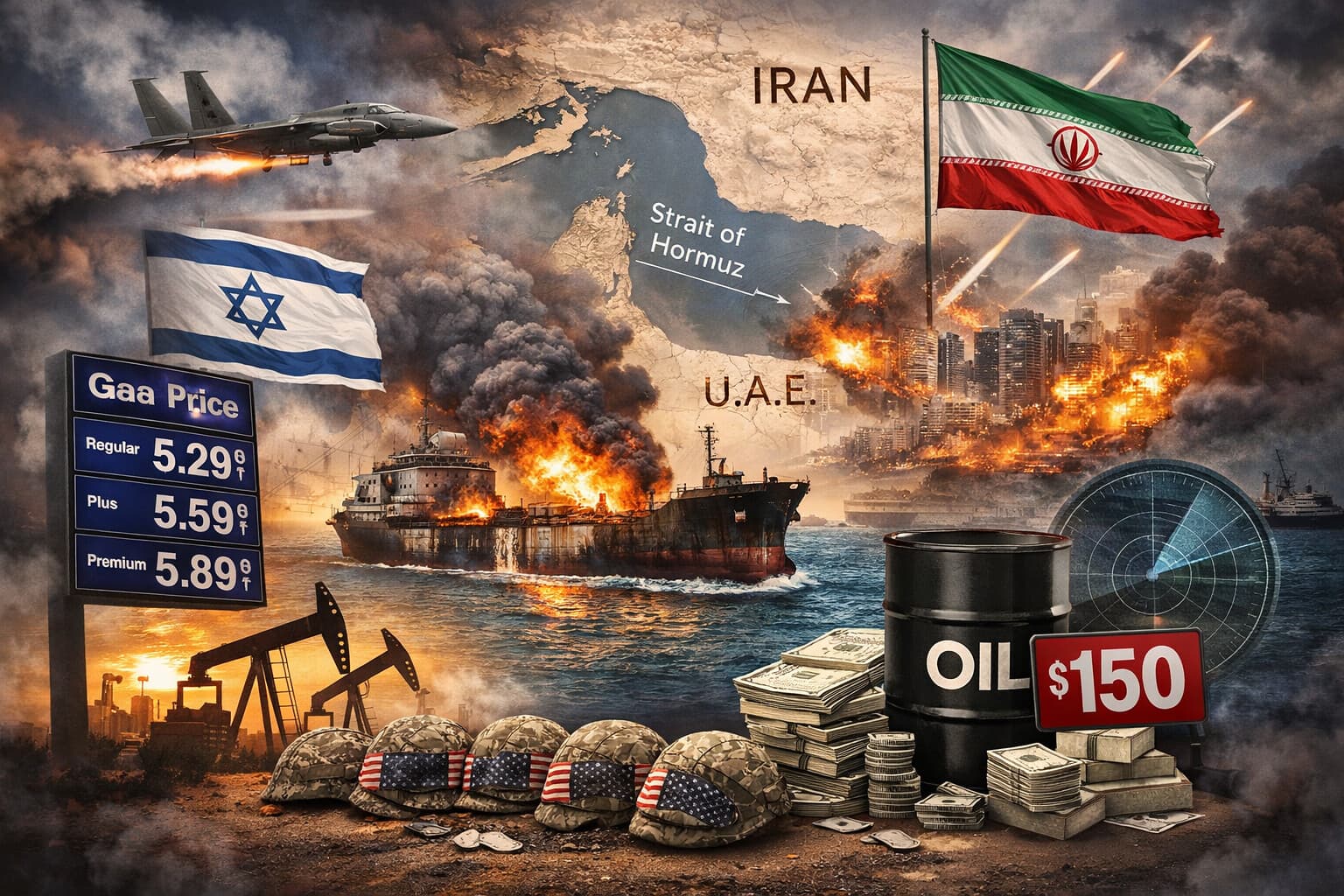
An Iranian-flagged liquefied natural gas tanker exploded in the Strait of Hormuz today after striking a mine, according to Iranian state media. The strait handles roughly one-fifth of global daily oil consumption, making it critical infrastructure for energy markets.
The disruption immediately repriced inflation expectations. Bond futures now show materially lower probability of rate cuts in the first half of 2027 compared with pricing a week ago, reflecting trader conviction that energy shocks will keep central banks on hold longer. Real breakeven rates—the market's inflation gauge—widened sharply, with front-end nominal yields pushing higher as markets bake in stickier energy prices.
The curve flattened on the inflation shock. Long-dated bonds underperformed as duration risk intensified; higher inflation erodes the real value of future fixed cash flows, making longer maturities structurally less attractive. This is the classic stagflation trade: growth expectations compressed, inflation premium expanding, and fixed-income investors facing negative real returns on duration.
Equity markets retreated cautiously. The S&P 500 fell 0.4 percent to 7,592, the Nasdaq dropped 0.4 percent to 25,366, and the Dow fell 0.4 percent to 52,297. The Russell 2000, more sensitive to input cost inflation and rate uncertainty, fell 1.7 percent to 2,799.