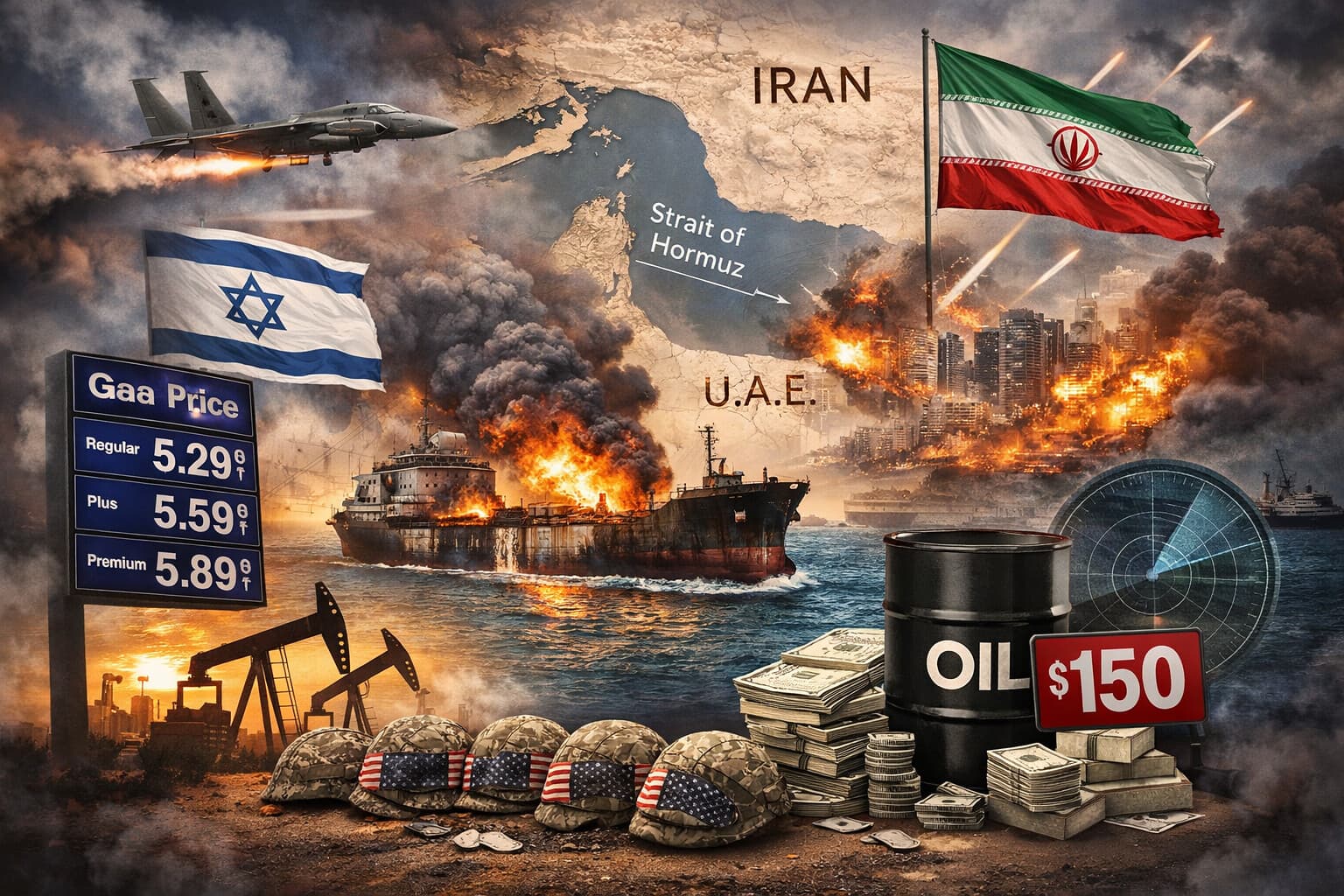
Yemen's Houthi rebels claimed responsibility for a drone attack on two pumping stations along Saudi Arabia's East-West pipeline, with military spokesman Yahya Sarea saying seven drones targeted the facilities deep inside Saudi territory.
The pipeline, also known as Petroline, carries five million barrels per day from Saudi Arabia's eastern fields to the Red Sea port of Yanbu, providing the kingdom's main export route that bypasses the Strait of Hormuz. Saudi authorities have not confirmed damage or operational disruptions.
Crude oil futures jumped more than two percent in early trading as the market priced in fresh supply risk. The move immediately raised the stakes for inflation tracking and central bank policy. Higher oil prices feed directly into headline Consumer Price Index and Personal Consumption Expenditures data, forcing reassessment of rate paths already under pressure from persistent core inflation.
The 10-year U.S. Treasury yield fell two basis points to 4.78 percent as investors rotated into safety, while the two-year dropped one basis point to 5.02 percent. The resulting curve flattening signals reduced growth expectations and the possibility that sustained energy inflation could keep the Fed on hold longer than markets had priced. Duration risk in fixed-income portfolios tightened as investors weighed whether central banks would need to maintain higher rates for an extended period to offset oil-driven price pressures.
The dollar strengthened 0.1 percent against major currencies as a traditional hedge in geopolitical stress. Equity markets turned mixed: the S&P 500 fell 0.4 percent to 7,592 and the Nasdaq dropped 0.4 percent to 25,366, though energy stocks outperformed on higher crude prices.
The market now waits for official Saudi confirmation of pipeline status. The next OPEC+ meeting is scheduled for December 5, where any coordinated production response could reshape energy price expectations and, by extension, inflation outlooks for the next rate cycle.