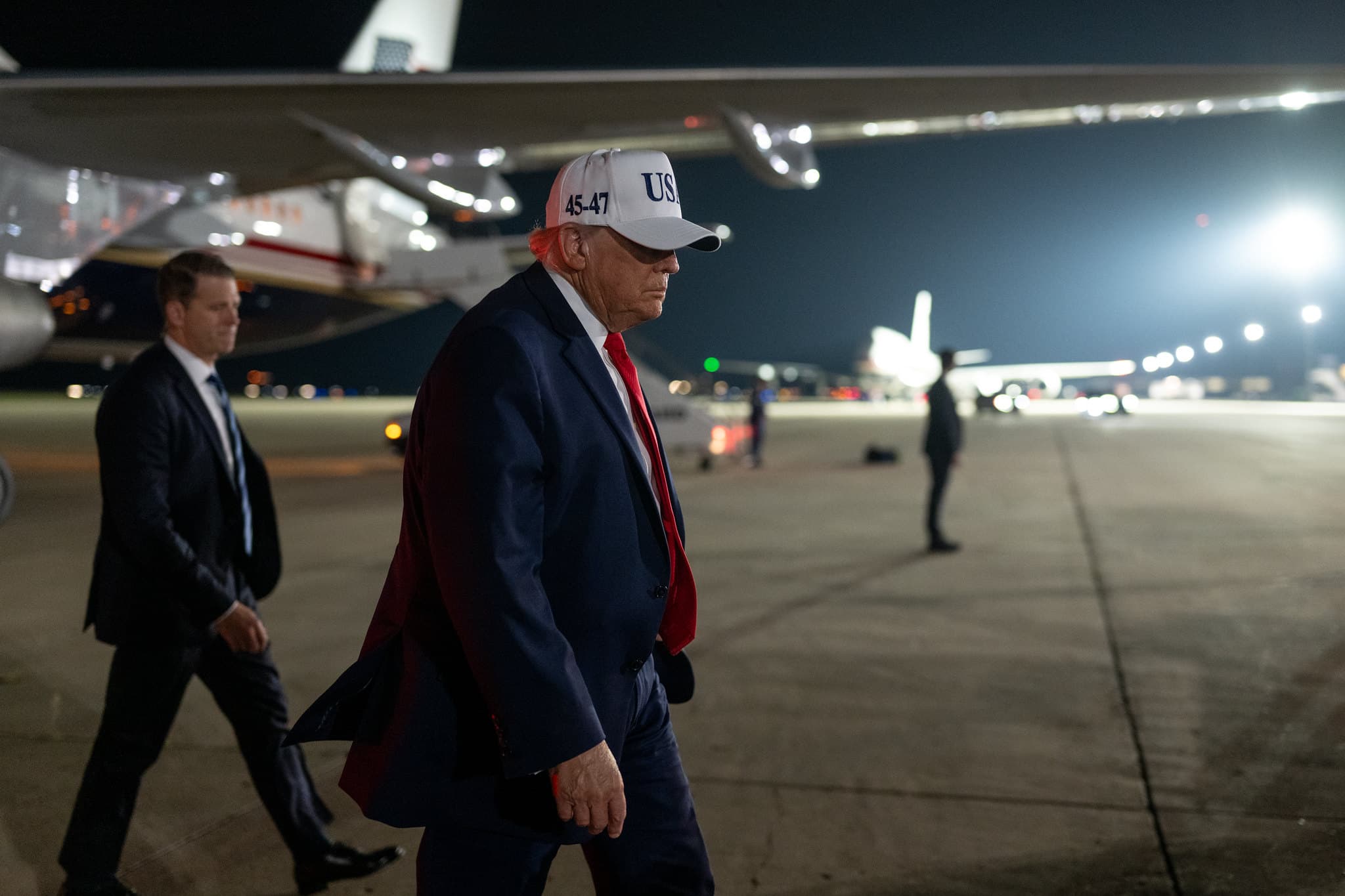
President Trump said he would not authorize a military strike against Iran following the upcoming elections, removing a significant tail risk that has supported defense contractor valuations.
The declaration eliminates a key near-term catalyst for increased defense spending. Lockheed Martin and Raytheon Technologies face investor pressure as the Iran conflict premium unwinds from their stock prices. While long-term defense budgets reflect broader strategic needs, this specific flashpoint's removal creates near-term headwinds. We recommend caution on these names; their risk-adjusted returns are likely to compress.
Energy stocks face the opposite pressure. Reduced geopolitical risk typically depresses crude prices, pressuring upstream producers like ExxonMobil and Chevron. Lower oil costs, however, benefit the broader economy by reducing business input costs and easing consumer spending pressure. This supports a more stable inflationary environment favorable for long-duration assets and consumer discretionary stocks. Airlines and logistics companies, where fuel represents substantial operating expenses, stand to benefit most.
Markets have not yet fully priced Trump's statement. The S&P 500 closed at 7,556 (down 0.3 percent), the Nasdaq at 25,234 (down 0.8 percent), and the Dow Jones at 52,078 (up 0.6 percent) before the announcement was widely disseminated. We expect a rotation out of defense and into lower-risk, lower-inflation beneficiaries when markets open. Prioritize companies with strong domestic demand and stable margins.
Watch crude oil futures for immediate confirmation of reduced geopolitical risk. Defense contractor earnings in the coming weeks will provide the next concrete gauge of forward guidance and order book health.