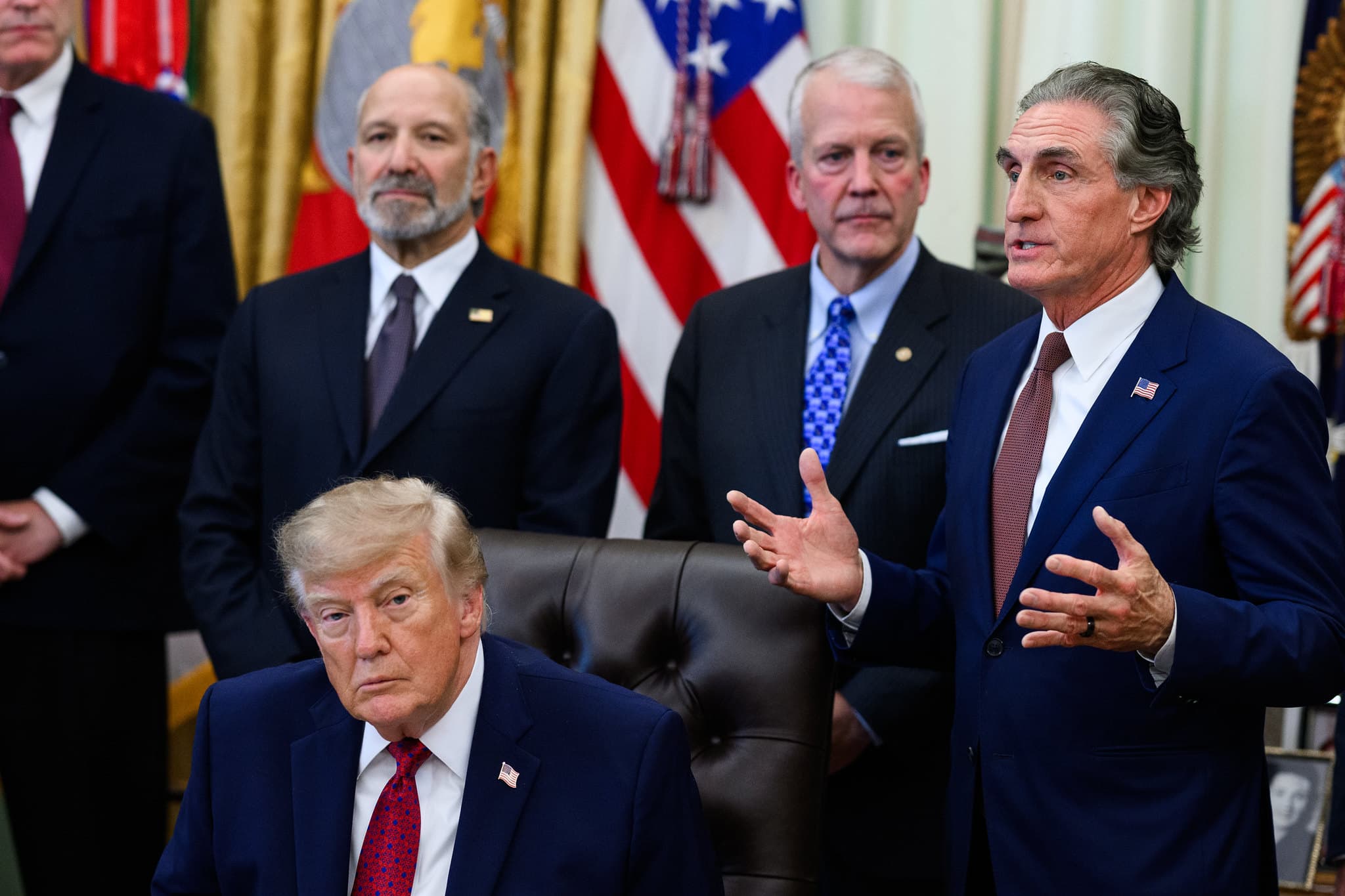
President Donald Trump calls House Speaker Mike Johnson day and night. Senate Majority Leader John Thune sometimes waits weeks for a conversation.
Thune told CNN he had not spoken with Trump in nearly two weeks during a critical stretch that included a Cabinet nominee in trouble, the president's agenda faltering, and an Iran funding bill in doubt. Thune often learns of Trump's moves through Truth Social and news reports.
"With me, it's more on an as-needed basis," Thune said of his contact with the president.
The disconnect is creating anxiety among congressional Republicans defending narrow majorities ahead of November. The relationship between Thune and Trump, never personally warm, grew more regular in January when Trump praised Thune's leadership as the Senate GOP leader moved his agenda forward. Thune avoided public breaks with the president on issues like social media posts or tariffs.
That dynamic has fractured in recent weeks. Trump has publicly criticized Thune's leadership and pressured MAGA-aligned Republicans to force the Senate Majority Leader to pass the "SAVE America Act," a voting restrictions bill the Senate had already rejected.
Trump has blindsided Thune repeatedly. He canceled a signing ceremony for a bipartisan housing bill on June 24, a measure Republicans wanted to champion as voters worried about affordability. He disrupted efforts to renew surveillance powers. He sidelined his own nominee for director of national intelligence.
Most damaging to Senate plans: Trump announced a $1.8 billion "anti-weaponization" fund that threw Senate efforts to approve tens of billions for immigration enforcement into disarray.
Thune has taken a direct approach in private conversations with Trump, explaining what the Senate can and cannot do. Most other Republicans simply comply with presidential orders, even implausible ones, according to GOP sources. The split has drawn roughly a dozen MAGA-aligned Republicans to Trump's side, while most Senate Republicans back Thune.
Trump continues to demand the Senate eliminate the filibuster to pass a GOP elections bill. Thune has repeatedly rejected the demand, creating sustained friction over Senate rules.
On funding, Thune indicated that campaign money has dominated recent conversations with Trump and his staff. Trump controls a $400 million war chest he could deploy in Minnesota, Michigan and New Hampshire, states where Republicans see pickup opportunities.
White House moves to spend taxpayer money on campaign-style ads and to rescind roughly $1 billion in congressionally approved spending have added to Republican frustrations ahead of the midterms, compounding pressure on Senate Republicans in a difficult election cycle.
The growing divide between Trump and his Senate Majority Leader risks fracturing party unity when Republicans aim to retain and expand their congressional majorities.


