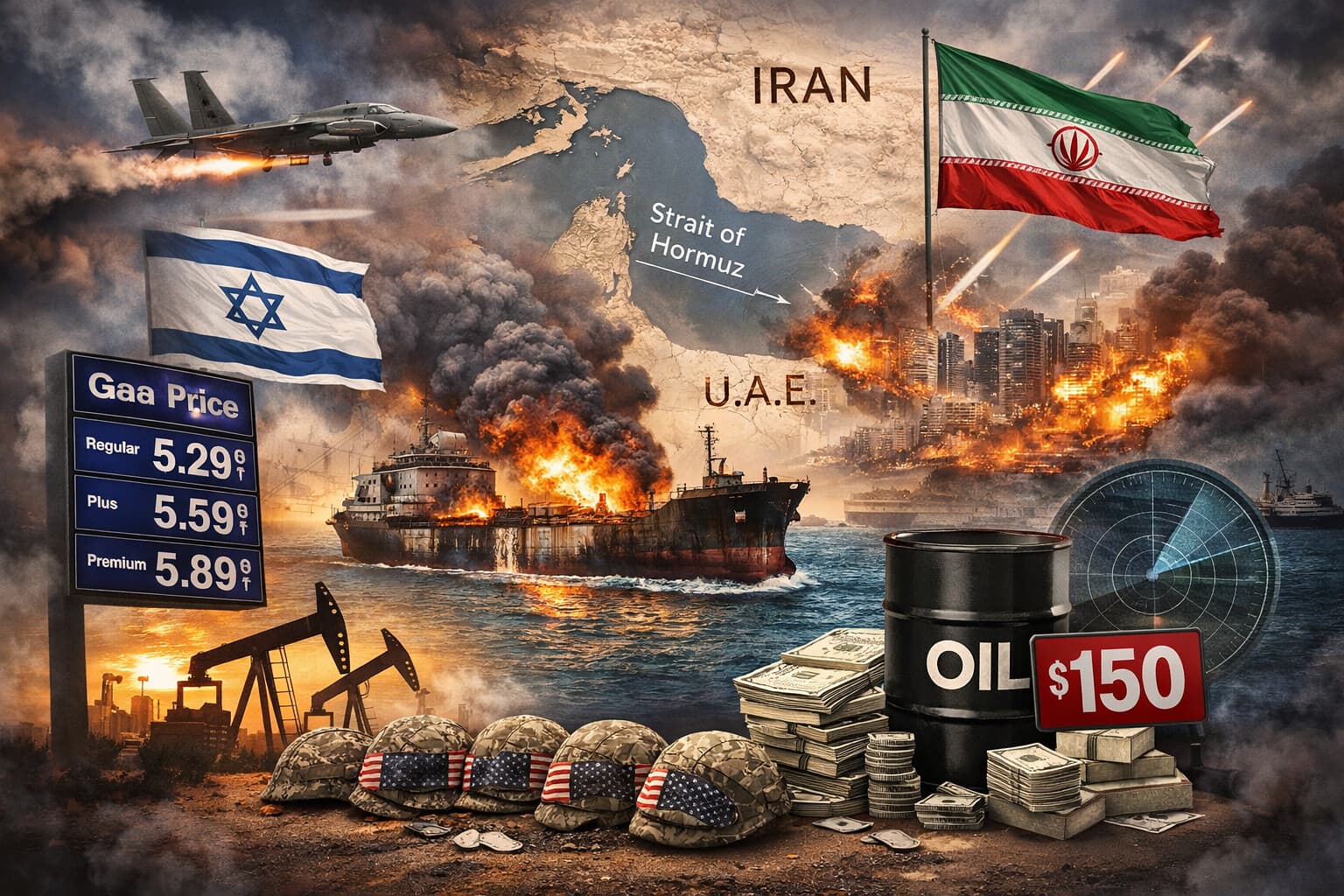
Iran has sharply escalated attacks on commercial vessels in the Strait of Hormuz, with UK Maritime Trade Operations logging nine incidents in October alone—double the monthly pace from September. The acceleration marks a shift in tactics: rather than attempting to halt all traffic, Iran is deploying volume attacks to create sustained uncertainty.
The data reveals the strategy's structure. A Western security official reported that Iran has launched approximately 30 drone attacks and 10 anti-ship missile attacks per week since early August. Most do not result in direct strikes. Yet the cumulative effect has not disrupted flows: oil shipments through Hormuz have recovered to about 80 percent of prewar levels, the world's most critical energy chokepoint.
Dmitris Maniatis, chief executive of risk management firm Marisks, said Iran "appears to be seeking to assert greater control over the Strait of Hormuz through one of its most established instruments of coercion: fear and uncertainty." Maniatis noted that Iran's objective is not to stop every vessel but to instill the belief among the maritime industry that any vessel could be targeted.
Previous periods of intense strikes have produced only brief disruptions to flows. Maritime security officials and shipping executives say it remains unclear whether the latest escalation will reduce Hormuz throughput. Historical patterns suggest that reductions are often offset by increased volumes in subsequent days.
Global energy prices track Hormuz volumes closely, particularly as the Northern Hemisphere enters winter demand season. Brent crude trades at $98 per barrel. Concerns over sustained inflationary pressure have prompted central banks to consider higher interest rates. Last week, several consuming nations announced plans to release millions of barrels from emergency stockpiles.


