OTTAWA — Canada announced retaliatory tariffs beginning Sept. 8 on specific U.S. goods, responding directly to 50 percent duties the United States imposed Saturday on approximately $20 billion worth of Canadian products. Prime Minister Mark Carney announced the countermeasures after trade negotiations concluded Friday without agreement.
Canada's decision to walk away from the table stemmed from new language Washington introduced in the final hours seeking to restrict Canada's ability to negotiate its own trade deals with other nations. Carney called the U.S. demand "unacceptable" and framed the dispute as "a question of sovereignty" for Canada.
British Columbia Premier David Eby supported Carney's position, asserting that accepting such a condition would have reduced Canada "to the economic equivalent of the 51st state." President Donald Trump has frequently raised the idea of Canada becoming the 51st U.S. state and has dismissed the shared border as artificial.
The dispute represents a test of Carney's long-held argument that middle powers must resist economic coercion from larger nations. Canada is intentionally risking economic pain rather than capitulating to tariff pressure, a stance many American allies have avoided.
In January, Carney addressed the World Economic Forum in Davos, warning that the international order was undergoing "a rupture, not a transition." He argued that national sovereignty would increasingly depend on a country's ability to "withstand pressure" from great powers, cautioning that middle powers negotiating alone do so from a position of weakness.
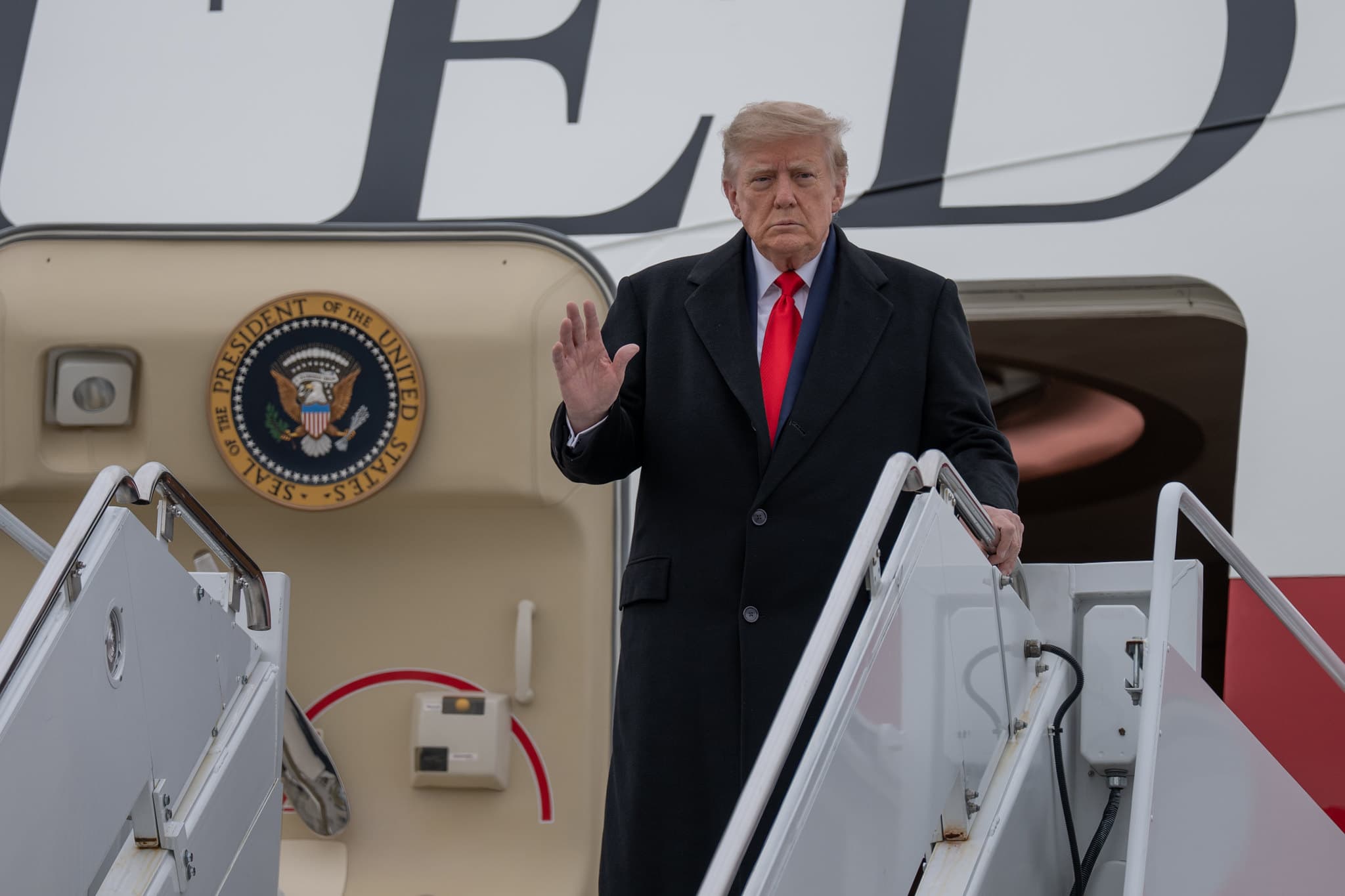
President Trump responded to Carney's Davos statements a day later. "Canada lives because of the United States," Trump said. "Remember that, Mark, the next time you make your statements."
Trump reiterated his views Sunday, posting on Truth Social that "Canada wants the benefits of being a State, without being one!!!" He also accused Canada of charging U.S. farmers "massive amounts" of tariffs for years.
Carney said Saturday that his government understood "before many, that America would transform all its commercial relationships." He accused Washington of using "economic integration as a weapon" and said its "signature was written in pencil," suggesting a lack of permanence in prior agreements.
Historian Robert Bothwell noted Canada's unique vulnerability to U.S. pressure due to deep economic ties. Despite this, Canada is now actively diversifying its trade partners to reduce reliance on the U.S. market.
Canada's diversification efforts encompass energy, minerals, agricultural products and manufactured goods. The objective is not to sever economic ties with the United States but to build leverage, making it easier to resist future political pressure tied to U.S. market access.