The U.S. Navy promised an answer in August. Admiral Daryl Caudle, the Chief of Naval Operations, said it at the Air Sea Space Exposition in Washington in April 2026. Defense Secretary Pete Hegseth said it. Acting Navy Secretary Hung Cao said it. September 1 arrived without a contract award, without an announcement and without any sign that a decision is close.
The Navy has confirmed it made its selection internally. The final call now rests with the Office of the Secretary of Defense—or potentially the White House, following the path the Air Force's F-47 decision took in March 2025, when the president announced that contract award directly.
On Aug. 22, Aviation Week reported the Navy still expected an announcement before month's end. That deadline passed. The program has now slipped past its publicly stated timeline with no revised deadline announced.
Congress cut the Navy's F/A-XX funding by 84 percent in fiscal year 2026, dropping it to $74 million while the Air Force's competing sixth-generation program received $5 billion. Congress later added a $900 million surge in the same fiscal cycle, but the whiplash cost the program time and momentum it has not recovered.
The delay carries real costs. Every month without a contract award compounds strain on the Navy's existing carrier air wings, which depend on fourth- and fifth-generation aircraft well past their designed service lives. The F/A-18E/F Super Hornet and the F-35C are logging more flight hours than their operational plans called for. Higher tempo means compressed maintenance cycles and climbing repair costs.
The Navy has warned publicly that logistics and maintenance budgets for both fleets grow each year the F/A-XX contract remains unsigned. The organizations sustaining these aircraft are already under strain, and that strain compounds as delay extends.
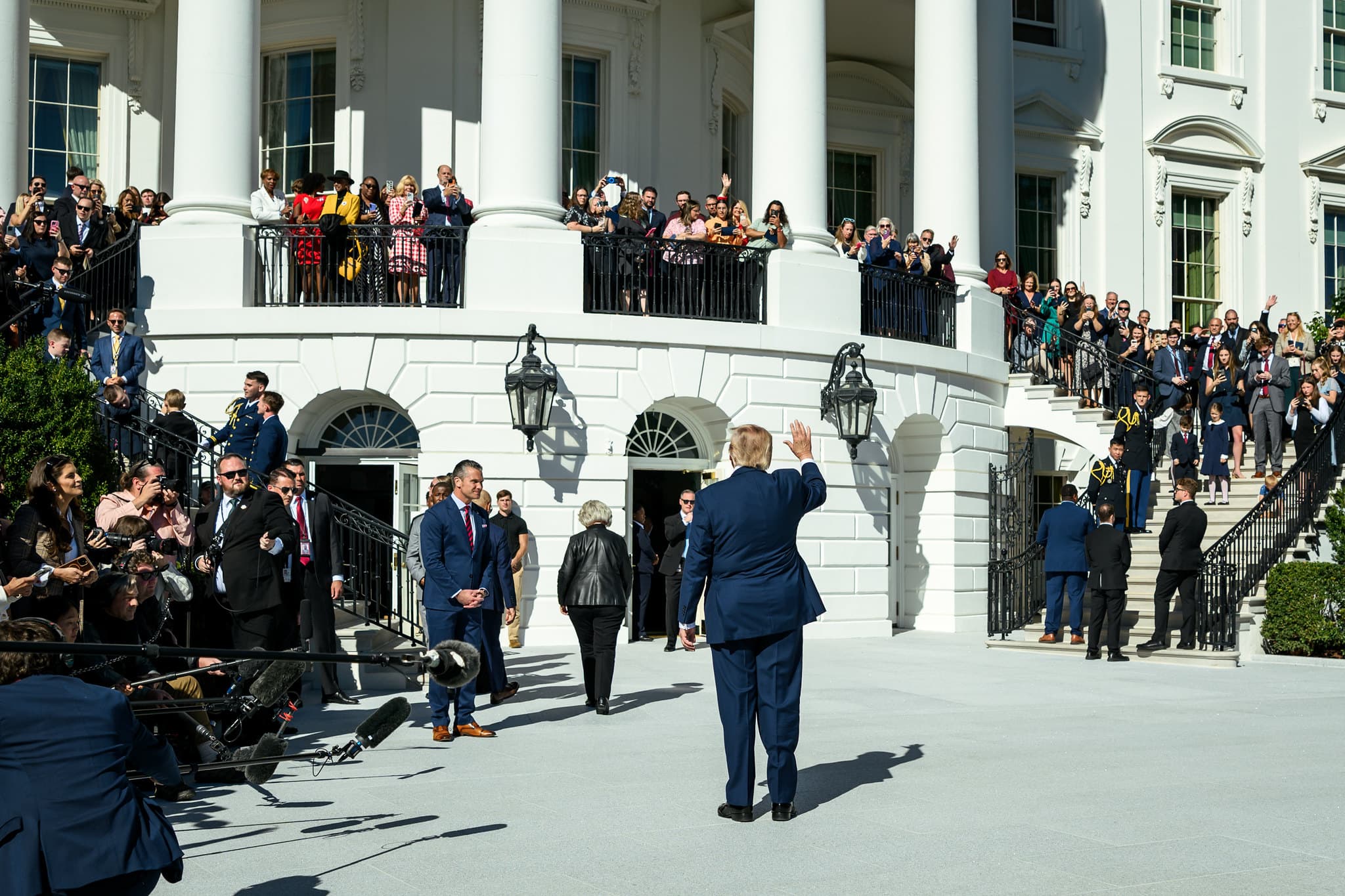
When the Air Force awarded the F-47 contract in March 2025, the announcement came from the White House—not the Pentagon or the Air Force. If the F/A-XX follows that same path, the timing depends less on procurement officers and acquisition timelines than on the president's calendar and political considerations. A procurement slip inside the Navy is an administrative problem. A decision held at the White House level is a political one, shaped by forces the naval aviation community cannot directly influence.
The contract represents the dominant question in U.S. tactical aviation for the next two decades. The two competitors are Boeing and Northrop Grumman—the same industrial players whose F/A-18 and F-35 programs currently fill the carrier decks the new fighter is meant to replace. Whoever wins will define American carrier aviation through the 2040s. The loser faces a restructuring of its tactical aircraft division around a program that will not come.
For the Navy, the answer it needs is the one promised for August. The clock is running on aging airframes, climbing maintenance costs and carrier air wings asked to do more with aircraft not designed to carry this workload indefinitely.