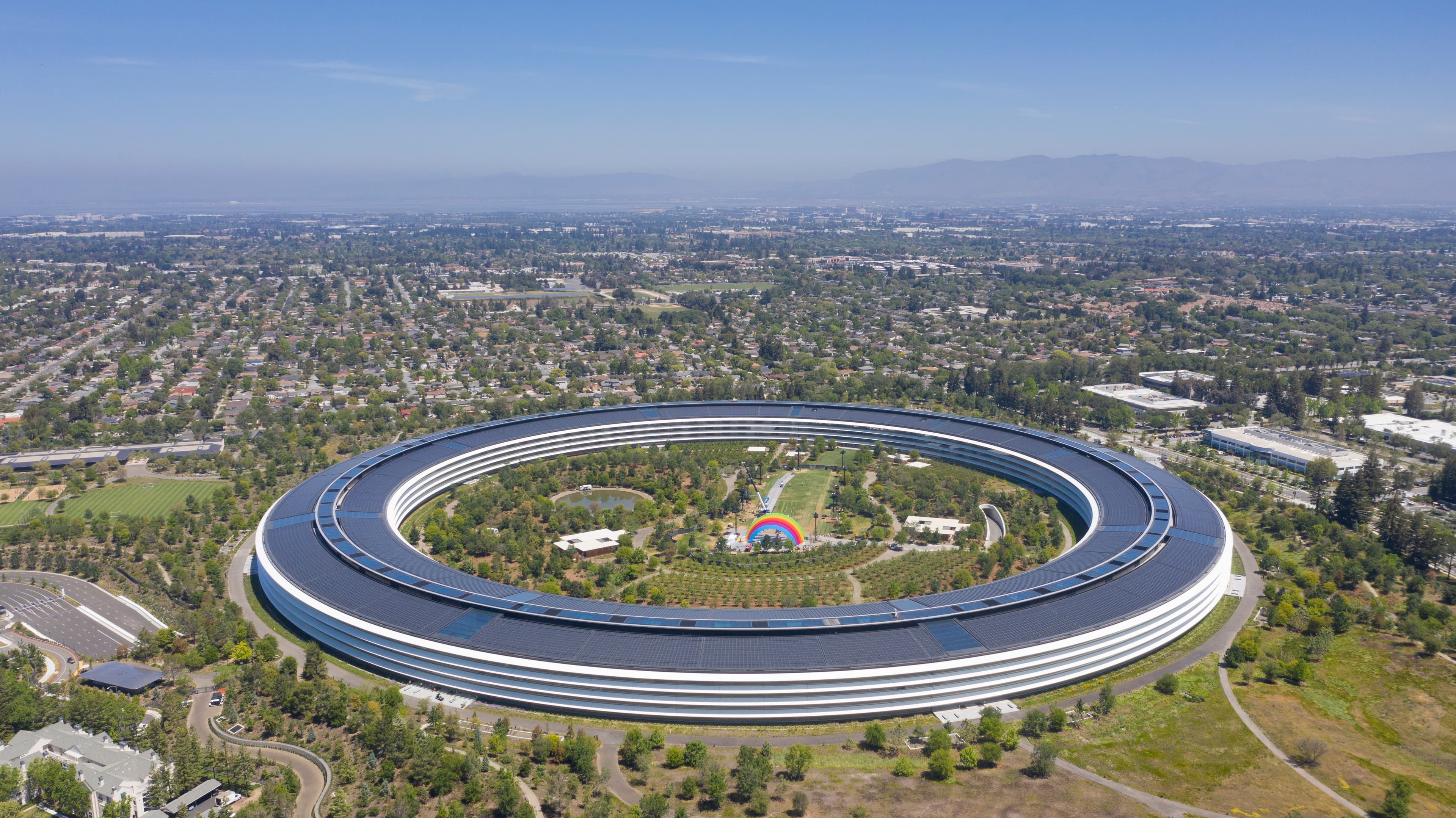
Apple (AAPL) stands as Berkshire Hathaway's largest equity position, a testament to Warren Buffett's conviction in the company's competitive moat. The stock traded at $319.70 today, up 1.6 percent.
Buffett's thesis rests on Apple's ecosystem: iPhone dominance, wearables, tablets, computers, and high-margin subscriptions and app-store revenue that lock in customer loyalty and drive recurring upgrades.
Analysts project Apple will grow earnings 13 percent annually over the next three to five years. That growth trajectory directly enables dividend expansion.
Here's the mathematical edge: Apple's dividend payout ratio sits at just 12 percent of 2026 earnings estimates. That leaves enormous room to raise payouts without straining balance sheet or cash flow.
The real lever is buybacks. Apple spent $82 billion repurchasing shares over the past four quarters, reducing its share count by 31.5 percent over the past decade. Lower share count inflates per-share earnings and per-share dividends—the company can grow its dividend faster than headline payout-ratio math suggests, because it's distributing the same total cash to fewer shares.
Apple's dividend has already grown at a 7 percent compound annual rate over the past decade. Berkshire received $280 million in cash dividends from the company last year alone.
For comparison, Coca-Cola yields 2.61 percent and pays $0.53 per quarter. Apple's strategy trades current yield for growth. A 0.3 percent yield is a starting point, not a destination—investors should value the compound rate of dividend expansion, not the snapshot yield.


