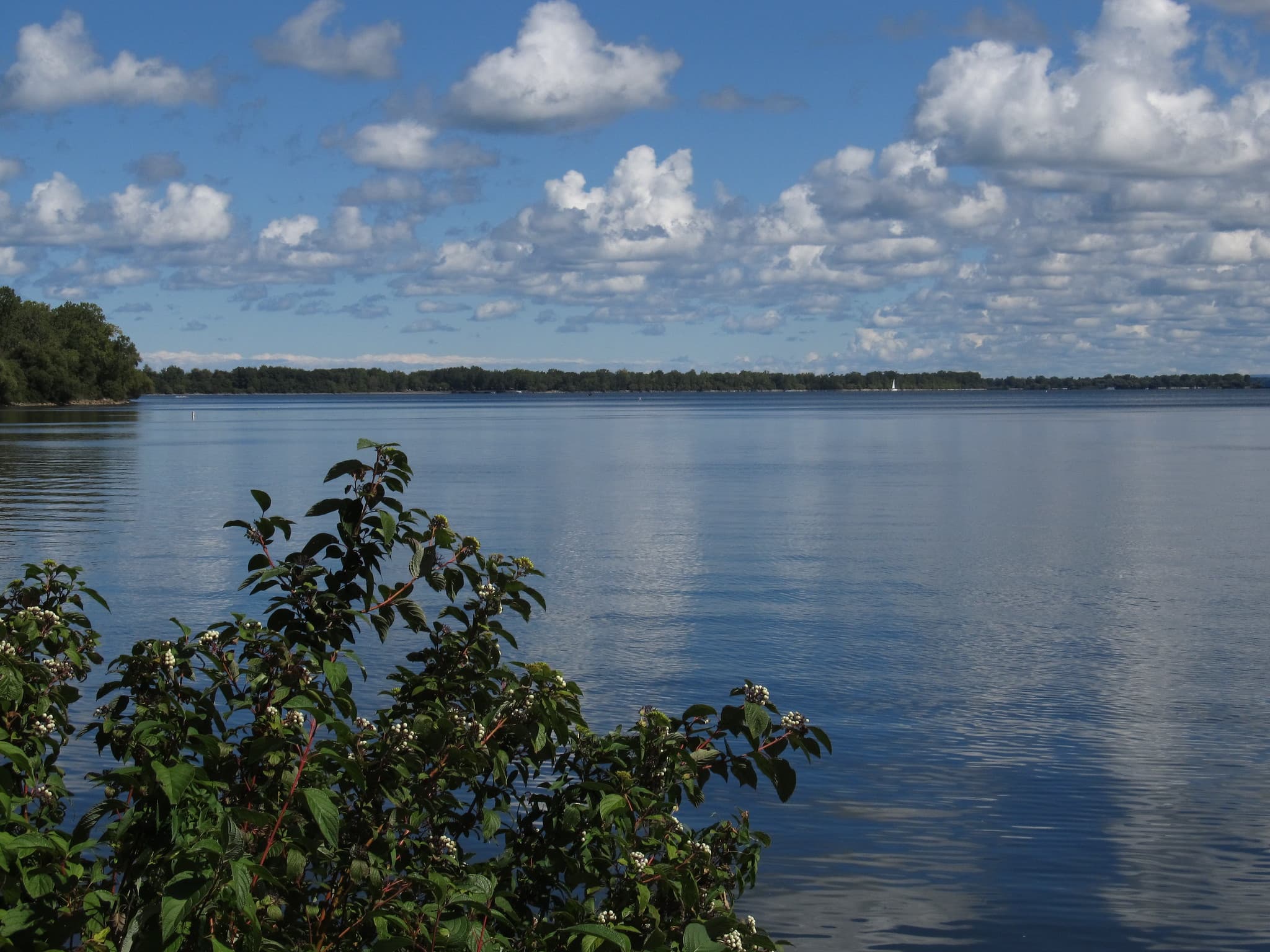
ERIE, Pa. — The sandbar at the mouth of Presque Isle Bay was a military asset before it was a vacation destination. During the War of 1812, master mariner Daniel Dobbins identified the shallow crossing as a natural barrier: British warships, with their deep drafts, could not cross it to attack American shipbuilders working under the cover of the peninsula's forests.
Under that protection, Commander Oliver Hazard Perry assembled a naval fleet inside the bay. In September 1813, he led that fleet out onto Lake Erie and defeated the British squadron, securing the Northwest Territory for the United States. The victory stands as one of the decisive moments of the war, and the 5.8-square-mile peninsula that made it possible has defined Erie's identity ever since.
The battle flag Perry flew that day carried a phrase that has become the city's civic motto: "Don't give up the ship." The words were not Perry's. His close friend Captain James Lawrence spoke them three months earlier, mortally wounded in a separate engagement. Lawrence's actual final order to his crew was longer: "Don't give up the ship — fight her till she sinks." Perry had women in Erie stitch the shortened phrase in white letters across a large blue banner and raised it as a visual rallying point for his fleet.
That phrase now appears on building walls, beer bottles, school banners and festival signage throughout Erie. The city also designates a Flagship District, making the battle's legacy the commercial and cultural center of the entire region.
Presque Isle's role shifted over the following century as the nation's economy changed. From the 1840s through the 1950s, the peninsula's harbor served as an industrial and commercial shipping hub, giving Pennsylvania its only direct access to the Great Lakes. When manufacturing declined and trade patterns shifted after mid-century, that dominance faded.
What replaced it was cultural. By the mid-20th century, Presque Isle had become the primary destination for blue-collar families from the steel towns, coal communities and manufacturing centers of Western Pennsylvania, Eastern Ohio and West Virginia. The park's seven miles of sandy shoreline and open-water horizon offered something rare for communities deep in landlocked Appalachia: an affordable alternative to the Atlantic coast. Families packed station wagons and made the drive not because they could afford beach vacations elsewhere, but because Erie was reachable, familiar and their own.
Those patterns hardened into tradition across generations. The same families who came in the 1950s sent their children and grandchildren back. The park absorbed something harder to quantify than visitor counts — it became the place where Appalachian working-class culture practiced the ritual of summer, without the cost or distance of coastal travel.
Today that tradition translates into economic weight. Presque Isle functions as the financial engine of Erie County's tourism sector, drawing visitors from the same three-state corridor of Western Pennsylvania, Eastern Ohio and West Virginia that first discovered it generations ago.
The broader story of Appalachian attachment to Presque Isle sits inside a wider pattern. Communities across the region have long dealt with physical and economic isolation — terrain that limited roads, limited opportunities that pushed residents toward industrial centers, and a persistent sense among those who left that they never fully departed. Erie and its peninsula gave the region's working class a fixed point of return, a place that belonged to them in the same way that coastal resorts belonged to more affluent Americans.
Columnist Salena Zito, who has covered working-class communities across the region for years, has made the trip to Presque Isle since the 1960s, first as a child in a loaded family station wagon. That personal continuity mirrors what the park represents at a community scale: a ritual repeated because the economic and cultural conditions that created it never fully disappeared. The families still come, the station wagons are now SUVs, and the sandbar that stopped British warships still holds the bay.