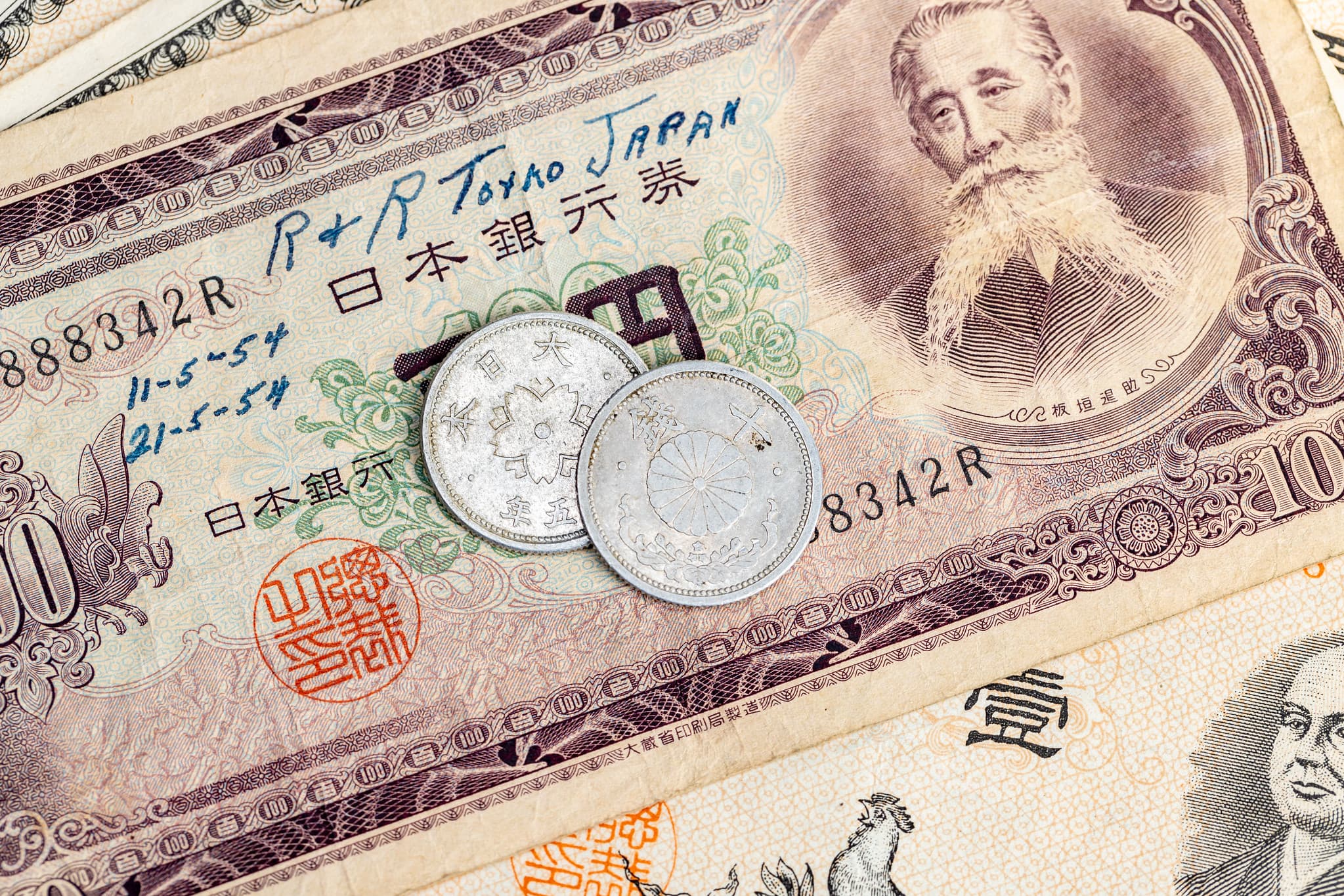
The yen sat at 159.37 per dollar Friday, putting it on track for its worst week in three months and within striking distance of 160—the level that has historically triggered Japanese authorities to act. Two rounds of intervention, one in April and May and a second joint operation with the United States at the end of July, have not held. The math is working against Tokyo.
The 10-year U.S. Treasury yields close to 4.7 percent. The equivalent Japanese government bond yields under 2.9 percent. That spread—roughly 180 basis points—is wide enough to sustain the yen carry trade regardless of how much intervention capital Tokyo deploys. Carry traders borrow cheaply in yen, park the proceeds in higher-yielding dollar assets, and pocket the difference. Until that rate gap narrows materially, the trade funds itself.
Mitsuhiro Furusawa, Tokyo's former top currency diplomat, said most market participants expect the Bank of Japan to raise rates in September. "Most market players believe the BOJ will raise rates in September and I think it should," Furusawa said. He added that what matters more is whether the central bank communicates a faster pace of future hikes—not just a single move, but a credible path that forces carry traders to reconsider the risk.
The BOJ has moved deliberately since ending its negative rate policy, a pace some analysts have called slow. Traders are now pressing for a more aggressive signaling framework, one that would shrink the Treasury-JGB spread without requiring the Fed to cut first. That is the crux of the problem: the yen's weakness is primarily a function of U.S.-Japan rate differentials, and Japan controls only one side of that equation.
The Fed side has shown some give. A run of softer U.S. inflation readings has reduced the probability of an imminent Fed rate hike. Benign inflation data lowers the ceiling on Treasury yields and, by extension, takes some pressure off the yen. European stock futures pointed to a modestly higher open Friday, with risk appetite supported by the same data showing limited pricing pressure across developed markets.
But the relief is conditional. An unresolved conflict in the Middle East keeps energy prices in play as an inflation risk. If oil prices spike on geopolitical disruption, U.S. CPI could re-accelerate, pushing Treasury yields higher and widening the JGB spread further. That scenario would erase whatever ground the yen recovers from soft inflation prints.
Tokyo's intervention record shows the limits of unilateral—and even coordinated—action against a structural rate gap. The April-May operation and the July joint action with the United States bought time but did not close the spread. The 160 level looms as a psychological and practical threshold. Japan's finance ministry has repeatedly said it stands ready to intervene again, but repeated interventions without a corresponding rate-policy shift from the BOJ carry diminishing returns.
The carry trade's mechanics mean intervention works best when it introduces uncertainty about direction, not when it defends a specific level. Once markets conclude that authorities will defend 160 but cannot change the underlying rate environment, each intervention becomes a cheaper entry point for carry traders to reload positions. That dynamic is why Furusawa's emphasis on communication—on the BOJ signaling a faster hike trajectory—matters more than the size of any single intervention.
For the JGB market, faster BOJ hikes carry their own duration risk. Japan holds the world's largest government bond market. A rapid rise in JGB yields compresses bond prices and raises the government's borrowing costs against a debt-to-GDP ratio that remains among the highest of any developed economy. The BOJ has to thread a narrow path: raise rates fast enough to support the yen, but not so fast that it destabilizes the JGB market or tips Japan's economy into contraction.
The next concrete catalyst is the BOJ's September meeting. If the central bank raises rates and pairs that move with language suggesting additional hikes are coming at a faster pace, carry traders face rising funding costs and a less predictable exit window. That combination—higher short-term yen rates plus credible forward guidance—is the only documented mechanism that has historically compressed carry-trade positioning without sustained foreign exchange intervention.