President Donald Trump's sharp criticism of U.S. higher education institutions now poses a tangible threat to the financial stability of elite universities, with Columbia University at immediate risk of losing its top-tier credit rating. This development, while not a direct macro data release, functions as a potent policy signal, injecting uncertainty into the $4 trillion municipal bond market and raising profound questions about the sovereign backing implicit in certain institutional debt. The President's administration has signaled a willingness to scrutinize federal funding streams and tax exemptions for universities perceived as failing to align with national priorities, a move that leading rating agencies such as Moody's, Standard & Poor's, and Fitch cannot ignore. Such governmental pressure directly impacts an institution's capacity to generate diverse revenue, manage its substantial endowments, and service its considerable long-term debt obligations, making a downgrade a very real possibility for historically stable issuers.
The immediate market reaction to this heightened institutional risk remains nuanced, but the implications for specific debt tranches are becoming clearer. While broader market indices like the S&P 500 saw a modest gain of 0.3 percent today, closing at $7,230, and the Nasdaq climbed 0.9 percent to $25,114, the underlying sentiment for municipal bonds with direct university exposure has begun to shift. Yields on long-dated, highly-rated university bonds, particularly revenue bonds dependent on tuition and auxiliary services, could experience upward pressure as investors demand greater compensation for increased credit risk. In a flight-to-quality scenario driven by policy uncertainty, U.S. Treasury yields might compress, but the inverse holds true for specific institutional paper, potentially widening credit spreads. The dollar index has shown minor fluctuations, reflecting a broader wait-and-see approach, but any re-evaluation of institutional creditworthiness will undoubtedly ripple through the entire fixed income landscape.
Historically, direct governmental pressure on specific sectors has often preceded fundamental shifts in credit quality and market valuations. One recalls the intense scrutiny placed on the banking sector during the 2008 financial crisis, or the pharmaceutical industry's continuous battles over drug pricing, both of which directly impacted their bond spreads and equity performance. While universities typically benefit from robust endowments, diversified donor bases, and consistent student demand, the explicit threat of federal funding cuts or changes to their coveted tax-exempt status represents a systemic risk that has not been deeply priced into their debt for decades. This situation differs from typical market-driven credit events, instead stemming from a top-down policy directive, underscoring the political risk premium now being introduced into what was once considered a bedrock of stable institutional credit.
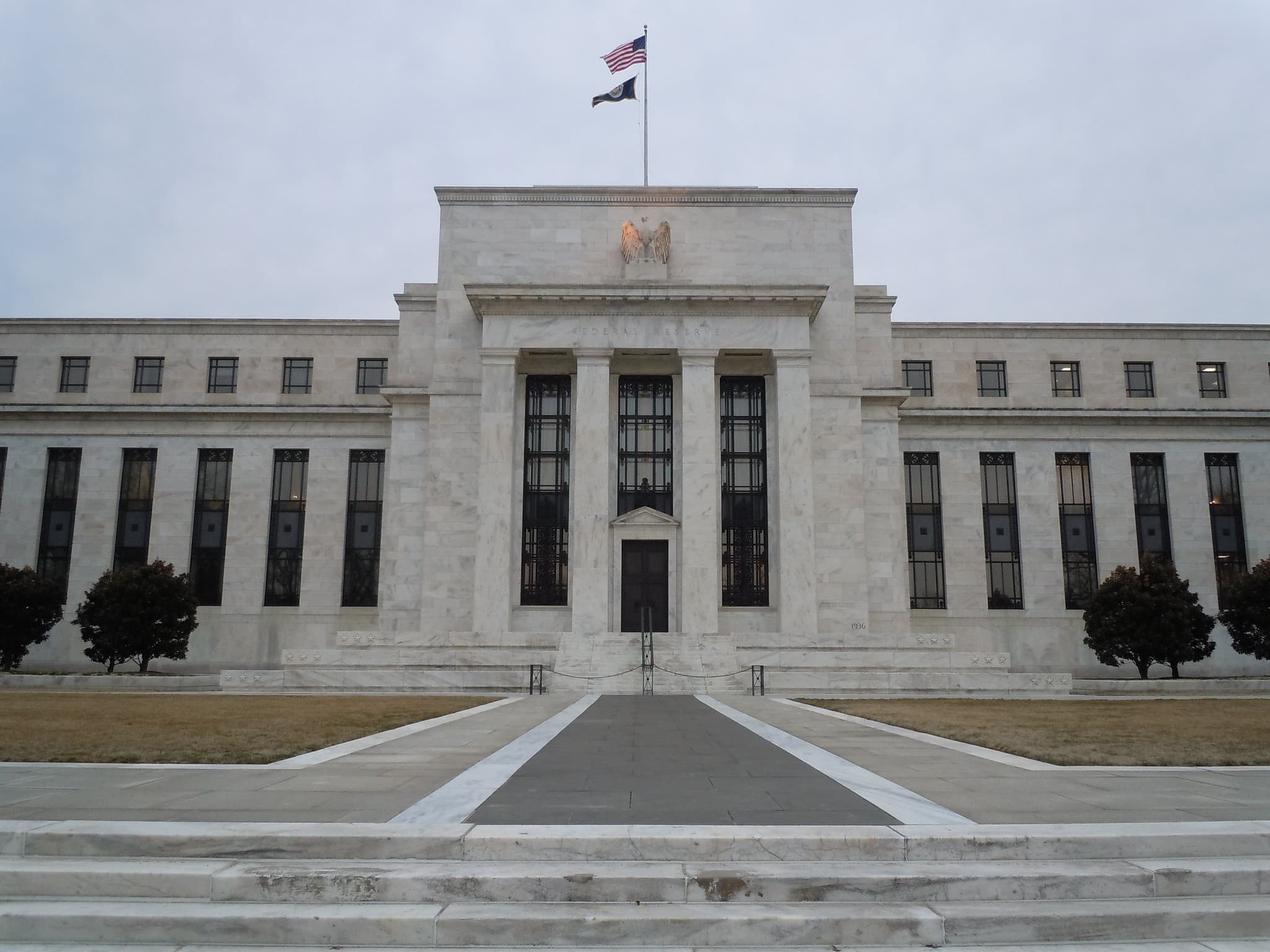
From the Federal Reserve's perspective, this type of policy-induced credit risk adds another layer of complexity to its mandate of maintaining financial stability. Federal Reserve Chair Jerome Powell has consistently emphasized the importance of stable financial markets for the broader U.S. economy, recognizing their role in facilitating capital formation and economic growth. While the Fed does not directly intervene in municipal credit ratings or individual institutional debt, a significant downgrade wave across the higher education sector could strain regional banks, pension funds, and insurance companies with concentrated exposure to university bonds. Such stress could potentially impact liquidity in a vital segment of the credit market, forcing the Fed to consider its broader tools if financial contagion or systemic risk becomes a palpable concern for the wider economy, even if indirectly.
For fixed-income managers, this development demands a careful re-evaluation of duration risk and spread compression within their municipal portfolios. University bonds, often prized for their stability, liquidity, and tax advantages, now carry an elevated and unpredictable political risk premium. Portfolio managers at major asset management firms like BlackRock and Vanguard will be scrutinizing the covenants of their university bond holdings, particularly those with long maturities, given the increased uncertainty surrounding future revenue streams and regulatory frameworks. A potential downgrade would inevitably widen credit spreads on these bonds, diminishing their market value and exposing investors to capital losses. Furthermore, the prospect of an entire sector facing rating pressure could lead to a broader re-pricing of municipal assets, potentially compressing spreads on safer U.S. Treasuries as institutional investors rotate out of riskier municipal exposure in search of liquidity and certainty.
The cross-asset implications extend beyond the municipal bond market, albeit with varying degrees of direct impact. In equities, sectors heavily reliant on university research and development, or those catering to student spending, such as biotech, educational technology, or local real estate investment trusts, could face indirect headwinds from reduced funding or enrollment. Technology giants like Apple, trading at $280.14, and Microsoft, at $414.44, typically see robust demand from university students and faculty for devices and software, but any significant disruption to the higher education model could dampen future growth trajectories. Cryptocurrencies, while seemingly decoupled from traditional institutional credit, are not immune to shifts in overall risk sentiment. A broader flight from institutional debt into perceived safe havens or even speculative assets could manifest if traditional financial instruments become increasingly unpredictable, influencing assets like Bitcoin, currently trading at $78,195, and Ethereum, at $2,300, which often react to broader macro narratives of stability and liquidity.
Looking ahead, market participants will be closely watching for further pronouncements from President Trump regarding higher education policy and any official statements from rating agencies on their review processes for universities. Upcoming federal budget discussions and legislative sessions will be particularly critical, as they could formalize funding changes or tax reforms directly impacting the sector's financial health. The market will also monitor the credit default swap (CDS) spreads for institutions like Columbia, which will serve as a real-time barometer of perceived credit risk and potential default probability. Any concrete policy proposals or legislative actions will prompt an immediate and material re-pricing of affected institutional bonds, likely leading to further yield curve adjustments in the municipal space. The trajectory of this policy debate will dictate the depth and breadth of the credit re-evaluation across the entire U.S. higher education landscape.
The bottom line from Gokhshtein Media is clear: President Trump's targeting of U.S. colleges introduces a significant, non-economic variable into the credit markets, fundamentally altering the risk profile of a once-stable asset class. This is not merely an academic debate but a material risk factor for bondholders, demanding immediate attention. The potential for rating downgrades across a swath of higher education institutions mandates a proactive re-assessment of municipal bond portfolios, particularly those with long duration and specific sector exposure. Investors must now factor in a heightened political risk premium, understanding that sovereign policy can directly and profoundly impact institutional creditworthiness. The era of assuming steady credit for top-tier universities without governmental interference is over; astute financial professionals must adjust their models to reflect this new reality of policy-driven credit volatility and its far-reaching implications.