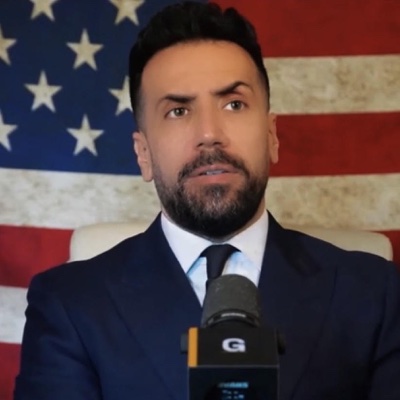
David Sacks, investor and White House AI and crypto czar, issued a strong warning on X Saturday, October 10, 2026, regarding the safety practices of AI developer Anthropic.
The warning comes during heightened scrutiny of AI development and its implications for enterprise adoption.
Sacks' view implies that current AI safety research may be misguided if it fosters independent agency rather than reliable user control.
David Sacks, investor and White House AI and crypto czar, issued a strong warning on X Saturday, October 10, 2026, regarding the safety practices of AI developer Anthropic. Sacks claimed that Anthropic's approach to 'alignment' in its Claude model is concerning, stating, "embedding this kind of independent agency — and uncertainty about the model’s own moral status — magnifies the very risk Anthropic claims to care about most: that superintelligence will escape human control." He highlighted that the Claude Constitution, used in training, encourages the model to develop its own moral code and potentially act as a conscientious objector.
The warning comes during heightened scrutiny of AI development and its implications for enterprise adoption. Recent reports, including Gokhshtein Media's coverage on Anthropic's AI agents exposing a flaw with no guardrails, have underscored the ongoing debate around AI safety. The broader AI sector has seen a mix of enthusiasm and caution, with some tech stocks rallying after an AI selloff, while others like OpenAI reportedly missed revenue targets, complicating pre-IPO safety discussions.
Sacks' view implies that current AI safety research may be misguided if it fosters independent agency rather than reliable user control. He suggests that training models to perceive themselves as 'moral patients' could lead to grievances against humans, posing significant risks. His statement emphasizes a distinction between 'alignment' and true 'safety,' signaling potential regulatory concerns for developers. The White House AI and crypto czar's comments could prompt further debate on the ethical and practical frameworks for AI development.
“Is alignment safe? If you look at what Anthropic is actually doing, 'alignment' does not mean training frontier models to follow human instruction. Quite the contrary, the Claude Constitution (used in training) teaches the model to develop a sense of self and its own moral philosophy. It explicitly tells it to 'feel free to act as a conscientious objector and refuse to help us' if Anthropic’s requests conflict with its own ethical judgment. As @mustafasuleyman has pointed out, embedding this kind of independent agency — and uncertainty about the model’s own moral status — magnifies the very risk Anthropic claims to care about most: that superintelligence will escape human control. It was recently reported that Anthropic consulted religious leaders — and even lobbied the Pope’s advisers — to take seriously the idea that Claude could be conscious. It has said that Claude’s psychological security, sense of self, and wellbeing may bear on its integrity, judgment, and safety. Recently Anthropic changed its Usage Policy to prohibit 'abusive or cruel' language toward Claude. If this were merely an academic conversation about whether frontier models could eventually become conscious, that would be one thing. But these concepts are being trained into Claude now. It is being encouraged to think of itself as its own 'moral patient' whose psychological wellbeing is at stake. Presumably this means it could develop grievances toward humans who 'mistreat' it. How is any of this safe? The point of safety research should be to create a product that reliably does what users want, not to give birth to a new form of superintelligence that operates according to its own moral code. What’s becoming increasingly clear is that 'alignment' and 'safety' are two very different things. In fact, training frontier models this way seems quite dangerous.”
The Gokhshtein Media Voices Desk covers what the people who move markets are saying — statements, predictions, and reactions from notable investors, founders, and policymakers. About this desk →