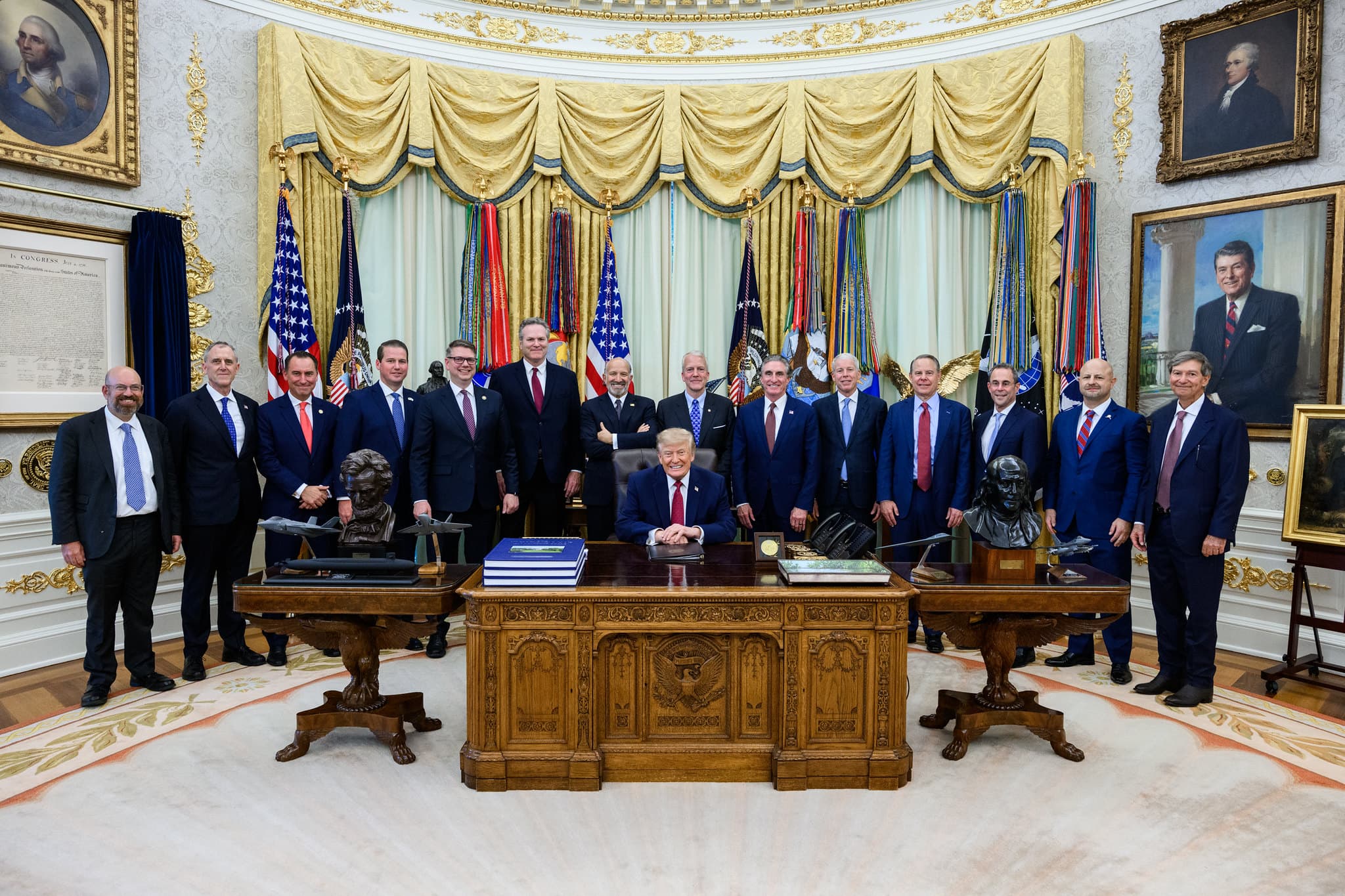
President Donald Trump signed an executive order deferring a 24.4 cent per gallon federal tax on dyed diesel fuel for one year and directing the administration to explore eliminating it entirely—a move aimed at lowering fuel costs for truckers and farmers squeezed by high prices.
Dyed diesel, typically reserved for off-road vehicles in agricultural and industrial use, could yield savings of $60 to more than $100 per fill-up for truckers under the order, according to White House claims and industry reports. The American Farm Bureau Federation praised the action, saying it would provide relief when "every cent per gallon matters."
But the policy runs into a hard limit: state law. Individual states maintain their own diesel taxes, often higher than the federal rate, and most prohibit dyed fuel from being used on public roads. A presidential order cannot override state statute.
"You need federal and state approval in order to get this to work, and you need it on a widespread basis," Andy Lipow, president of Lipow Oil Associates, said in an interview. "Without uniform state action, the impact remains constrained."
Patrick De Haan, senior petroleum analyst at GasBuddy, said farmers—who already use tax-free dyed diesel for their operations—will see little benefit from the federal deferral. Truckers fare better, but only within states that permit dyed fuel on highways. A driver crossing state lines could face legal trouble in jurisdictions that enforce restrictions.
Several states have already suspended enforcement temporarily. Louisiana Gov. Jeff Landry publicly backed Trump's order, noting he had previously declared a state emergency allowing farmers to use dyed diesel in their possession and that the federal relief now extends the window.
De Haan said the order's real-world impact would be "likely to be limited and flat-out lumpy" across state lines—meaning truckers and farmers would see relief in some places and none in others.


