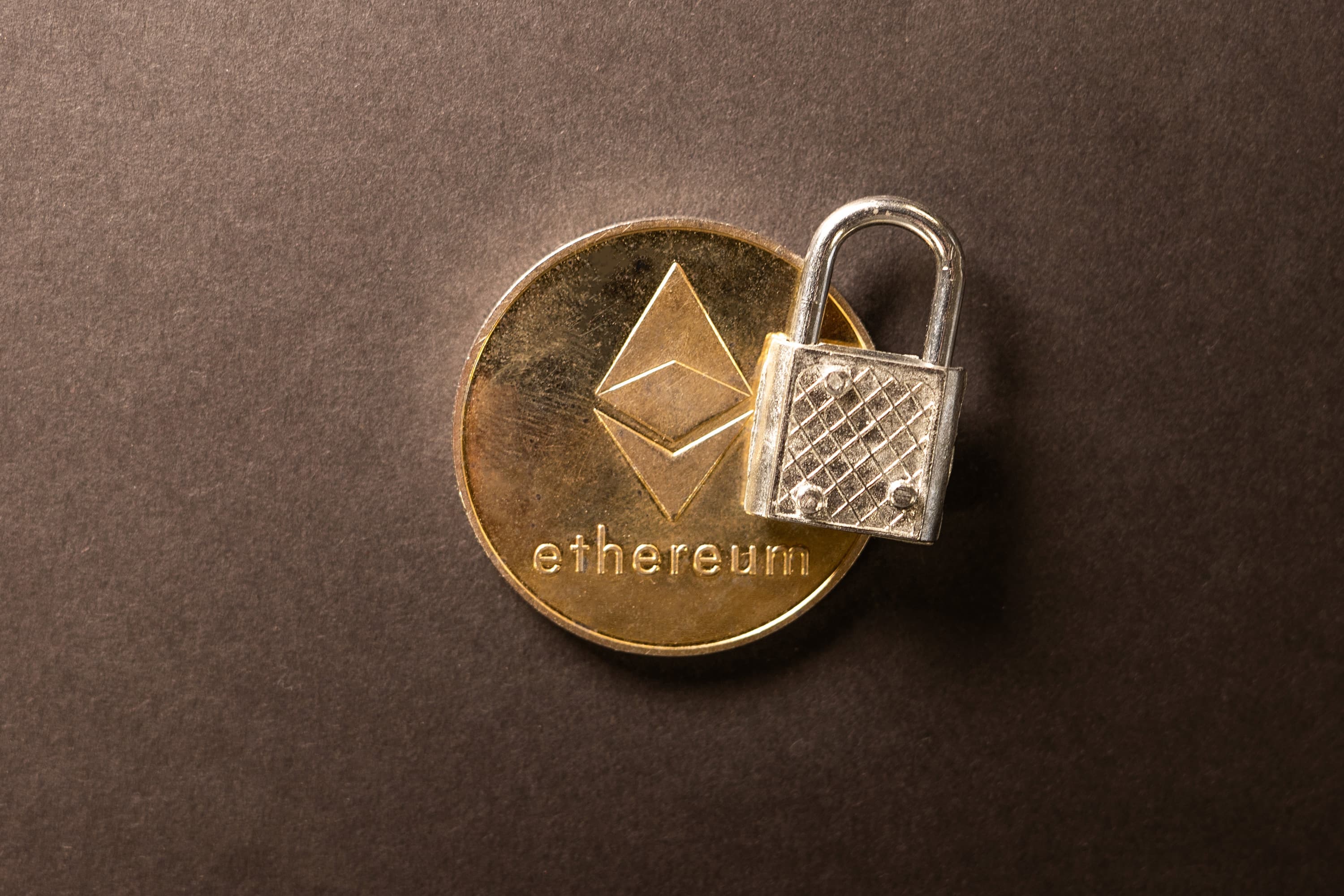
BitMine Immersion acquired 15,112 Ether on October 5, 2026, for approximately $41 million at $2,710 per token.
The purchase pushed the firm's total Ether holdings to 6,016,414 ETH—roughly 99 percent of its stated 5 percent Ethereum supply target. That position now represents $16.27 billion in notional value.
Fundstrat co-founder Tom Lee chairs BitMine, which has built its Ether position through steady open-market buying rather than block trades. Each incremental tranche now moves the headline percentage only marginally as it closes in on its 5 percent ceiling.
Holding 5 percent of Ethereum differs from holding 5 percent of Bitcoin. Ether functions as a yield-generating instrument through staking—a protocol-level feature that Bitcoin lacks. A position of this scale grants the holder a substantial voice in network validation if directly staked. BitMine has not disclosed how much of its 6,016,414 ETH is currently staked versus held in liquid form.
BitMine's strategy mirrors the Bitcoin treasury playbook popularized by MicroStrategy, which focuses a public company's balance sheet on a single crypto asset, allowing equity to trade as a leveraged proxy for the underlying token. MicroStrategy recently reported a $21 billion fair-value gain on 848,000 BTC, demonstrating the shared thesis across different base assets.
The concentration cuts both ways. A treasury so heavily exposed to a single token rises and falls directly with its price movements. A sharp Ether drawdown would impact the firm's mark-to-market value as severely as accumulation has boosted it.
Large standing bids from entities like BitMine remove float from the open market and can tighten supply dynamics when demand remains steady—a crucial factor in price discovery. Spot ETF inflows for altcoins, however, have cooled sharply in recent weeks, indicating thinner retail and fund demand than earlier in the cycle.


