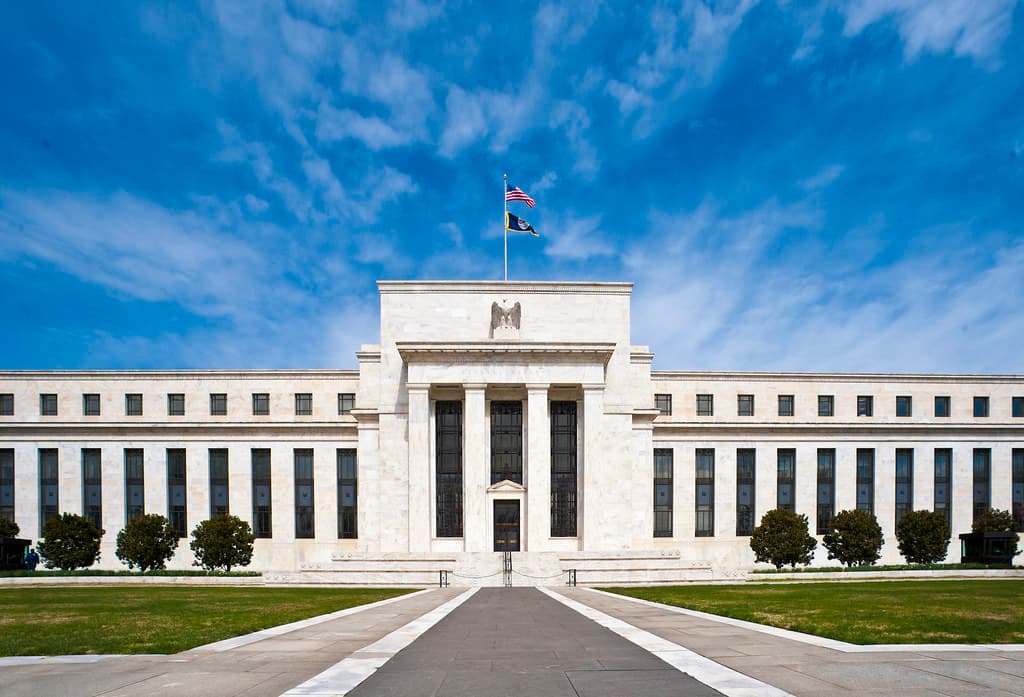
The Federal Reserve's Federal Open Market Committee raised the federal funds rate to a target range of 3.75% to 4.00% this past week in a 12-0 vote, marking its first increase since 2023.
The 10-year Treasury yield closed the week at 5 percent, a level unseen in 19 years. The 30-year yield held near 5.34 percent, reflecting sharp repricing in the duration market.
Fed Chair Kevin Warsh signaled that more rate increases could follow. The FOMC's latest projections notably contain no scheduled rate cuts through 2027, a detail that caught many market participants off guard.
Equity markets whipsawed through the week. Stocks fell Wednesday after the announcement, rallied Thursday, then sold off Friday ahead of option expiration before a late-day rebound. The S&P 500 closed at 7,637.76, near where it opened the week. The Dow finished at 51,778, the Nasdaq at 26,418, and the Russell 2000 at 2,874.
Underneath broad indices, damage concentrated in rate-sensitive sectors. Financials led the decline, with Goldman Sachs and Bank of America each down roughly 8 percent on the week—their largest weekly loss since March. Energy weakened as West Texas Intermediate crude fell to $95.46 a barrel, below $100.
Market breadth deteriorated despite the S&P 500 holding above both its 50-day and 200-day moving averages. A handful of megacap stocks carried the advance while average stocks, particularly those dependent on leverage, lagged sharply. Gold held near $4,420 an ounce. Bitcoin rose to $81,190, suggesting broader liquidity had not yet fully seized.
Individual investor sentiment soured. The American Association of Individual Investors survey showed 53 percent bearish on the six-month outlook, up roughly 14 points from the prior week and the most pessimism since last spring.
Economists say the rate hike targets demand-side inflation while missing the actual culprits. Ryan Sweet, chief global economist at Oxford Economics, identified three supply shocks driving inflation above target: the Middle East war, the AI buildout, and tariffs. A higher fed funds rate does not address supply constraints. When inflation stems from production bottlenecks rather than excess demand, rate hikes pull the wrong lever. Current market leadership—concentrated in areas where inflation benefits rather than harms returns—trades on two volatile inputs: oil and the path of monetary policy. Until either breaks lower, rallies remain tactical positions rather than structural commitments.