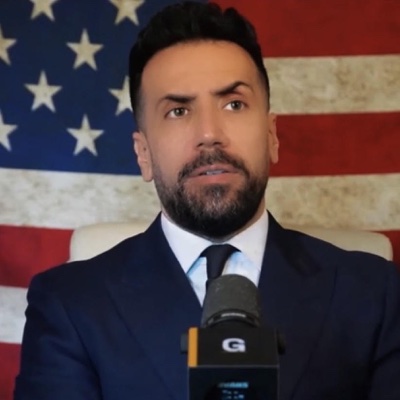
Steve Schmidt, a former political strategist for President George W. Bush and the McCain presidential campaign, delivered a scathing assessment of Treasury Secretary Scott Bessent this week.
"He is, bar none, the worst treasury secretary in the history of the United States," Schmidt said. "Because the first treasury secretary was a true genius, the distance between Alexander Hamilton and Bessent in evolutionary scale is the difference between a flea and a human being. He is inept, he is incompetent, he is dishonest, he is smug, he is craven."
Bessent, a billionaire hedge fund manager and former Democratic donor, serves as President Donald Trump's Treasury Secretary. He graduated from Yale in 1984 and held an influential role in George Soros's London investment operations, including the 1992 bet against the British pound. Bessent previously donated to Democratic causes in the early 2000s, including Al Gore's presidential campaign, before becoming an adviser and advocate for Trump's economic nationalism.
Schmidt's remarks came after Bessent testified before Congress on Tuesday regarding the nation's $40 trillion national debt and the administration's handling of Venezuelan oil funds. During that hearing, Bessent described Venezuelan oil revenue as "one of the largest assets ever to go on the US balance sheet."
That characterization contradicts President Trump's executive order signed Jan. 9, which explicitly states the money is "property of the Government of Venezuela," held by the United States "solely in a custodial and governmental capacity." Critics argue that funds held in custodial capacity are not assets of the United States.
Bessent declined to provide Congress with the total amount of Venezuelan funds held by the U.S. stating he "won't give out" the figure. Public records show the Treasury received $14.5 billion from this source since January, compared to a normal annual intake of $3.4 billion. About $3.5 billion has been documented returning to Venezuela, leaving roughly $7.5 billion unaccounted for publicly.
Bessent promised Congress a written agreement in February detailing the funds' handling, but it has not yet been produced. When asked Tuesday about its delivery, Bessent responded, "I'll check with my staff."
The handling of Venezuelan assets has involved several controversial entities and individuals. Trafigura, a Swiss trading house that now markets Venezuelan oil, pleaded guilty in Miami federal court in March 2024 to bribing Brazilian officials and paid $126 million. The company received a no-bid contract to market Venezuela's oil "at the request of the U.S. government."
Vitol, another trading firm, paid $135 million in 2020 under a deferred prosecution agreement for bribery in three countries. One of Vitol's senior traders donated $5 million to the President's super PAC and was present at the White House on Jan. 9, where he reportedly told President Trump his "influence over the Venezuelans" would ensure desired outcomes. Vitol secured its first contract five days later.
The Pentagon also took a 35 percent stake alongside Venezuelan businessman Alejandro Betancourt. Betancourt's prior company, Derwick Associates, won billions in no-bid power-plant contracts under former Venezuelan President Hugo Chávez. Federal prosecutors in Miami named Betancourt as an unindicted co-conspirator in a $1.2 billion scheme to launder money from PDVSA, Venezuela's state-owned oil company. Betancourt hired Rudy Giuliani in 2019 to lobby the Justice Department regarding the investigation, which was paused earlier this year. Spain reopened its own case against him in June. Betancourt denies wrongdoing and has never been charged.
Former congressman David Rivera was convicted on May 1 of acting as an unregistered foreign agent. Rivera had taken a $50 million contract from Citgo's parent company to lobby for normalizing relations with the Maduro government. Senator Marco Rubio testified at Rivera's trial. Rubio's State Department now signs off on every dollar that leaves the Venezuela account.
President Trump has stated the U.S. "paid for that war many times over" and that "to the victor belong the spoils." The executive order, however, states the money is not U.S. property.