CHAMONIX, France — The Mont-Blanc massif is experiencing intensified rockfalls, with blocks cascading down the Goûter Couloir and sections of mountain detaching beneath the Aiguille du Midi. Climbers have reported near-continuous stone falls in the Grand Couloir du Goûter, known as the "corridor of death."
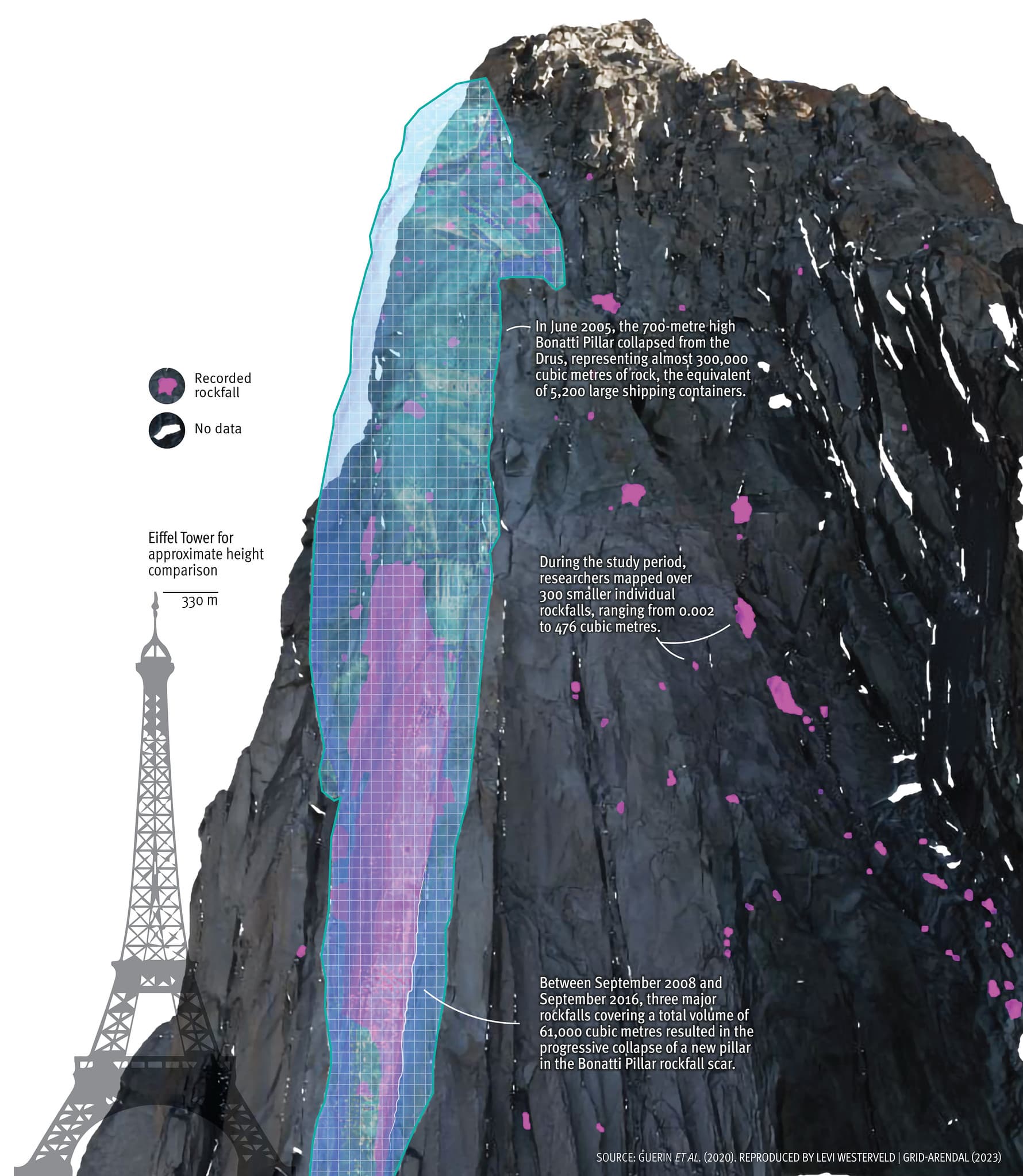
These rockfalls follow weeks of exceptionally high temperatures and drought. The absence of nocturnal refreezing cycles and progressive degradation of permafrost are weakening mountain walls. Ice within fissures is warming or disappearing, increasing water circulation and causing previously stable blocks to detach.
The connection between hot summers and wall instability in the Mont-Blanc massif has been documented for years. A study of the Chamonix needles found that over 70 percent of recorded collapses since 1947 occurred during the 1990s and 2000s, with peak frequency during particularly hot summers.
In response to escalating danger, the Saint-Gervais town hall closed the Tête Rousse and Goûter refuges on Aug. 11. The measure aims to discourage alpinists from using the standard Mont-Blanc route, as the municipality does not generally prohibit climbing.
Local guide companies from Chamonix and Saint-Gervais-Les Contamines had already ceased guiding operations on this route. Jean-Marc Peillex, mayor of Saint-Gervais, described crossing the Goûter couloir as extremely hazardous in a statement to Le Dauphiné Libéré, emphasizing the severe risks posed by continuous rockfalls.
Peillex said such closures can no longer be considered exceptional. Similar measures were implemented in 2015 and 2022. He indicated that closures will likely recur annually and raised the possibility of routinely keeping the refuges closed between July 20 and Aug. 15, redirecting climbers to alternative activities during that period.