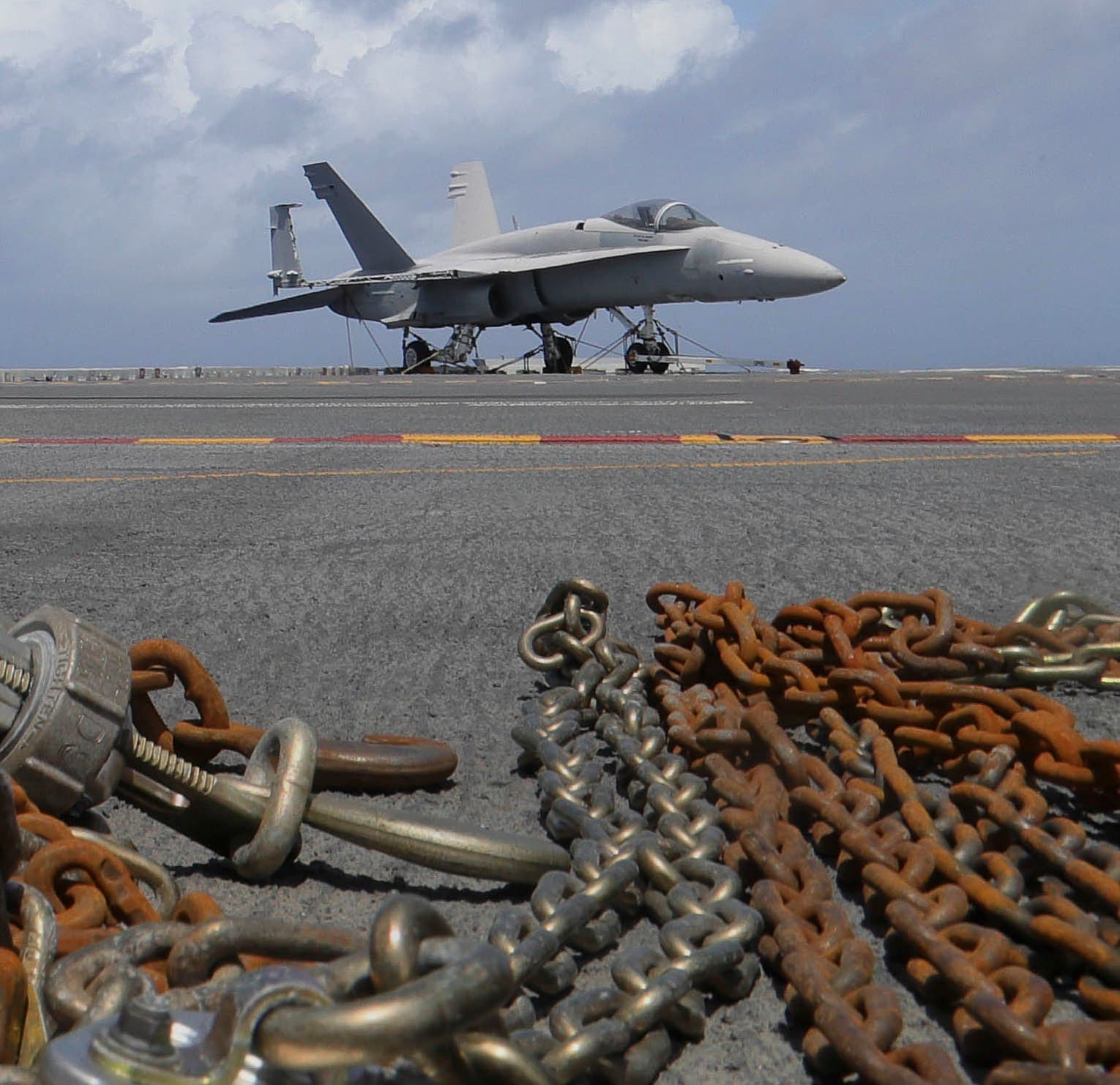
The USS Abraham Lincoln just completed a 260-day deployment at sea without a single port call, a record that exposes how far the U.S. Navy has been pushed to meet global commitments.
Crewmembers spent most of that time operating in a war zone. Reports from aboard documented deteriorating food quality and mental health struggles—symptoms of a fleet stretched past its breaking point.
On pa the U.S. Navy commands 11 aircraft carriers. In practice, only a fraction are available for deployment at any moment. The rest sit in home ports undergoing routine maintenance or multiyear refurbishments that keep them off the water for months or years.
The Trump administration's operational tempo has aggravated the problem. Carriers have been pulled repeatedly to support operations against Venezuela and Iran. The USS Gerald Ford, just back in Norfolk, Virginia, after nearly 10 months at sea. The USS John F. Kennedy faces construction delays that will keep it from deploying. When the Lincoln needed relief in the Middle East this week, the Navy had only one option: the USS George Washington.
The squeeze extends beyond carriers. Nearly half of the Marine Expeditionary Units are committed to Venezuelan or Iranian operations. Air defense systems—already scarce—have been diverted to the Middle East.
The Pentagon has identified a shortfall in sophisticated weapons and flagged chronic underinvestment in military capacity. The Trump administration responded with a sweeping plan: dramatically expand the military's size, accelerate weapons production, and allow foreign shipbuilders to construct Navy vessels overseas—provided they invest in expanding U.S. shipbuilding capacity in return.
The administration also scrapped a complex piece of naval technology that had become a symbol of Pentagon waste. New Ford-class carriers, beginning with the USS Doris Miller, will use traditional steam catapults instead of the electromagnetic aircraft launching system that has delayed earlier carriers and sent costs soaring. Construction on the Doris Miller begins in 2029.
The shift prioritizes speed over technological reach—a tacit admission that the Navy's current trajectory, left unchecked, would leave the fleet smaller and older than the threats it faces.