SAN FRANCISCO — Battery materials startup Sila closed a $300 million private equity round on July 21 to expand its Moses Lake, Washington, manufacturing campus. Atreides Management and Sutter Hill Ventures led the round, with 8VC, Bessemer Venture Partners, Matrix Partners and funds advised by T. Rowe Price Associates joining as participants.
The timing is deliberate. U.S. EV demand has weakened since the $7,500 federal tax credit ended in September 2025, and automakers have pulled back on battery-electric programs. Honda stopped production of its Prologue electric SUV after the 2026 model year. Rival battery startups have cut projects and laid off staff. Sila raised $300 million anyway.
The reason is the customer list. Sila's pitch to investors now centers on AI hardware, robotics, aerospace and defense rather than passenger vehicles. The company frames three forces as its new demand drivers: the AI power crunch, rising energy costs and geopolitical pressure for domestically sourced advanced defense components. All three require batteries. None depend on EV adoption rates.
Sila's core product is Titan Silicon, a silicon-carbon anode material that replaces graphite in lithium-ion cells. The company said Titan Silicon can improve cell energy density by roughly 20 percent and enable fast charging in under 10 minutes in certain applications. For a consumer EV, those numbers matter at the margin. For a military drone, a satellite or a robotic platform where weight and run time determine mission success, a 20 percent energy density gain is the difference between a product that works and one that doesn't.
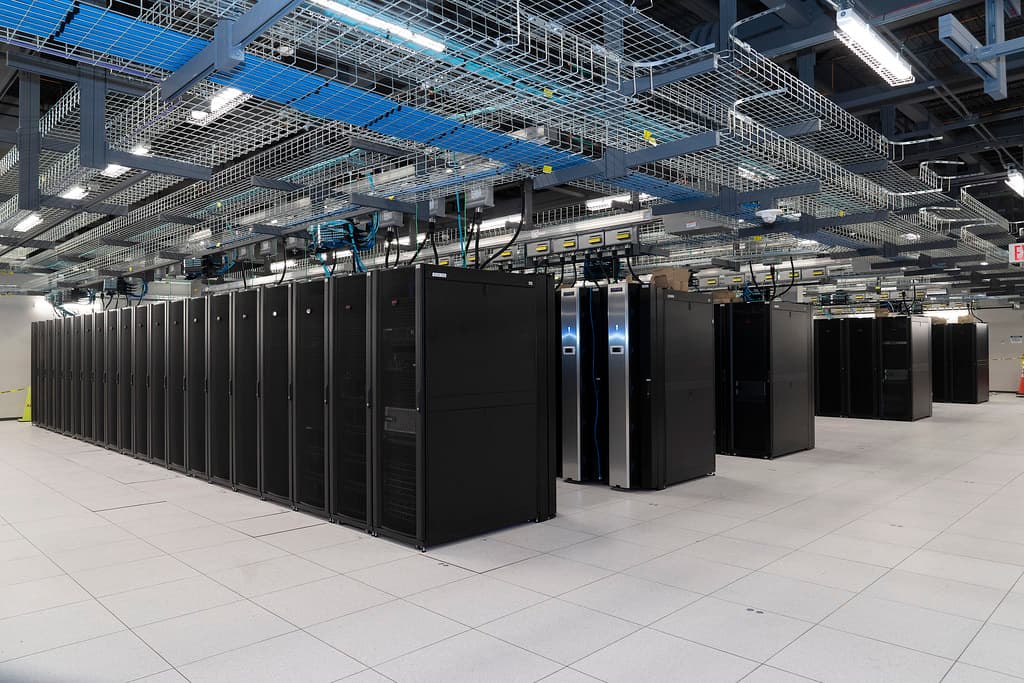
The Moses Lake campus is operational. Sila said it completed construction and began operations there in fall 2025. The facility spans 160 acres and runs at two gigawatt-hours of annual anode production capacity in its Phase 1 configuration. Phase 2 is the expansion this round funds: Sila said the plant is designed to reach up to 250 gigawatt-hours of annual capacity over the next five years. If the company reaches that number, Moses Lake would be the largest anode production facility in the world.
Two gigawatt-hours to 250 gigawatt-hours is a 125-fold scale. That is the actual business risk in this round. Silicon anode manufacturing at scale carries yield, materials cost and process control challenges that graphite-based production does not. Sila is asking investors to fund that journey before the destination is proven, which is why the investor syndicate matters as much as the dollar figure. Atreides and Sutter Hill both have histories of funding capital-intensive bets at early stages; T. Rowe Price brings balance-sheet scale that signals confidence in the multi-year buildout.
The AI data center angle is not abstract. Battery startups have found a real market in smoothing split-second power surges inside hyperscale facilities, where grid power quality can degrade sensitive compute hardware. That application rewards energy density and cycle life over raw cost-per-kilowatt-hour—exactly where silicon anodes have an advantage over graphite. For edge AI deployments in drones and robotics, where weight budgets are tight and recharging is infrequent, the performance premium commands pricing that EV supply chains rarely allow.
The defense and aerospace case is built on sourcing as much as performance. The U.S. government has pushed to reduce dependence on Chinese anode materials, which dominate global graphite supply chains. A domestically manufactured silicon anode produced at scale in Washington state addresses that sourcing requirement directly. Moses Lake's Phase 1 capacity already puts Sila inside that conversation; Phase 2 would make it a primary supplier for any program requiring domestic battery content.
Sila's diversified market pitch carries its own risk. Drones, robotics, defense and AI infrastructure are each real markets, but they are also fragmented, and none individually approaches the volume that passenger EVs once promised. Sila is betting that the aggregate across those verticals justifies a plant built to 250 gigawatt-hours. The company has not disclosed revenue figures or named anchor customers for the non-EV segments publicly, which leaves the commercial validation of that thesis unverified.
What the round does establish is that institutional capital is still willing to fund domestic battery manufacturing at scale when the story moves away from consumer vehicles. The question Sila now has to answer is whether the drone, robotics and AI hardware markets can absorb enough volume, fast enough, to justify Moses Lake's eventual footprint.