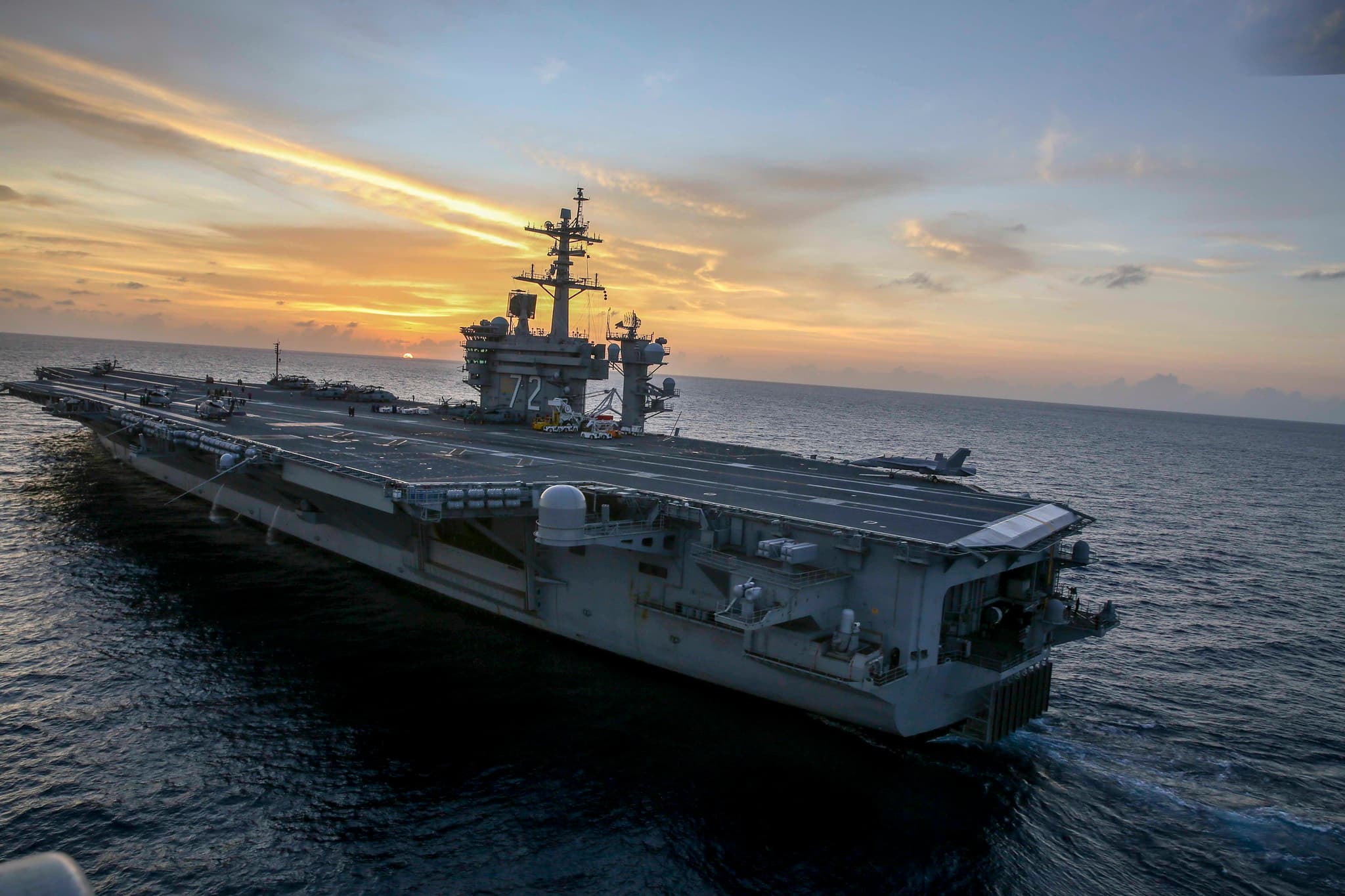
WASHINGTON — Sen. Ruben Gallego said Sunday that reported conditions aboard the USS Abraham Lincoln prove President Donald Trump views service members as toys, escalating a partisan fight over an aircraft carrier deployment that has stretched nearly nine months in the Middle East.
Gallego, an Arizona Democrat and former Marine, told ABC News that the problems are current and ongoing — not historical. "I was just speaking to a spouse just about three days ago and this is the current problems right now," Gallego said. He placed the blame squarely on planning failures at the top: "It really goes to the deep problem here is that this administration did not plan for this war, did not plan how to get out of this war, did not really understand how this war was going to escalate."
The Lincoln has been at sea for close to nine months and has gone more than 200 days without a port call — an extended stretch that drew Democratic calls for a congressional investigation into conditions and morale aboard the ship.
Defense Secretary Pete Hegseth dismissed the reports as completely misrepresented. Trump, asked directly about the length of the deployment, said it is "not nearly long enough." Gallego said those responses will cost the military when sailors weigh whether to re-enlist. "When they get back to home, when they start having that conversation with their wife or with their husband — is it worth rejoining? They're going to have to think twice because look at how this leadership is treating them," Gallego said. He called it "a true lack of leadership from the secretary of Defense as well as the president."
Retired Adm. Mike Mullen, former chairman of the Joint Chiefs of Staff, offered a more measured read but did not endorse Trump's framing. Mullen told ABC News that extended carrier deployments are common and often run past their stated timeline. But he pushed back on the president's suggestion that a longer deployment is preferable. "We learned in Vietnam, we deployed for a year at a time there. That's just too long. You wear yourself out," Mullen said. "These ships, these people, these families need to basically come back."
Mullen said he spoke Saturday evening with U.S. Central Command commander Brad Coo who told him the reported problems aboard the Lincoln have been resolved. Cooper visited the ship and announced to the crew that it is heading home. "One of the positives of Cooper's visit yesterday is he announced to the crew that they're going home, and so the morale is up significantly from where it was just a few days ago," Mullen said.
The Navy's replacement plan is already in motion. The USS George Washington departed its station in the Pacific last week and is expected to take over for the Lincoln in the Middle East. Acting Navy Secretary Hung Cao confirmed publicly that the Lincoln is returning home.
The political divide over the Lincoln tracks sharply along party lines. Democrats frame the deployment as evidence of a White House that failed to plan for or limit a war with Iran and is now unwilling to acknowledge the cost to the sailors involved. Republicans, led by Hegseth and Trump, argue the reports were overblown and that the mission's length reflects operational necessity.
Gallego's intervention carries personal weight. He served in the Marine Corps and has positioned himself as a veteran voice within the Democratic caucus on military affairs. His warning that Trump's comments risk driving experienced service members out of the military is a direct challenge to the administration on recruitment and retention — an issue the Pentagon has flagged as a priority.
Mullen, who served as Joint Chiefs chairman under Presidents George W. Bush and Barack Obama, did not endorse Gallego's political framing but independently validated the core concern: that deployments of this duration take a measurable toll on crew readiness and family stability. His account of Cooper's Saturday call offers the clearest signal yet that military leadership recognized an internal problem and moved to address it before it became a larger personnel issue.
The Lincoln's situation now sits at the center of a broader argument about who controls the narrative on military welfare — the administration, which says the mission demanded the deployment and conditions are fine, or Democrats, who say the sailors themselves are telling a different story.