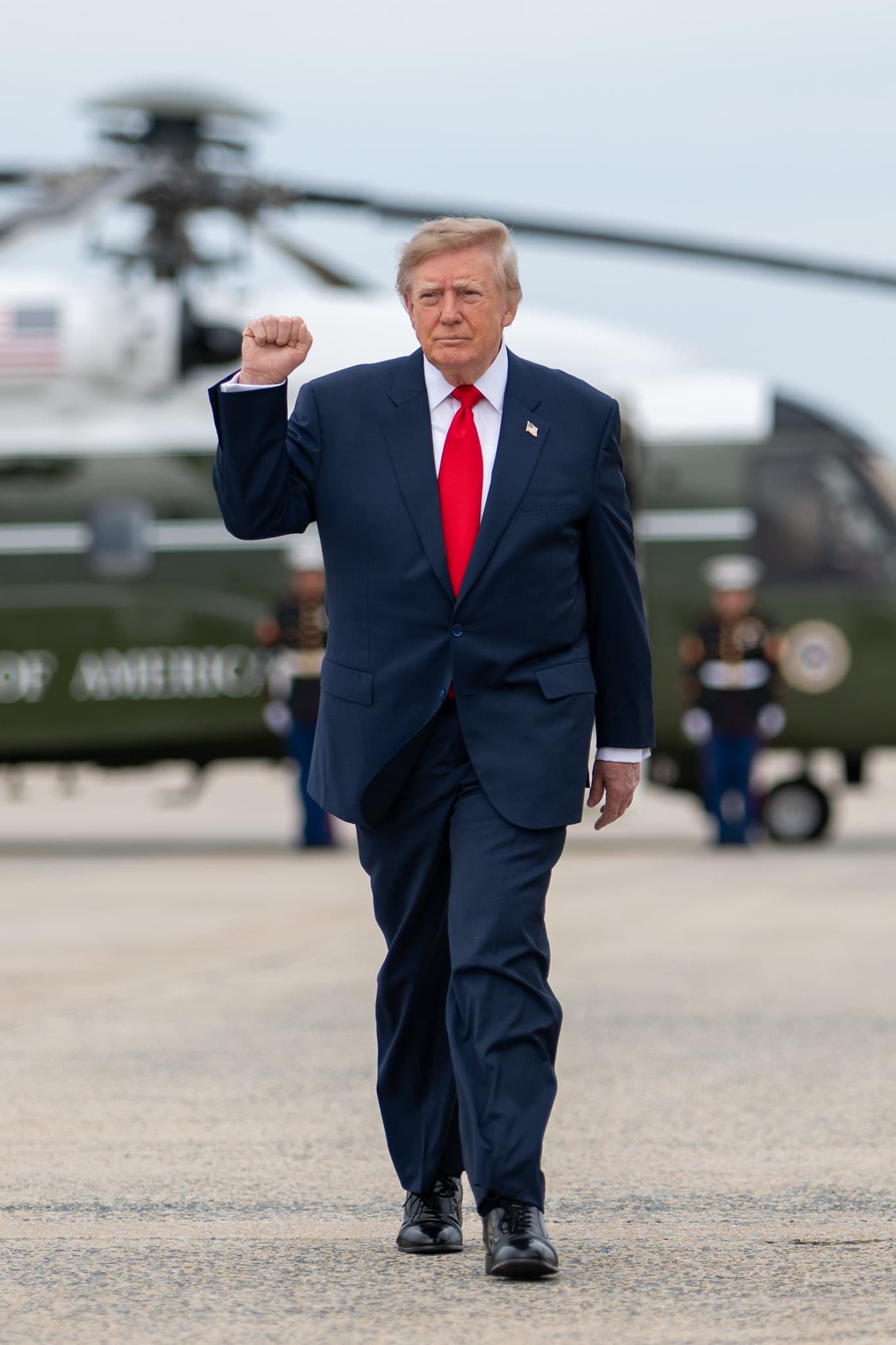
WASHINGTON — President Donald Trump filed an emergency petition with the Supreme Court asking the justices to allow construction of the East Wing Ballroom to continue, then capped the night with a late Friday post on Truth Social calling his legal opponents "treasonists" who "revealed Top Military Secrets."
The target of Trump's post is the National Trust for Historic Preservation, the nonprofit that sued the Trump administration in December 2025. The group argued the administration bypassed required regulatory and authorization channels when construction began. Two federal courts agreed: the U.S. District Court for the District of Columbia ruled against the administration, and a federal appeals court upheld that ruling. The Supreme Court petition is the administration's third attempt to keep construction moving.
"These are the TREASONISTS that brought the suit against the Military Complex. They revealed Top Military Secrets!" Trump wrote on Truth Social on Friday. He argued the nonprofit's decision to proceed with the lawsuit put classified plans for a military bunker beneath the ballroom at risk, claiming the group was shown detailed specifications by senior military and Secret Service officials before filing.
"They were asked by the United States Military not to bring this suit because of the Top Secret nature of the important facility being built. They were shown detailed plans and specifications of this knitted, unified, and cohesive structure by Top Officers and Leaders in both the Military and Secret Service. But this did not deter them because they suffer from Trump Derangement Syndrome," Trump wrote.
Trump framed the construction as essential to the security of the presidency, not only for himself but for future occupants of the White House. "They are very bad for our Country. They stop many projects that are worthy, and hurt many others. In this case, they are trying to stop one that is vital to our National Security, and the Safety of all Presidents of the United States, both current and future, their families, staff, and Cabinet members," he wrote.
The administration has tried this argument before. After a shooting at the White House Correspondents' Association dinner in April 2026, Trump said the attack would have "never" occurred if the event had been held in the East Wing Ballroom. Civil Division Assistant Attorney General Brett Shumate sent a letter to the National Trust's attorney in April urging the group to drop what he called a "frivolous lawsuit." Shumate wrote: "I hope yesterday's narrow miss will help you finally realize the folly of a lawsuit that literally serves no purpose except to stop President Trump no matter the cost."
"Your client should voluntarily dismiss this frivolous lawsuit today in light of last night's assassination attempt on President Trump," Shumate wrote in the letter. "Enough is enough."
The National Trust refused. Its attorney, Gregory Craig, said at the time that the lawsuit did not endanger the president or national security. Craig's argument that the litigation posed no security threat ran directly counter to what Shumate and the administration had claimed.
The legal fight turns on a procedural dispute: whether the administration followed established historic preservation law before breaking ground. The National Historic Preservation Act requires federal agencies to consult with relevant bodies and complete a formal review before altering protected structures. The National Trust argues those steps were skipped. The administration has not disputed the procedural timeline but argues national security overrides the preservation statutes.
The case now sits before the Supreme Court, which has not yet ruled on the emergency petition. If the justices deny it, construction stays halted while the underlying litigation proceeds. If they grant it, work can resume even as the legal challenge continues in the lower courts.
The National Trust for Historic Preservation is a congressionally chartered nonprofit founded in 1949. Its lawsuit, filed in December 2025, represents one of the more unusual confrontations between a preservation organization and a sitting president. The administration's decision to characterize that lawsuit as a national security threat—and now to label the group's members "treasonists"—marks a sharp escalation of what began as a regulatory dispute over construction permits and approval timelines.
Trump's treason allegation carries no formal legal weight; the president made it in a social media post, not a court filing. But the administration's position, now argued before the nation's highest court, is that the ballroom's underlying military infrastructure is so sensitive that even litigation touching on it endangers the country. Craig and the National Trust have rejected that framing in court and in public.