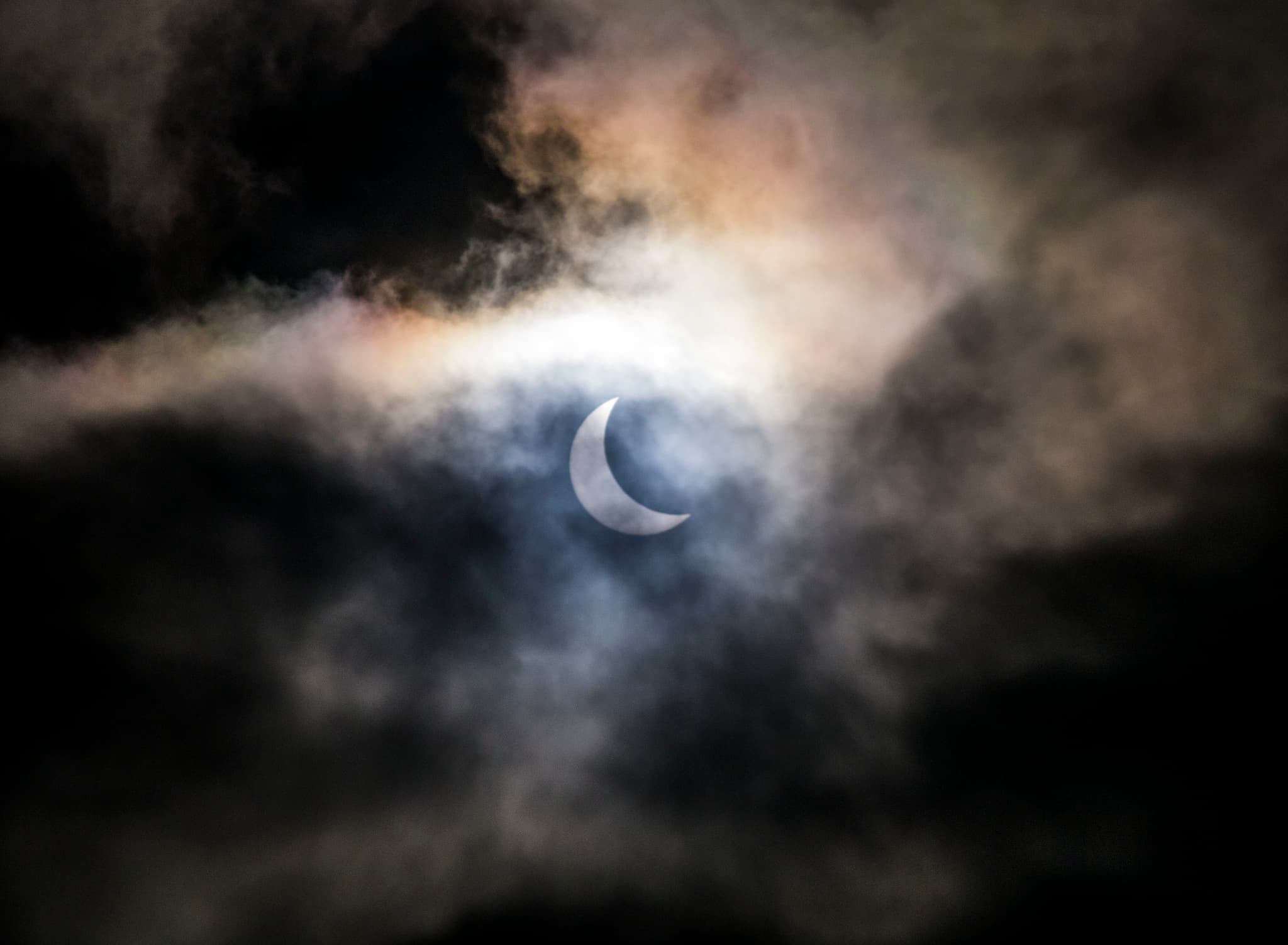
A partial solar eclipse will be visible across parts of the United Kingdom and Channel Islands today, Aug. 11, with the moon blocking a substantial portion of the sun and drawing comparisons to the total solar eclipse that captivated the region on Aug. 11, 1999.
In Devon and Cornwall, the partial eclipse is set to begin at approximately 6:18 p.m. local time, reach its peak at 7:15 p.m. and conclude around 8:09 p.m. Residents of Guernsey and Jersey can expect similar timings, starting at about 6:21 p.m. peaking at 7:17 p.m. and ending near 8:10 p.m.
Today's celestial display occurs 27 years after the last total solar eclipse visible from the UK. That 1999 event plunged parts of Cornwall and the Channel Islands into daytime darkness, marking the final total eclipse of the 20th century for the British Isles.
Barbara Logan, who witnessed the 1999 eclipse in Shortlanesend near Truro, described the experience as a "weird sensation." She recalled the sudden onset of darkness and birds singing as they prepared to roost.
Nigel Brown, who visited Truro that day, said it was a "wonderful but really eerie experience" as day turned to dusk and birds fell silent.
In St Peter Port, Guernsey, hundreds of people gathered along the seafront to watch the 1999 totality. Anne Le Cheminant described it as a "gigantic, awesome event" as the moon cleared the sun.
Alderney, the third-largest Channel Island, offered some of the best vantage points for the 1999 eclipse despite initial cloud cover. Former BBC News correspondent Simon Hall reported from the island, where more than 250 astronomers had gathered alongside local islanders.
Hall said eclipse day in Alderney was a "tease," with clouds obscuring the first half of the event. He said a sharp temperature drop came around 11:00 a.m. as totality neared, but the clouds cleared just at 11:16 a.m.—the moment of totality.
Today's partial eclipse is the deepest visible from the UK since the 1999 event, with the moon covering approximately 90 percent of the sun. The United Kingdom's next total solar eclipse is projected for 2090, according to Royal Museums Greenwich.