WASHINGTON — Spain won the FIFA World Cup final over Argentina in front of more than 80,000 fans, and the tournament closed as a showcase of American hospitality that drew visitors, spending and goodwill from across the globe. The question now for Congress and the White House is whether the policy architecture that made it work survives past the closing ceremony.
C. Stewart Verdery Jr. who served as assistant secretary of Homeland Security in the Bush administration and now leads the GREAT USA Coalition, argues in a new essay that the United States has a short window to lock in the gains. His case rests on a clear historical pattern: after the Sept. 11 attacks, the United States overhauled its security apparatus and built a new Department of Homeland Security. Those reforms were necessary, but travel to the United States fell 17 percent over the five years that followed.
The recovery took deliberate work. A bipartisan advisory committee called Secure Borders and Open Doors identified the tension at the core of the problem. Its report concluded: "Our long-term success requires not only that we deter and detect determined adversaries, but also that we persuade millions of people around the globe of our ideals — democratic freedom, private enterprise, intellectual pursuit, technological achievement. That persuasion requires human interaction, and each visitor to the United States represents such an opportunity."
The Bush and Obama administrations adopted dozens of that committee's 44 recommendations. They expanded the Visa Waiver Program, launched Brand USA as a dedicated travel-marketing operation, created the Global Entry trusted-traveler program and cut visa wait times. Travel to the United States rose nearly 30 percent between 2010 and 2015, producing substantial economic returns across the hospitality, retail and aviation sectors.
The gains did not hold. Illegal immigration politics and the COVID-19 pandemic pushed the federal government toward what Verdery describes as a mix of hostility and indifference toward international visitors. The 2026 World Cup, he argues, has reopened the conversation.
Verdery identifies five specific steps he says Washington should take now. The first is legislation giving the State Department permanent authority to manage visa processing for large-scale events. For the World Cup, the department ran a program called the FIFA Pass, which guaranteed timely visa interviews for ticket holders. Verdery said that authority should extend to major conventions and sporting events without loosening underlying security standards.
The second involves expanding eligibility for existing trusted-traveler programs. The Visa Waiver Program already requires high security cooperation standards from participating countries; Global Entry speeds pre-cleared, low-risk travelers through customs. Both programs have room to grow, Verdery said, by bringing additional countries into compliance with U.S. security benchmarks rather than leaving them outside the system.
The third step addresses the Trump administration's travel restrictions on 39 countries, imposed because of inadequate law enforcement cooperation or related concerns. Verdery does not argue those restrictions are wrong — he acknowledges they may be justified — but said the administration should create a formal appeals process tied to measurable improvements in law enforcement cooperation. Without one, the restrictions generate diplomatic friction with no off-ramp.
The fourth step is the most direct: reverse two decisions made by Congress in 2025. Congress cut the marketing budget for Brand USA and imposed a $250 visa fee surcharge. Verdery calls the marketing cut a self-inflicted wound and said the fee surcharge should be officially abandoned by the Trump administration. Brand USA's purpose is to generate inbound tourism spending that far exceeds its operating cost; cutting its budget to close a budget gap trades a small short-term saving for larger long-term revenue losses.
The fifth involves domestic infrastructure. Verdery credits the Trump administration for prioritizing air traffic control reform and airport modernization, including work at Washington Dulles. He said deploying autonomous vehicles and improving urban transit safety belong on the same list — the visitor experience does not end at the customs hall.
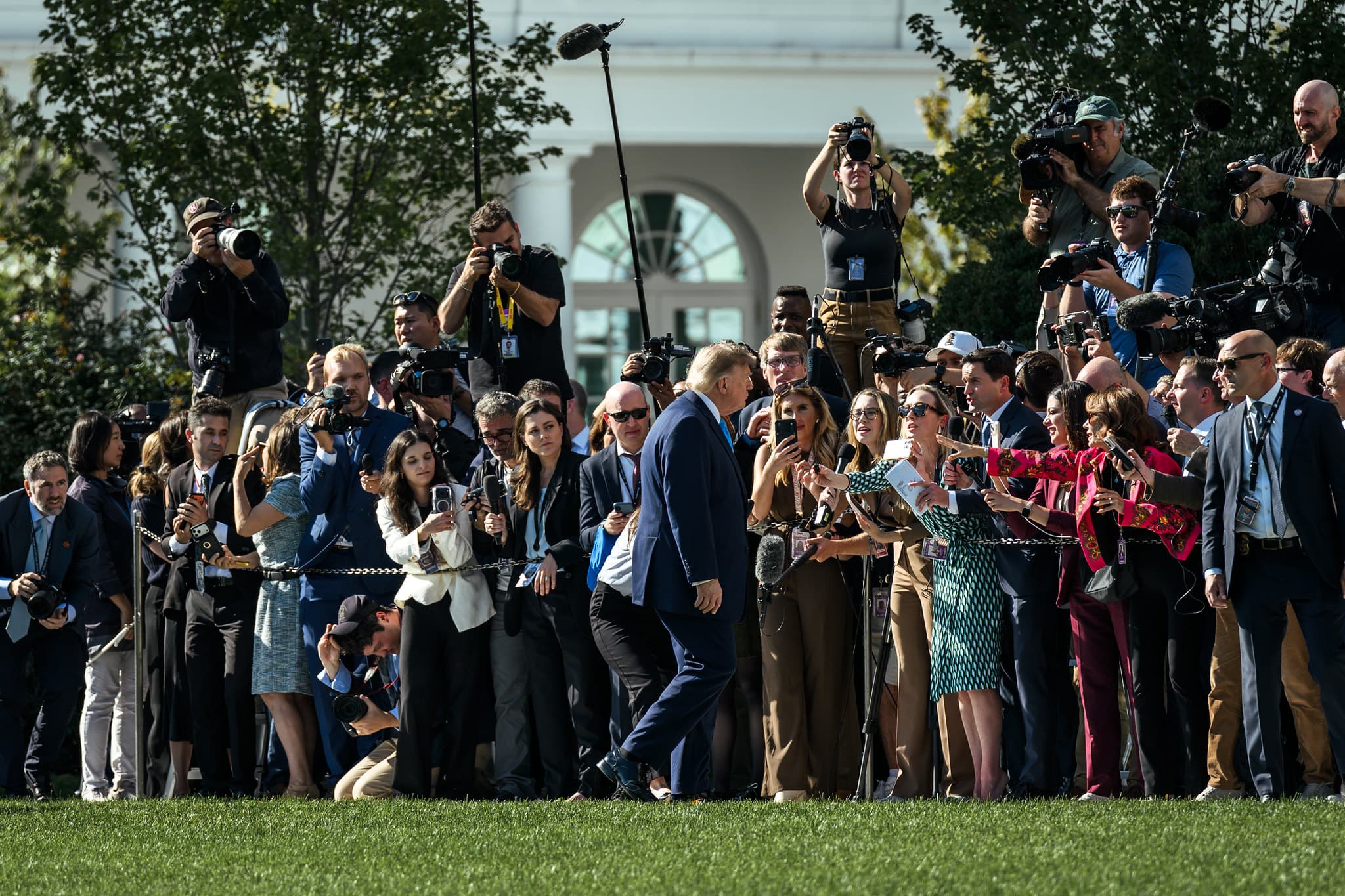
President Trump drew visible credit for treating the tournament as a national priority. The White House World Cup Task Force, directed by Andrew Giuliani as executive director, coordinated with federal agencies, host cities, foreign governments and the private sector. Trump's personal appeal to FIFA president Gianni Infantino over a red card issued to U.S. striker Folarin Balogun led FIFA to review and soften the resulting suspension.
The tournament's political atmosphere was not without friction. The final put Trump in the position of handing the trophy to Spain — a country he had called "hopeless" days earlier — and congratulating Prime Minister Pedro Sanchez, whom he had publicly criticized over NATO spending. In the VIP suite, Trump sat alongside Mexican President Claudia Sheinbaum despite ongoing tariff disputes and border tensions, and Canadian Prime Minister Mark Carney attended as well. Trump reportedly raised the subject of Canadian wildfire smoke compensation during the match.
Verdery's argument runs past the World Cup. The United States faces the America 250 celebration, the 2028 Los Angeles Olympic and Paralympic Games and a continuous calendar of major conventions, including the annual Consumer Electronics Show in Las Vegas. Each event is an opportunity to repeat what the World Cup demonstrated. Whether Congress restores Brand USA's budget and whether the administration formally drops the $250 surcharge will determine how much of that opportunity the country captures.