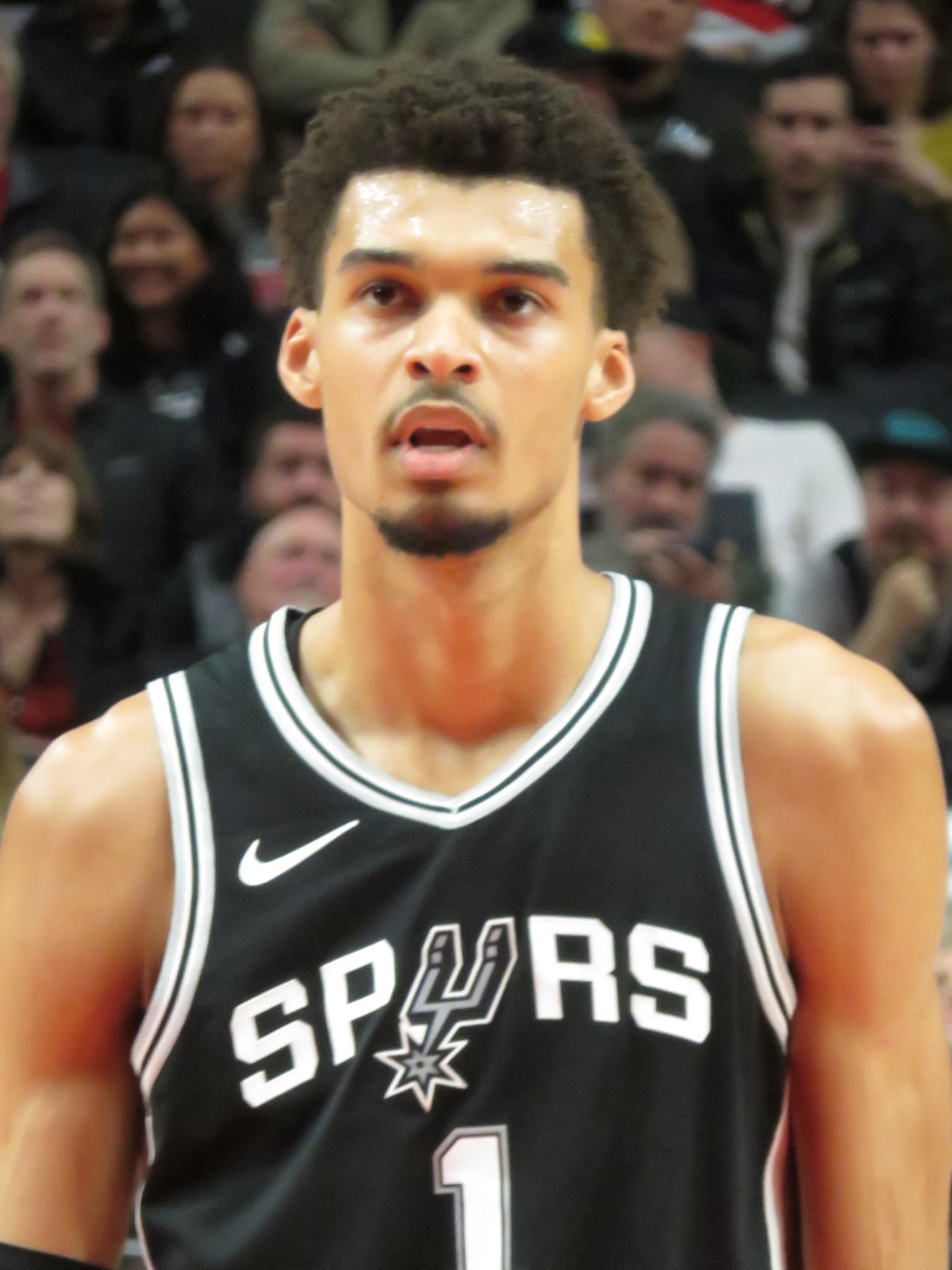
SAN ANTONIO — Spurs rookie Victor Wembanyama recently said he would be surprised if he did not unanimously win Defensive Player of the Year, a statement that might sound audacious from a first-year player on a struggling team but one firmly rooted in his unparalleled performance. This isn't just a young star talking big; it's a cold assessment of a season where Wembanyama has redefined what's possible on the defensive end. His confidence reflects a season of historic individual dominance, forcing the league to reckon with a defensive force unlike any seen in decades, regardless of his team's overall record. The audacity of his claim is matched only by the statistical evidence supporting his case for the league's top defensive honor.
Wembanyama's defensive statistics are not just impressive for a rookie; they are historic for any player in the modern NBA. He currently leads the league with 3.6 blocks per game, the highest mark since Hassan Whiteside's 3.7 blocks per game in the 2015-16 season. Beyond his rim protection, Wembanyama also averages 1.3 steals per game, demonstrating his ability to disrupt passing lanes and guard perimeter players effectively. His defensive rating, despite the Spurs' overall struggles, consistently hovers among the league's elite when he's on the court, fundamentally altering opponent shot selections and offensive schemes. These numbers anchor the argument that he has been the most impactful defender in the league from day one.
The larger narrative surrounding Wembanyama's DPOY candidacy extends beyond individual statistics to his profound impact on San Antonio's defensive identity. Despite the team's poor record, which often detracts from individual awards, Wembanyama has almost single-handedly transformed the Spurs into a different defensive unit when he's on the floor. He covers up defensive deficiencies from his teammates, rotating seamlessly to protect the paint, closing out on shooters and switching onto smaller guards with shocking agility for a player of his size. His presence forces opposing teams to completely rethink their offensive strategies, often shying away from driving to the basket or attempting contested shots in his vicinity. This transformative effect, even within a losing season, underscores his value as a generational defensive anchor.
What this performance reveals about Wembanyama is a defensive identity built on unprecedented physical gifts combined with an advanced understanding of defensive positioning and timing. Standing at 7 feet 4 inches with an 8-foot wingspan, he doesn't just block shots; he erases them, often from angles that defy logic. He possesses an ability to read offensive plays, anticipating passes and drives to position himself perfectly for a block or steal. This combination of physical tools and basketball IQ allows him to effectively guard all five positions on the court for stretches. He functions as the ultimate defensive free safety, patrolling the paint, rotating out to the perimeter and recovering with incredible speed.
While other formidable candidates like Rudy Gobert and Anthony Davis have had stellar defensive seasons, Wembanyama's claim for DPOY is compelling due to his overall impact and the sheer volume of defensive plays. Gobert, a three-time DPOY winner, remains an elite rim protector and rebounder, but Wembanyama's ability to generate steals and switch onto smaller players offers a more complete defensive package. Anthony Davis has also been a defensive anchor for the Lakers, showcasing versatility and shot-blocking, yet Wembanyama's rookie season has simply transcended expectations with its statistical output and consistent disruption. The discussion is not about whether Gobert or Davis are excellent defenders; it's about whether anyone else has delivered a more impactful, game-changing defensive performance this season than the Spurs' rookie.
The historical context further amplifies Wembanyama's audacious claim: no rookie has ever won the Defensive Player of the Year award in NBA history. This unprecedented aspect of his campaign adds another layer of significance to his potential victory. While voters traditionally favor established veterans or players on top-tier defensive teams, Wembanyama's individual brilliance forces a reevaluation of these conventional criteria. His season challenges the notion that a player needs years of experience or a winning record to be recognized as the league's premier defender. If he were to win, it would not only be a testament to his immediate impact but also a groundbreaking moment for the league, acknowledging a new paradigm for defensive excellence.
Looking ahead, a Defensive Player of the Year award, especially a unanimous one, would solidify Wembanyama's status as a foundational pillar for San Antonio for the next decade and beyond. This recognition would not only enhance his individual brand but also significantly boost the Spurs' appeal to potential free agents looking to contend. It signals that San Antonio has the centerpiece around which to build a championship contender, accelerating their rebuilding timeline significantly. This award would be more than just personal hardware; it would be a powerful statement about the future trajectory of the entire franchise, signaling a new era of dominance.


