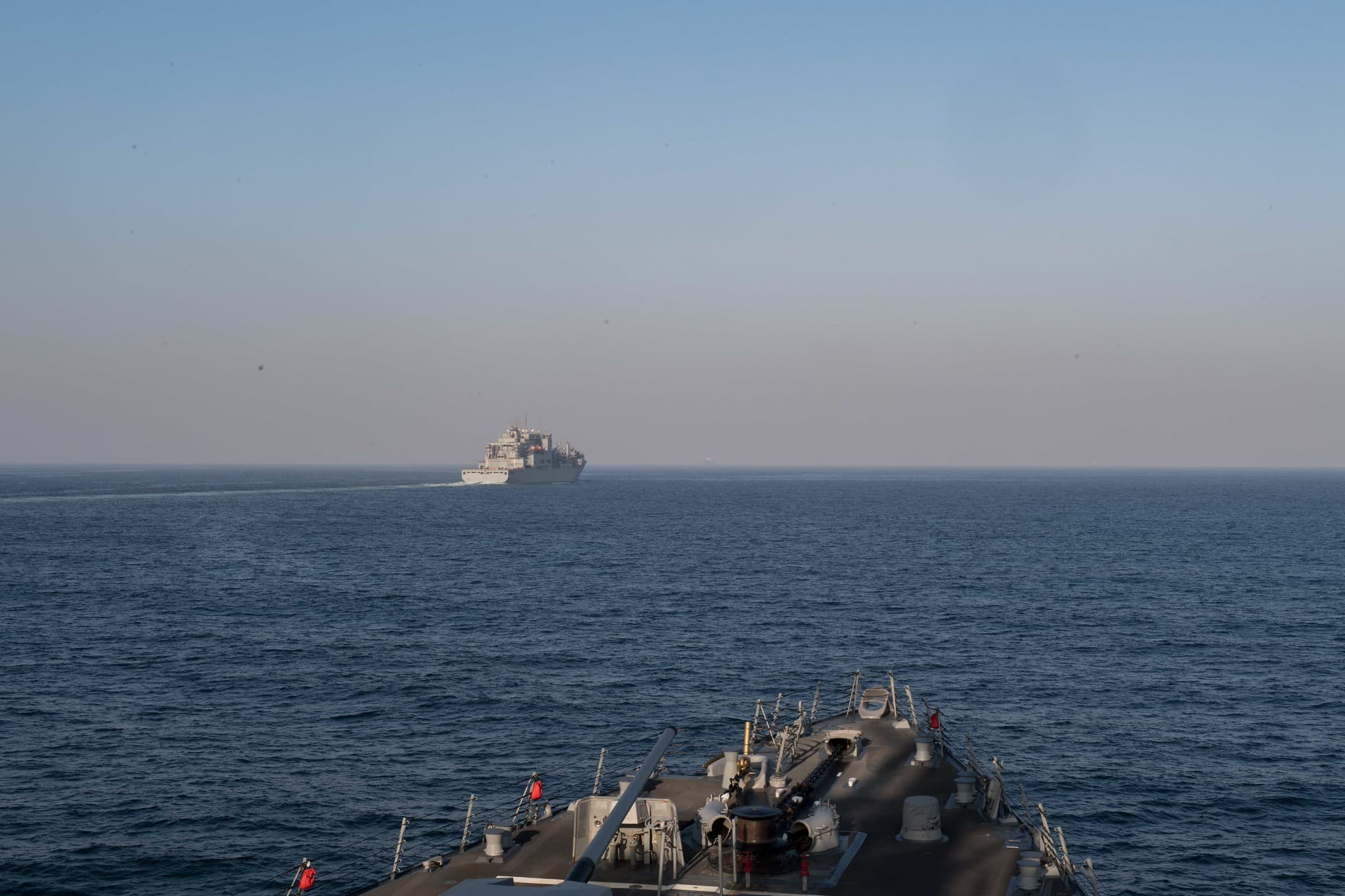
President Donald Trump said three U.S. destroyers successfully transited the Strait of Hormuz under fire, an event that immediately heightened concerns over Middle East stability and added geopolitical uncertainty for equity markets already navigating inflation and interest rate pressures.
The incident serves as a direct catalyst for U.S. defense contractors. Lockheed Martin (LMT), Raytheon Technologies (RTX) and Northrop Grumman (NOC) typically see increased investor interest during periods of heightened global tension. These firms benefit from potential increases in defense budgets and international arms sales. The incident could strengthen arguments for higher military spending in upcoming congressional discussions regarding the annual defense authorization act.
The Strait of Hormuz remains a critical chokepoint for global energy flows, with approximately one-fifth of the world's oil supply—about 21 million barrels per day—passing through the narrow waterway. Historical disruptions in the strait have triggered sharp increases in crude oil prices and elevated shipping insurance premiums. Investors should monitor oil futures for sustained upward movement.
U.S. equity markets showed mixed reactions today. The Dow Jones Industrial Average dropped 0.6 percent to 49,597. The S&P 500 fell 0.4 percent to 7,337, while the Nasdaq Composite declined 0.1 percent to 25,806. Geopolitical risk premiums typically weigh on broader market sentiment, leading to flight-to-safety moves and increased volatility.
Investors should watch for Pentagon statements regarding transit specifics and subsequent diplomatic actions. Any escalation or de-escalation will directly influence energy markets and defense sector outlook. The next Department of Energy crude oil inventory report, scheduled for Wednesday, will provide updated supply and demand data for energy sector analysis.


