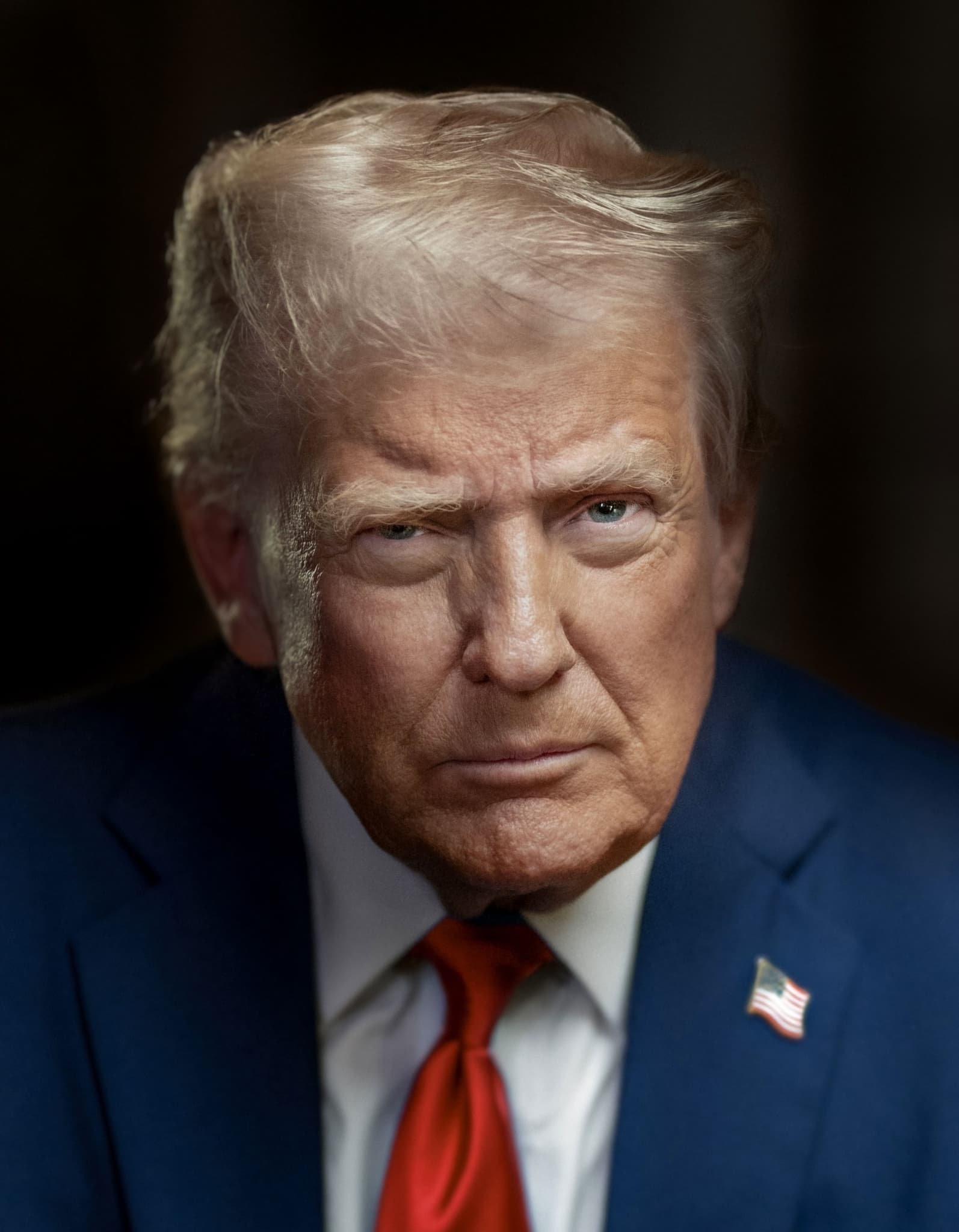
President Trump's declaration that he is reviewing an Iran peace plan while simultaneously considering new strikes has immediately injected a fresh wave of geopolitical uncertainty into global markets. This dual-pronged stance, signaling both diplomatic engagement and potential military action, creates a complex risk premium for fixed-income investors. The prospect of renewed tensions in a critical oil-producing region directly impacts energy supply chains, threatening to reignite inflationary pressures that central banks have worked diligently to contain over the past year. Market participants are now grappling with the potential for sudden spikes in commodity prices, which would inevitably complicate the Federal Reserve's delicate balancing act between price stability and economic growth.
Initial market reactions reflected this heightened caution. While the Dow Jones Industrial Average registered a modest decline of 0.3 percent, closing at $49,499, the S&P 500 managed a 0.3 percent gain to $7,230, and the Nasdaq Composite climbed 0.9 percent to $25,114, indicating a nuanced equity response with tech names like Apple and Microsoft showing resilience. In the fixed-income arena, U.S. Treasury yields broadly moved higher across the curve as investors priced in a greater inflation risk premium, particularly for longer-dated maturities. The U.S. Dollar Index, often a safe-haven asset during global instability, demonstrated strengthening against a basket of major currencies. Gold, another traditional safe haven, also saw directional upward movement, reflecting the immediate flight to quality as geopolitical concerns dominated trading desks.
This geopolitical development echoes historical periods of Middle East instability, providing a stark reminder of how quickly global events can reshape the macroeconomic landscape. During past conflicts, such as the Gulf War in the early 1990s or the lead-up to the Iraq War in the early 2000s, energy price shocks frequently translated into broader inflationary spikes, forcing central banks into difficult policy decisions. Fixed-income markets during these times typically witnessed a flight to safety in the most liquid sovereign bonds, often accompanied by a steepening of the yield curve as long-term inflation expectations rose. Corporate credit spreads would also widen, reflecting increased perceived default risk in sectors heavily exposed to energy costs or supply chain disruptions. This historical context underscores the potential for a significant recalibration of risk across asset classes if tensions escalate.
From a central bank perspective, President Trump's statements present a new layer of complexity for Federal Reserve Chair Jerome Powell and his counterparts at the European Central Bank and Bank of Japan. The Fed, in particular, has been navigating a challenging path to bring inflation back to its two percent target without stifling economic expansion. Any material increase in oil prices stemming from renewed Middle East conflict would directly undermine these efforts, potentially forcing a reassessment of the current monetary policy trajectory. While a significant risk-off event could theoretically prompt a dovish pivot, the inflationary implications of an energy shock would likely push the Fed towards maintaining a more restrictive stance for longer, or even considering further tightening if the situation deteriorates rapidly. This geopolitical overhang makes forward guidance exceptionally challenging and elevates the importance of upcoming inflation data.
For fixed-income portfolios, the implications are substantial. The current environment demands a careful re-evaluation of duration risk, as the potential for higher-for-longer interest rates — driven by persistent inflation from energy shocks — could lead to significant capital losses for long-duration assets. Yield curves are likely to reflect this uncertainty; an initial flight to safety could flatten the short end, but a dominant inflation premium would steepen the curve as investors demand higher compensation for holding longer-term bonds. Credit spreads, particularly within the energy and transportation sectors, are poised for compression as the market prices in greater default risk and funding costs for companies exposed to geopolitical volatility. Investment-grade corporate bonds could see their spreads widen relative to Treasuries, while high-yield segments face even greater pressure, prompting a renewed focus on credit quality and liquidity.
Cross-asset implications are broad and far-reaching. Equities will likely experience increased sector rotation; energy stocks could benefit from higher oil prices, while consumer discretionary companies might face headwinds from reduced consumer spending power. Technology giants like Apple, Amazon, and Alphabet could show relative resilience if the market views them as less directly impacted by geopolitical strife, but a broader economic slowdown would eventually weigh on all sectors. In the cryptocurrency space, Bitcoin, currently trading at $78,158, and Ethereum at $2,303, often exhibit a complex correlation with traditional risk assets. While some proponents view crypto as a hedge against fiat currency instability, geopolitical events frequently trigger sharp price swings, reflecting both risk-off sentiment and speculative flows. Commodities beyond oil, such as industrial metals, could also see increased volatility, depending on the perceived impact on global supply chains and demand.
Looking ahead, market participants will closely monitor any further statements from President Trump or his administration regarding the Iran policy review, as well as the immediate reactions from Tehran. Crucially, upcoming economic data releases, including the Consumer Price Index and Producer Price Index, will be scrutinized for any signs of renewed inflationary pressure directly attributable to geopolitical events. The next Federal Open Market Committee meeting will be pivotal, as Federal Reserve officials will have to weigh these new risks against their existing mandates. Scenario analysis suggests a range of outcomes, from a swift de-escalation that allows central banks to return to their prior focus, to a protracted period of elevated tensions that necessitates a fundamental shift in monetary policy expectations and asset allocation strategies.
The bottom line for Gokhshtein Media's macro outlook remains one of heightened vigilance and increased volatility. President Trump's statements have undeniably introduced a significant geopolitical risk premium into global markets, particularly within fixed income. This development complicates the path for central banks aiming for price stability and stable economic growth, suggesting that the era of predictable rate cycles may be temporarily suspended in favor of a more reactive policy stance. Investors must be prepared for potential shifts in yield curve dynamics, widening credit spreads, and an elevated duration risk, demanding a more tactical and defensive approach to portfolio management in the coming weeks and months. The market's focus has unequivocally shifted from purely domestic economic indicators to the complex interplay of geopolitics and global energy dynamics.


