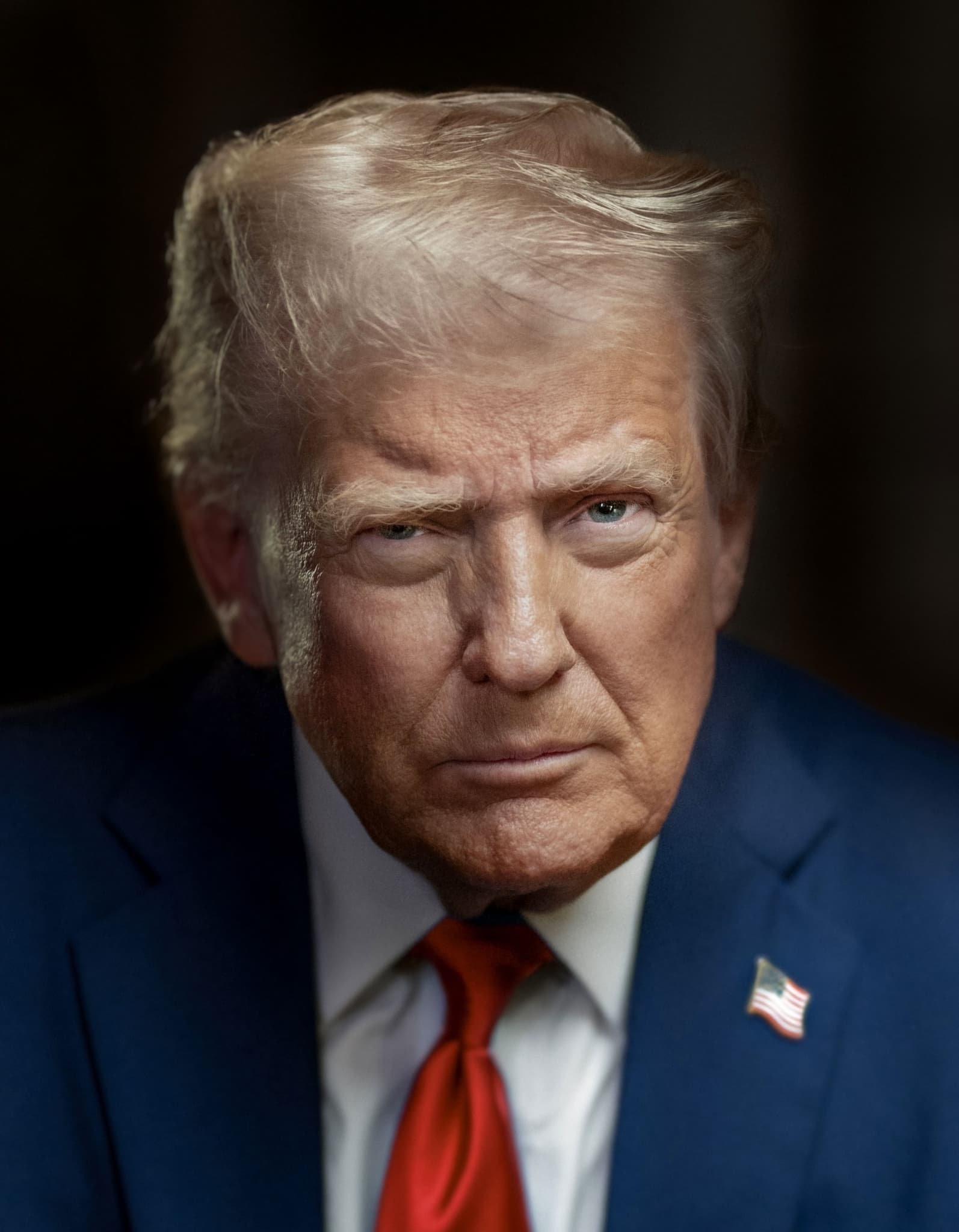
The U.S. equity market, broadly represented by the S&P 500's modest 0.3 percent gain to $7,230 and the Nasdaq's 0.9 percent ascent to $25,114 today, masks a deepening undercurrent of systemic risk that sophisticated investors cannot afford to ignore. This superficial calm belies a rapidly rising probability of a significant market correction, or even a crash, directly attributable to the escalating policy unpredictability and fundamental economic shifts engineered by President Donald Trump's administration. While megacap tech names like Apple, surging 3.2 percent to $280.14, and Microsoft, up 1.6 percent to $414.44, continue to prop up headline indices, the broader market’s vulnerability is reaching a critical inflection point that demands immediate portfolio re-evaluation.
The current market reaction demonstrates a clear divergence in investor sentiment, with the Dow Jones Industrial Average notably declining 0.3 percent to $49,499, indicating a lack of uniform conviction across sectors. This split performance, where high-growth technology names like Amazon, climbing 1.2 percent to $268.26, and Tesla, gaining 2.4 percent to $390.82, continue to attract capital, contrasts sharply with the struggles of other segments. The Russell 2000, often a bellwether for domestic economic health, posted a 0.5 percent gain to $2,813, yet this momentum is fragile, susceptible to any adverse policy shock. The market’s breadth suggests a narrow leadership, historically a precursor to volatility, as capital concentrates in fewer, more speculative pockets while fundamental concerns mount for the wider economy.
Historically, periods marked by intense geopolitical friction and an aggressive protectionist trade stance, hallmarks of the Trump presidency, have invariably introduced significant uncertainty into corporate earnings projections and global supply chains. The current environment, characterized by persistent inflationary pressures and unprecedented fiscal expansion, echoes patterns seen before major economic contractions, albeit with distinct modern nuances. Unlike the relatively contained dot-com bust or the credit-fueled collapse of 2008, a potential downturn now risks being amplified by a highly interconnected global economy grappling with trade wars and currency volatility, creating a more complex and potentially more severe scenario for equity investors. This historical parallel is not a mere coincidence but a warning sign, as the market's current valuations do not adequately discount these elevated risks.
Wall Street's mainstream consensus, in our view, remains dangerously complacent, underestimating the profound impact of the current administration’s policies on long-term corporate profitability and economic stability. While many institutional investors continue to chase momentum, particularly in the artificial intelligence and technology sectors, a growing cohort of astute fund managers is quietly de-risking portfolios, recognizing the increasing tail risk. Prominent analysts, who previously dismissed the likelihood of significant market disruption, are now starting to acknowledge the potential for policy-induced shocks to corporate earnings and consumer confidence. This subtle shift in institutional positioning, though not yet fully reflected in headline indices, suggests a widening divergence between short-term trading narratives and long-term strategic allocation, signaling a deeprehension about the market's sustainability.
The fundamental analysis reveals that the administration's aggressive trade tariffs and unpredictable regulatory shifts are creating substantial headwinds for multinational corporations, impacting revenue drivers and compressing profit margins across various industries. While some sectors may benefit from domestic-focused initiatives, the overall effect of protectionist policies is a reduction in global trade volumes and increased operational costs for U.S. companies operating internationally. This directly erodes the competitive advantage many U.S. firms have enjoyed for decades, making their earnings forecasts increasingly tenuous. Furthermore, the persistent high fiscal spending, while stimulating short-term growth, risks exacerbating inflation and crowding out private investment, fundamentally altering the landscape for corporate capital allocation and long-term growth prospects.
The broader market implications of this rising crash likelihood are profound, suggesting a potential for dramatic sector rotation and a significant shift in overall risk appetite. Should systemic risk materialize, capital will inevitably flow out of high-beta growth stocks into defensive sectors, precious metals, and potentially cryptocurrencies, which could act as uncorrelated safe havens for some investors. Bitcoin, trading at $78,286 and up 1.3 percent over the last 24 hours, alongside Ethereum, at $2,303 with a 0.9 percent gain, demonstrates a nascent potential for digital assets to serve as alternative stores of value in times of traditional market stress. However, the primary effect will be a broad-based repricing of risk across all asset classes, fundamentally altering correlation effects and challenging conventional diversification strategies.
Looking forward, several catalysts could trigger a sharp market correction. The upcoming 2026 midterm elections, which will serve as a referendum on the current administration's economic policies, present a significant event risk. Any unexpected shift in Federal Reserve policy, particularly a more hawkish stance to combat persistent inflation, could also accelerate a downturn. Furthermore, the ongoing geopolitical tensions, exemplified by escalating rhetoric or trade disputes with major economic partners, retain the potential to ignite market panic. Investors must closely monitor key technical levels for the S&P 500, with a decisive break below the 7,000 mark signaling a broader capitulation and a potential descent towards 6,500, fundamentally altering the bullish narrative that has dominated for too long.
Gokhshtein Media’s bottom line is unequivocal: the market is underpricing the rapidly escalating risk of a significant downturn under President Trump's current policy trajectory. Investors who fail to acknowledge this reality and adjust their portfolios accordingly are exposing themselves to substantial capital impairment. The current environment demands a defensive posture, a critical re-evaluation of high-beta positions, and an increased allocation to assets with demonstrable resilience against economic and political shocks. This is not a moment for complacency; it is a critical juncture requiring decisive action to protect capital and position for the inevitable volatility ahead, as the probability of a market crash moves from a distant possibility to an increasingly imminent threat.


