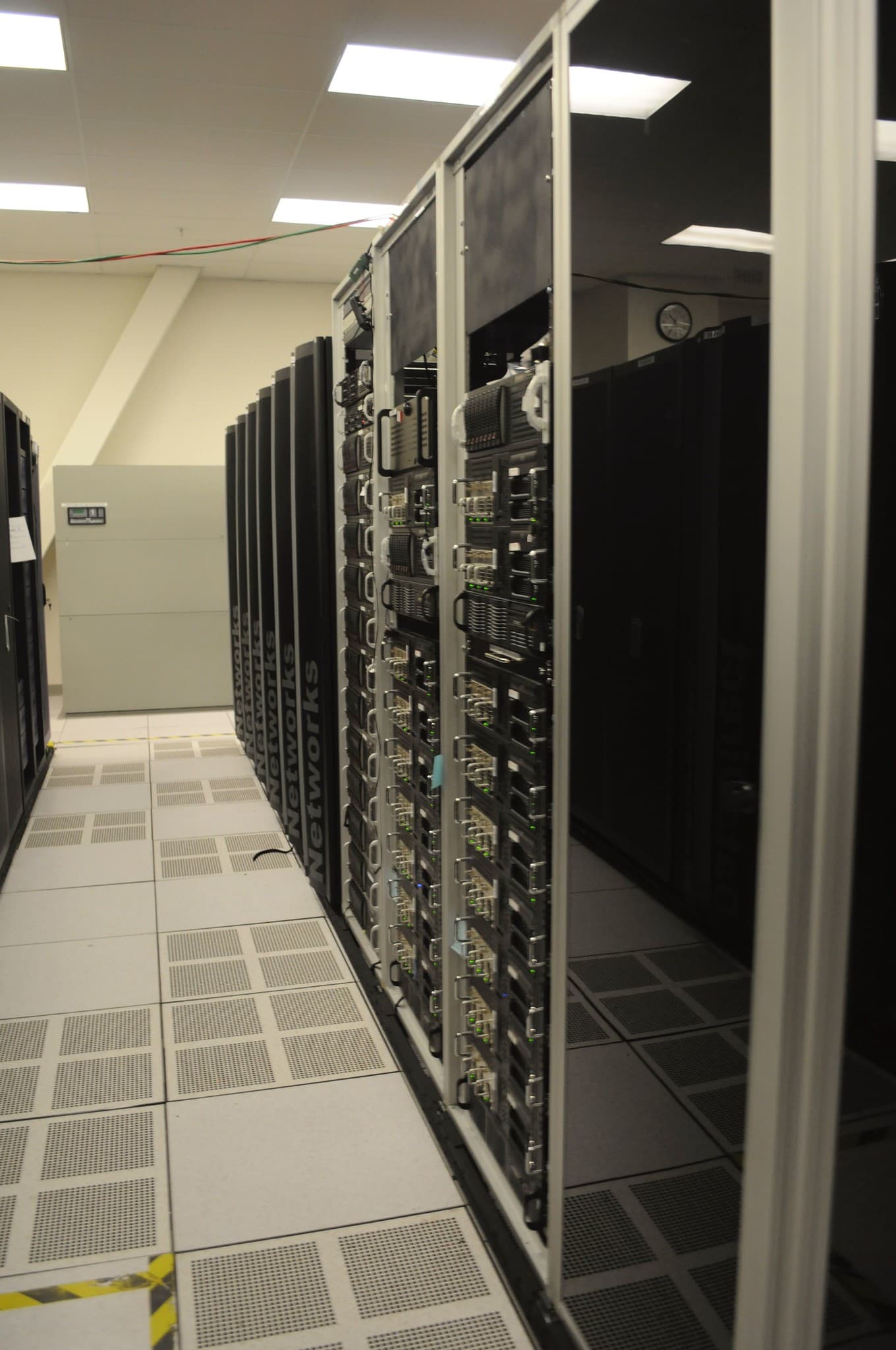
Amazon is making an aggressive, multi-year investment in its artificial intelligence capabilities, unveiling plans for a new generation of custom AI training chips, codenamed "Project Cerebrus," alongside a concurrent $50 billion global data center expansion dedicated to AI infrastructure. This colossal capital allocation aims to solidify Amazon Web Services' competitive moat by reducing its reliance on third-party silicon providers and optimizing performance for large language models, directly impacting the economics of cloud computing. The initiative represents a fundamental strategic pivot, designed to enhance AWS's long-term profitability and market share in the rapidly expanding AI services sector by bringing more of the underlying hardware development in-house.
The market’s immediate reaction to Amazon's ambitious expenditure has been nuanced, with Amazon's stock trading at $268.26 today, down 0.5 percent, as investors weigh the significant upfront capital outlay against potential future returns. While the S&P 500 showed a modest gain of 0.3 percent and the Nasdaq advanced 0.9 percent, the broader tech sector is grappling with the implications of such large-scale infrastructure commitments. Peers like Microsoft, trading at $414.44, and Alphabet, at $385.69, are also heavily investing in AI, but Amazon's scale here underscores the escalating arms race for AI compute power. Nvidia, a dominant force in the GPU market, saw its stock decline 0.6 percent to $198.45, reflecting investor anticipation of increased competition from cloud providers' custom silicon efforts.
This move by Amazon is not entirely unprecedented, building on a decade of strategic investments in custom silicon, including its Graviton processors for general computing, Inferentia for AI inference, and Trainium for AI training workloads. Project Cerebrus represents a significant escalation, pushing AWS into the very high-end of AI training, a domain traditionally dominated by Nvidia’s powerful GPUs. The strategy mirrors Apple’s successful transition to its M-series chips, where controlling the silicon allowed for unprecedented performance gains and tighter integration with its software ecosystem, ultimately improving product differentiation and profit margins. Amazon’s long game is to replicate this vertical integration advantage within the cloud, offering superior price-performance ratios to its enterprise clients.
Industry analysts are largely bullish on Amazon’s long-term prospects from this strategic investment, despite the near-term capital expenditure. Sarah Kessler, a principal analyst at Gartner, said, "Project Cerebrus allows AWS to not only control its costs more effectively but also to deliver highly differentiated performance for the most demanding AI workloads, which is critical for securing enterprise contracts." She explained that this vertical integration provides AWS with a unique competitive edge, enabling it to fine-tune its hardware for its specific software stack, something off-the-shelf solutions cannot achieve. This move is less about competing directly with Nvidia and more about optimizing AWS’s own operational efficiency and service offerings for its cloud customers.
From a technical standpoint, Project Cerebrus is expected to feature a novel chip architecture specifically optimized for the parallel processing demands of transformer models, which underpin most modern large language models. This custom design allows for significant improvements in compute density, memory bandwidth, and energy efficiency compared to general-purpose GPUs, directly translating into faster training times and lower operational costs for AWS customers. Such specialized hardware creates a formidable competitive moat, as replicating this level of integration and optimization requires immense engineering talent and capital, making it difficult for smaller players or even other hyperscalers to quickly match AWS’s capabilities in tailor-made AI infrastructure.
The sheer scale of Amazon’s investment and its potential to further consolidate AWS’s market leadership in cloud infrastructure could attract increased regulatory scrutiny, particularly from antitrust bodies in the U.S. and Europe. President Trump’s administration has consistently expressed concerns about the market power of large technology companies, and any move that appears to further entrench a dominant position could invite examination. While custom silicon development is an internal investment, its impact on the competitive landscape for AI services and the broader cloud market will undoubtedly be a topic of interest for regulators, potentially leading to questions about fair access and interoperability for smaller companies utilizing AWS services.
Looking forward, Project Cerebrus and the accompanying data center expansion are poised to significantly influence AWS's revenue projections and the overall trajectory of the AI market. This infrastructure build-out will enable AWS to offer more compelling pricing for high-performance AI compute, attracting a broader array of enterprise clients who are increasingly integrating AI into their core operations. The strategic imperative is clear: companies that control the underlying hardware will dictate the pace and economics of the AI revolution, making this investment a critical enabler for AWS to capture a larger share of the burgeoning AI services market, which is projected to reach trillions of dollars in the coming decade.
Gokhshtein Media’s take is that Amazon’s $50 billion commitment to Project Cerebrus and its AI infrastructure is a calculated, necessary bet in a market where owning the silicon layer is becoming paramount for sustainable margins and competitive differentiation. While the immediate capital expenditure is substantial, the long-term benefits of optimized performance, cost control, and supply chain security are undeniable, establishing a deeper moat against rivals and cementing AWS's position as a foundational layer of the global AI economy. This is not merely an investment; it is a strategic declaration of independence in the AI hardware arms race, positioning Amazon to capture outsized value from the AI paradigm shift.