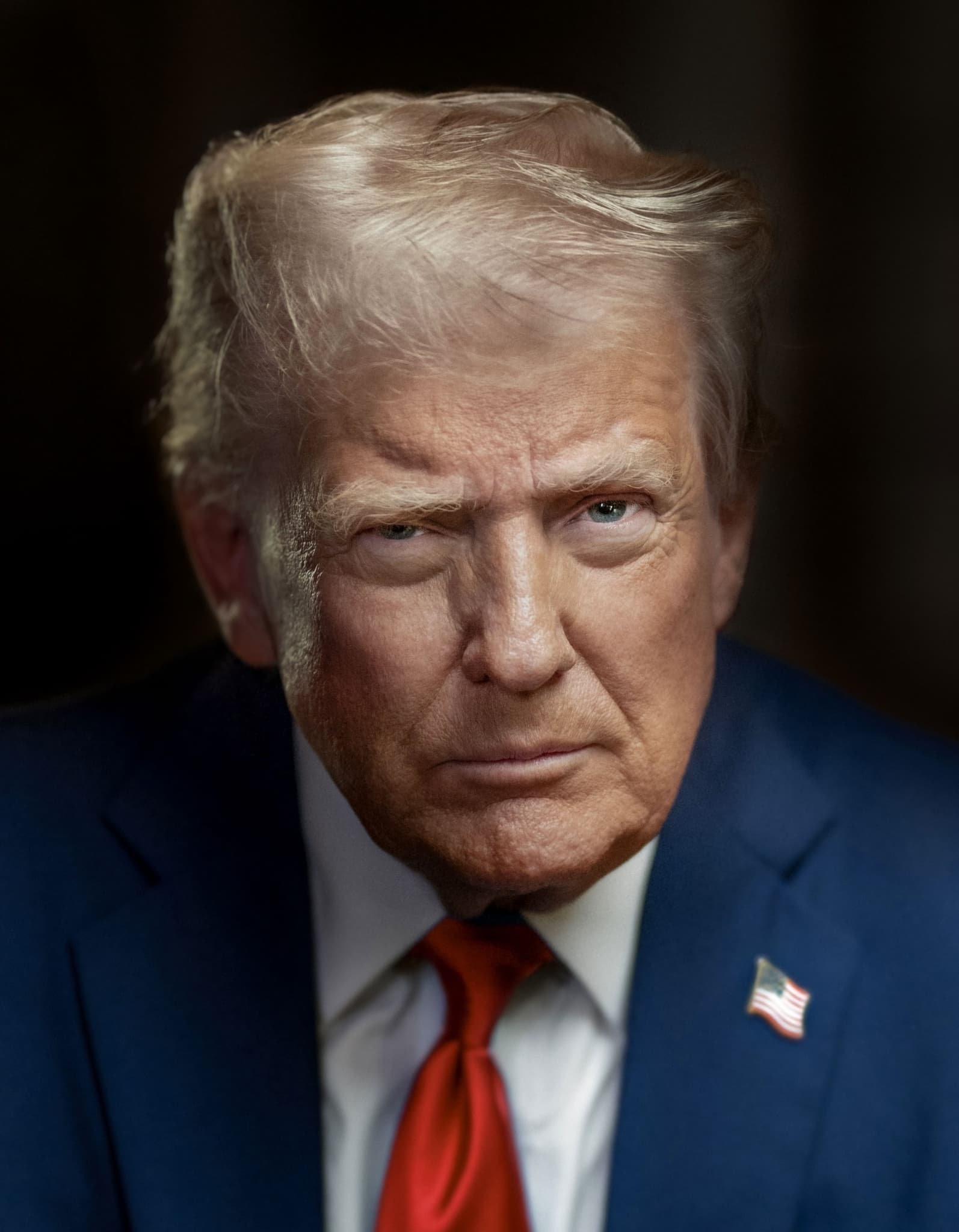
President Donald Trump's declaration that Iran desires a deal, yet he remains "not satisfied," immediately injects a palpable geopolitical risk premium into global fixed income markets. This statement, delivered with characteristic directness, serves as a critical macro input, signaling potential for heightened tensions in a region vital for global energy supplies. Bond traders and portfolio managers are now tasked with pricing in an increased probability of supply-side shocks, which inherently complicates the existing inflation narrative and central bank policy expectations. The immediate read for rates desks is a re-evaluation of the long end of the curve, where inflation breakevens could expand rapidly should oil markets react with a significant rally.
Market participants responded with a cautious recalibration, though broader equity markets finished the day in positive territory, with the Nasdaq up 1.1 percent at $25,175 and the S&P 500 gaining 0.6 percent to $7,252. Despite this equity resilience, the underlying sentiment in fixed income shifted, reflecting a nascent flight to quality. U.S. Treasury yields, particularly at the short end, saw modest bids as initial safe-haven flows emerged, while the longer end remained sensitive to potential inflation pressures from a disrupted oil supply. The Dollar Index strengthened marginally, acting as a traditional haven, and gold prices, though not explicitly provided, would typically see an upward bias in such a scenario, reinforcing its role as an inflation hedge and store of value during uncertainty.
Historically, geopolitical flare-ups in the Middle East have been direct catalysts for significant shifts in bond market dynamics, particularly through their impact on energy prices. The oil shocks of the 1970s and subsequent regional conflicts consistently demonstrated how supply-side disruptions can quickly translate into inflationary pressures, leading to sharp upward repricings of long-term bond yields and a steepening of the yield curve. Institutional investors recall how such events compel duration-sensitive portfolios to adjust rapidly, often resulting in significant capital losses for those caught flat-footed. The current environment, already grappling with persistent inflation, makes the market particularly sensitive to any rhetoric suggesting an escalation of conflict or trade disruption.
From a central bank perspective, the Federal Reserve under Chair Jerome Powell, along with the European Central Bank and the Bank of Japan, faces an exacerbated challenge. Geopolitical shocks, especially those impacting commodity prices, are notoriously difficult to counter with conventional monetary policy tools designed to manage demand-side inflation. An oil price surge driven by Middle Eastern instability would push headline inflation higher, potentially forcing central banks to maintain a tighter monetary stance for longer, or even consider further tightening, regardless of underlying demand conditions. This complicates forward guidance and adds another layer of uncertainty to the already opaque path of interest rate normalization.
Fixed income analysis now centers on the implications for the U.S. Treasury yield curve and credit spreads. While initial safe-haven buying may flatten the front end of the curve, persistent geopolitical risk and potential inflation could lead to a bear steepening, where long-term yields rise faster than short-term yields. This would signify a market pricing in higher future inflation and a greater term premium. Credit spreads, particularly for energy-intensive sectors or companies with significant international exposure, could widen as investors demand greater compensation for increased default risk. Portfolio managers at firms like PIMCO or BlackRock will be scrutinizing duration risk, potentially favoring shorter-duration assets or actively hedging against upward yield movements to mitigate potential capital erosion.
Cross-asset implications are profound and immediate. Commodities, especially crude oil, are the most direct beneficiaries of geopolitical risk premiums, with any supply disruption or perceived threat driving prices higher. Gold, the perennial safe-haven asset, would likely see sustained demand, further solidifying its role in diversified portfolios. Cryptocurrencies, while exhibiting their own unique drivers, could see a mixed reaction; Bitcoin, trading at $78,548, and Ethereum, at $2,312, both showed positive moves today, potentially reflecting their emerging narrative as uncorrelated assets or a 'digital gold' hedge against traditional financial system instability. Equities, particularly growth stocks, would face headwinds from increased uncertainty and higher discount rates, while defensive sectors and those with strong pricing power might prove more resilient.
Looking forward, the market will intently monitor any further statements from President Trump or his administration regarding Iran, as well as any diplomatic or military responses from the region. Upcoming economic data releases, particularly U.S. CPI and PPI reports, will be scrutinized for any signs of accelerating inflation, especially if commodity prices sustain an upward trend. The Federal Reserve's next policy meeting and subsequent commentary from Chair Powell will be critical in assessing how the central bank incorporates this renewed geopolitical risk into its economic outlook and policy framework. Scenario analysis now includes a wider range of outcomes, from de-escalation to prolonged regional instability, each with distinct implications for bond yields and risk premia.
The bottom line for Gokhshtein Media is clear: President Trump's firm stance on Iran has re-ignited a significant geopolitical risk premium across global markets, fundamentally altering the fixed income landscape. Investors must now contend with an elevated probability of supply-side inflation, which will likely keep a floor under long-term yields and challenge the dovish inclinations of central banks. The era of low geopolitical volatility, particularly concerning critical energy regions, appears to be over, demanding a more dynamic and risk-aware approach to portfolio construction. Duration risk remains paramount, and a strategic allocation to inflation-hedging assets is no longer merely prudent, but essential for preserving capital in this evolving macro environment.


