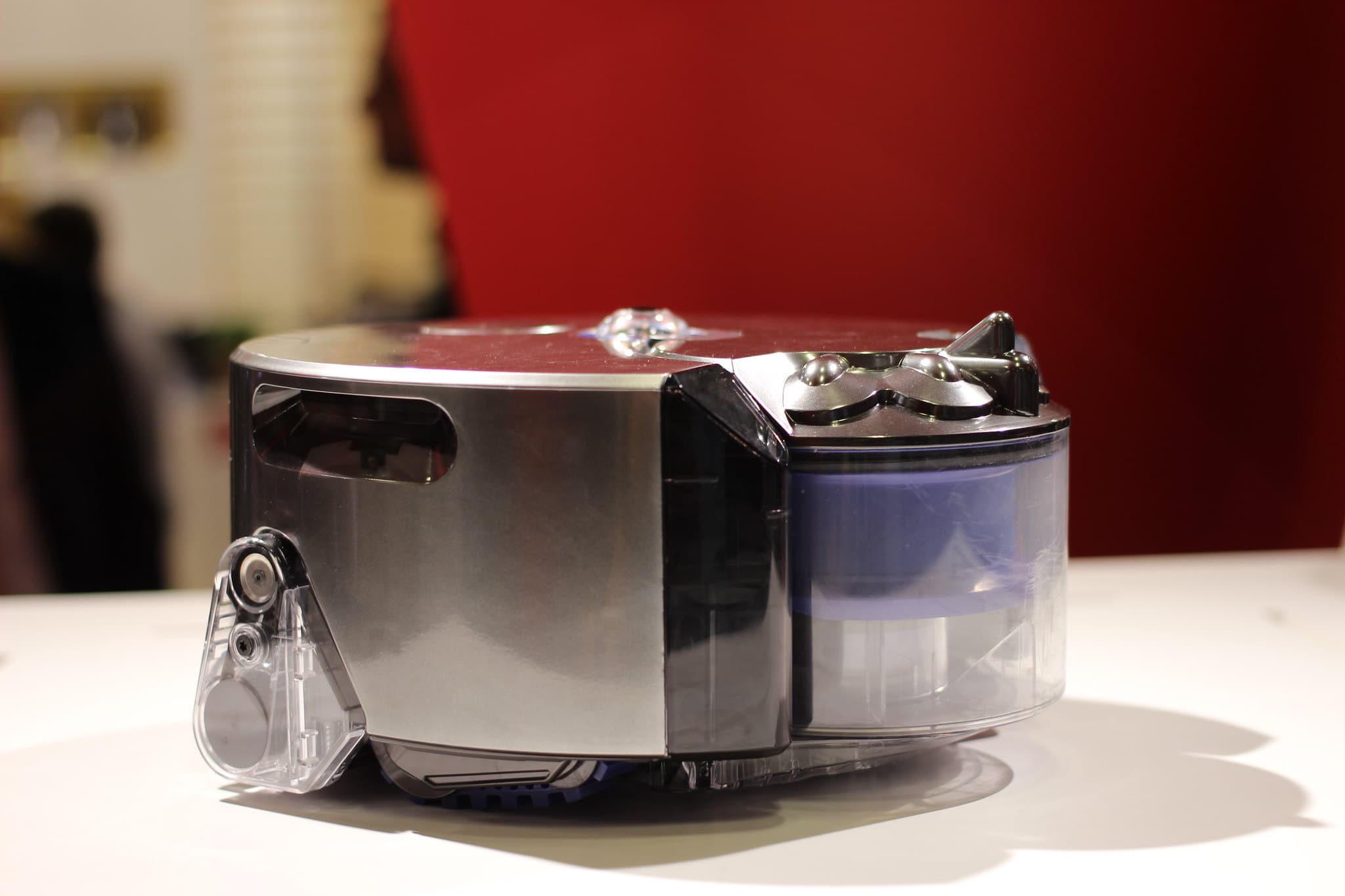
Dyson, the U.K.-based engineering and technology firm, has launched its newest robot vacuum, representing a significant capital allocation towards advanced robotics and artificial intelligence. While the device boasts sophisticated navigation, enhanced object recognition, and adaptive cleaning algorithms—marking it as a technically superior robot—early reports indicate a potential trade-off in its core vacuuming efficacy when compared to Dyson's established upright and stick models. This strategic pivot, following years of substantial research and development investment, positions the company at a critical juncture, questioning whether its premium brand can sustain a price point justified more by computational prowess than by raw cleaning power.
Given Dyson's private ownership, direct stock market reaction is not observable, but the launch sends ripples through the competitive smart home appliance sector. Companies like iRobot, a subsidiary of Amazon, along with offerings from Samsung, LG, and Chinese manufacturers such as Roborock and Ecovacs, dominate a market where price-to-performance ratio for cleaning is often paramount. This move by Dyson suggests a push towards a higher-end, niche segment of the market, potentially challenging existing players who have focused on incremental improvements in cleaning mechanics alongside robotics. Sector sentiment broadly supports innovation in home automation, yet investors and analysts remain keen on sustainable business models and clear competitive moats, which this product's positioning makes less clear.
Dyson's foray into robotic cleaning is not its first; earlier models like the Dyson 360 Eye and 360 Heurist, while technologically advanced for their time, struggled to gain significant market traction against more established, often more affordable, competitors. This new iteration signifies a doubling down on the company's belief that its engineering prowess, now heavily leaning into software and AI, can redefine the category. Historically, Dyson built its brand on revolutionary mechanical design and unparalleled suction power, epitomized by its bagless cyclone technology and powerful digital motors. The current emphasis on robotic intelligence over sheer vacuuming brute force marks a distinct departure from that core identity, shifting focus from a mechanical engineering advantage to a software-driven one.
Industry analysts are weighing the strategic implications of this shift. "Dyson is betting that consumers will pay a premium for a truly autonomous cleaning experience, even if it means a slight compromise on the 'vacuum' part of the equation," said Sarah Jenkins, a senior analyst at Tech Insights Group. "The real question is whether the market for a $1,500-plus robot vacuum, which excels at mapping and navigation but perhaps not at deep-pile carpet cleaning, is large enough to justify the R&D and potential brand dilution." Jenkins highlighted the potential for market fragmentation, where Dyson might carve out a new ultra-premium segment, but at the risk of alienating its traditional performance-focused customer base.
The technical architecture of Dyson's new robot vacuum reportedly leverages advanced LiDAR sensors for precise room mapping and Simultaneous Localization and Mapping (SLAM) algorithms, enabling highly efficient navigation and obstacle avoidance. Its onboard AI is designed for continuous learning, adapting to home layouts and cleaning preferences over time. However, reports suggest that the pursuit of this complex robotics platform may have led to compromises in the physical vacuuming components, such as a smaller dustbin capacity, potentially less powerful suction compared to Dyson's flagship stick vacuums, and shorter battery life relative to its larger footprint. This design choice creates a dichotomy: a highly intelligent robot that might not deliver the robust cleaning performance expected from the Dyson name.
While direct regulatory implications for a vacuum cleaner are minimal, the sophisticated mapping and data collection capabilities of such an autonomous device raise nascent concerns around data privacy and security. As smart home devices become more prevalent, the collection of detailed home layouts and user habits by manufacturers like Dyson could attract scrutiny from consumer protection agencies globally. The broader trend of connected devices, including those from major tech players such as Apple, Amazon, and Google, has already prompted discussions in the United States and European Union regarding data ownership, consent, and potential misuse of personal information, which could extend to highly intelligent home robots.
Looking forward, this launch could be a foundational step for Dyson's broader ambitions in home robotics and smart living ecosystems. If successful, the company could leverage its advanced AI and sensor technology into other home appliances, potentially creating a network of intelligent Dyson devices. The global robot vacuum market is projected to exceed $10 billion by 2028, and Dyson aims to capture a significant share of the high-end segment, driving future revenue growth. The long-term success hinges on whether consumers perceive the value of an advanced robot outweighing any perceived shortcomings in its fundamental cleaning function, paving the way for further product roadmap expansion in autonomous home solutions.
Gokhshtein Media’s take is clear: Dyson's latest robot vacuum represents a high-stakes gamble on the future of home automation, prioritizing sophisticated robotics over the raw cleaning performance that built its brand. This strategic shift in capital allocation towards AI and autonomy could establish a new competitive moat in a nascent market, but it simultaneously risks diluting the core brand equity associated with superior vacuuming power. The success of this product will not only determine Dyson's future in the robotics space but also serve as a crucial test case for whether consumers will pay a premium for intelligence over sheer utility in the evolving landscape of smart home technology. The company must prove that a "better robot" can still deliver a "Dyson-level clean" to secure its financial future in this segment.