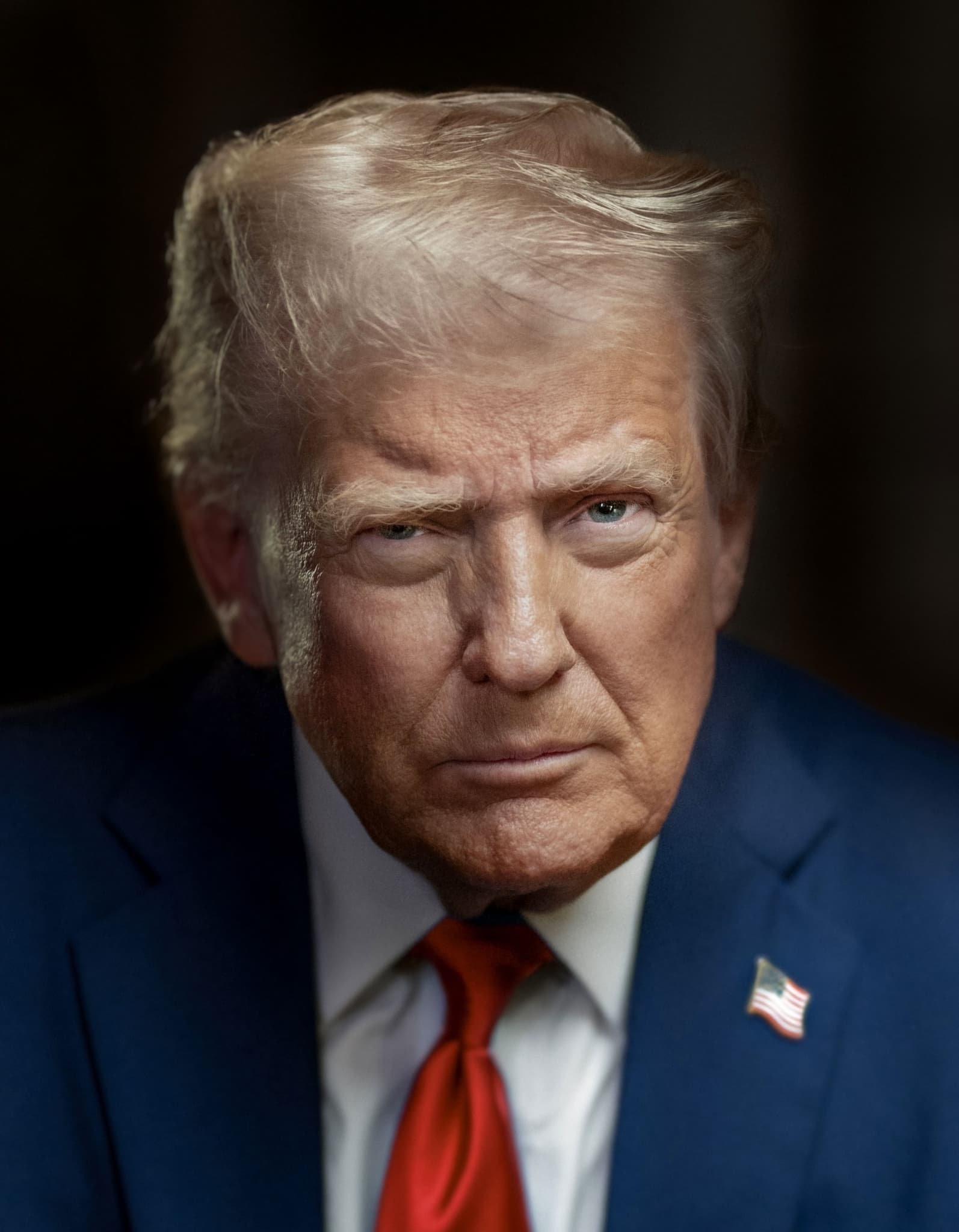
President Donald Trump announced his intention to engage King Charles III on two critical global issues: digital taxation and the future of NATO. These discussions, revealed by Trump to Reuters, underscore a potential shift in international economic cooperation and defense policy, with significant implications for global fiscal stability and geopolitical risk premiums. The mere prospect of such high-level talks on these sensitive subjects immediately injects a dose of caution into an already complex macroeconomic environment, signaling potential friction points for multinational corporations and alliance structures.
Markets absorbed the news with a nuanced reaction. U.S. equity futures, particularly the Nasdaq, which currently trades at $24,837, saw some initial volatility, given the potential for new digital tax regimes to impact major technology companies like Apple, currently at $271.06, and Alphabet, trading at $344.40. The S&P 500, up 0.8 percent today to $7,165, maintained a generally positive trajectory, largely driven by strong performance in other sectors, while the Dow Jones slipped 0.2 percent to $49,231. In the fixed-income sphere, the U.S. Dollar Index, a key gauge of global risk sentiment, saw modest strengthening as investors contemplated potential shifts in international tax policy that could affect trade balances and capital flows. Gold, a traditional safe haven, saw a slight uptick as geopolitical uncertainty brewed.
Historically, discussions around international taxation, especially concerning digital services, have been fraught with challenges, often leading to unilateral actions by nations seeking to capture revenue from global tech giants. The Organization for Economic Co-operation and Development (OECD) has grappled with a unified approach for years, with limited success. Similarly, debates over NATO funding and burden-sharing have been a recurring theme across multiple U.S. administrations, frequently leading to tensions with European allies. These renewed discussions under the current administration signal a potential re-evaluation of long-standing international agreements and norms, recalling periods of heightened trade policy uncertainty and alliance re-negotiations.
From a central bank perspective, these proposed discussions add another layer of complexity to monetary policy formulation. Federal Reserve Chair Jerome Powell and his counterparts at the European Central Bank (ECB) and Bank of Japan (BOJ) closely monitor geopolitical developments and fiscal policy shifts for their potential impact on inflation and economic growth. A fragmented global digital tax landscape could introduce supply chain inefficiencies or alter corporate investment decisions, potentially influencing price stability. Furthermore, any significant re-calibration of NATO commitments could elevate geopolitical risk, impacting capital flows and sovereign bond markets, factors that central banks must integrate into their forward guidance and risk assessments for financial stability.
The fixed-income market, ever sensitive to risk and policy shifts, will pay close attention to the specifics of any digital tax proposals. New levies could affect the earnings of major technology companies, potentially widening credit spreads for corporate bonds in the sector, as seen in past periods of regulatory uncertainty. Furthermore, discussions around NATO's future and defense spending could influence sovereign bond yields. If U.S. commitments shift, European sovereign yields could face upward pressure as defense spending increases or perceived risk rises, leading to potential yield curve steepening in those regions. For long-duration bond portfolios managed by institutions like BlackRock and Vanguard, this increased uncertainty translates directly into higher duration risk, necessitating careful re-evaluation of portfolio allocations and interest rate hedges.
Across asset classes, the implications are diverse. In equities, the technology sector, represented by companies like Microsoft at $424.62 and Amazon at $263.99, faces potential headwinds from new digital taxes, impacting future earnings and valuations. Defense contractors, conversely, might see increased activity if NATO funding debates lead to higher defense outlays, though this remains speculative. In the cryptocurrency space, assets like Bitcoin, trading at $77,526, and Ethereum, at $2,316, often react to broader geopolitical and fiscal uncertainty. While some view them as a hedge against traditional market volatility, a Crypto Fear & Greed Index reading of 31 (Fear) suggests overall caution. Commodities, particularly oil, could also see volatility driven by any escalation in geopolitical tensions, while gold might continue to attract safe-haven flows as risk premiums rise.
Looking ahead, the market will scrutinize any further statements from President Trump or official communications following his discussions with King Charles. These talks precede several key economic data releases, including upcoming CPI reports and Federal Open Market Committee meetings, where central bankers will undoubtedly weigh the evolving geopolitical and fiscal landscape. Investors will be seeking clarity on the scope and potential implementation timeline of any digital tax initiatives, as well as the concrete implications for NATO's operational framework. Scenario analysis among institutional investors is already underway, modeling outcomes ranging from coordinated international tax reforms to increased geopolitical fragmentation.
The bottom line for Gokhshtein Media is clear: President Trump's stated intent to engage King Charles on digital taxation and NATO signals a period of heightened policy uncertainty that will reverberate through global financial markets. While specific outcomes remain to be determined, the potential for significant shifts in international fiscal policy and geopolitical alliances demands careful monitoring. Fixed-income investors must remain vigilant regarding duration risk and credit spread movements, while equity markets will need to factor in potential regulatory headwinds and sector-specific impacts. This is not merely diplomatic pleasantries; these discussions carry the weight of real institutional money and long-term economic trajectories.


