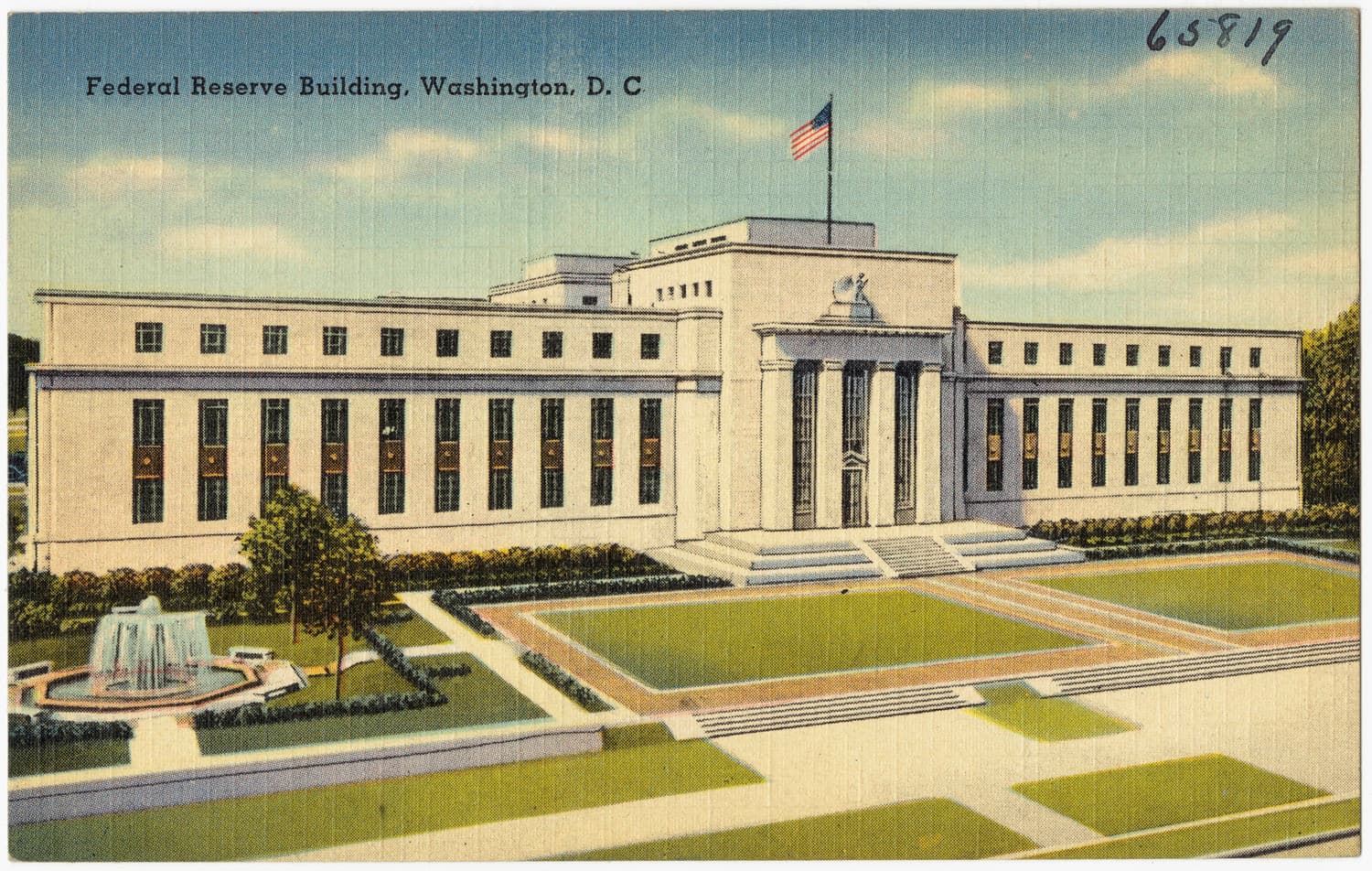
Recent economic indicators suggest a persistent inflationary environment, a key theme highlighted by Goldman Sachs Asset Management's Chief Investment Strategist Isabella Calnon. While market participants began the year pricing in an aggressive series of rate cuts, the reality of durable economic growth and stubborn price pressures has forced a significant recalibration. Calnon's analysis underscores that the Federal Reserve will maintain its higher-for-longer stance, driven by data that consistently defies expectations for a rapid return to the two percent target. This ongoing vigilance from policymakers fundamentally reshapes the landscape for all asset classes, particularly fixed income instruments sensitive to shifts in monetary policy. The bond market, a reliable barometer of future growth and inflation, continues to digest these implications, demanding a reassessment of duration exposure and yield curve positioning.
Bond markets reacted with a palpable shift following the latest data and Calnon's strategic commentary, with U.S. Treasury yields pushing higher across the curve, reflecting diminished rate cut probabilities. The U.S. Dollar Index strengthened, signaling a flight to safety and a repricing of interest rate differentials. Equity markets, however, displayed a nuanced response; the S&P 500 rose 1.0 percent to 7,138, the Nasdaq climbed 1.6 percent to 24,658, and the Dow Jones Industrial Average gained 0.7 percent to 49,490, indicating underlying strength in corporate earnings and a resilience to higher rates in certain sectors. The Russell 2000, representing smaller capitalization companies, also edged up 0.7 percent to 2,785, suggesting broader market participation. Gold prices saw minor fluctuations, reflecting its dual role as an inflation hedge and a safe-haven asset in an environment of policy uncertainty.
This current cycle presents distinct characteristics when viewed against historical rate regimes. Unlike the disinflationary periods of the early 2000s or the post-Global Financial Crisis era, the present environment features elevated fiscal spending and tight labor markets, sustaining demand even in the face of restrictive monetary policy. Calnon draws parallels to the late 1990s, where robust economic expansion allowed the Fed to maintain a hawkish bias for an extended period, leading to a prolonged flattening of the yield curve. The market's initial mispricing of the Fed's resolve, based on a playbook from prior cycles, has created significant volatility for investors who were positioned for an immediate pivot. Understanding these historical divergences is critical for navigating the current landscape, where the old rules of rapid central bank intervention may no longer apply.
From the central bank's perspective, Federal Reserve Chair Jerome Powell has consistently reiterated the data-dependent nature of policy decisions, emphasizing that the committee requires compelling evidence of sustained progress towards its inflation target before considering rate adjustments. Calnon's insights align with this cautious posture, suggesting that the market's earlier aggressive pricing of March and May rate cuts was fundamentally detached from the Fed's stated objectives and the prevailing economic data. The European Central Bank and Bank of Japan also face their own unique inflationary challenges, but the dominant influence of the U.S. Fed's stance on global liquidity and capital flows remains paramount. The message from central banks is clear: policy will remain restrictive until inflation is unequivocally on a path to two percent, a reality the bond market is now fully internalizing.
In the realm of fixed income, Calnon's strategy emphasizes a disciplined approach to duration risk and a keen eye on credit spreads. The yield curve, which saw significant inversion earlier in the cycle, continues to reflect the market's skepticism about long-term growth prospects even as short-term rates remain elevated. This flattening dynamic, where the spread between two-year and ten-year U.S. Treasuries remains tight, underscores the premium on liquidity and the cautious outlook for future economic expansion. Credit spreads, particularly in the investment-grade segment, have shown remarkable resilience, indicating healthy corporate balance sheets and ample demand from institutional investors. However, Calnon warns that any unexpected economic deceleration or credit event could lead to rapid spread widening, necessitating careful sector and issuer selection. Managing duration exposure becomes paramount, favoring shorter-duration assets or employing active strategies to mitigate interest rate sensitivity.
Cross-asset implications are profound. While equities like Apple, trading at $273.17, and Microsoft, at $432.92, demonstrate resilience driven by strong earnings and AI narratives, a sustained higher-rate environment inherently raises the cost of capital, potentially dampening future growth prospects for highly leveraged companies. The technology sector, represented by companies such as NVDA at $202.50 and Alphabet at $339.32, has shown robust performance, but the broader market must contend with the gravitational pull of higher discount rates. In the digital asset space, Bitcoin, trading at $78,361, and Ethereum, at $2,367, have shown unexpected strength, potentially reflecting their emerging status as alternative stores of value or a decoupling from traditional risk assets in certain contexts. However, a prolonged period of high real rates could eventually test this resilience, particularly for speculative assets sensitive to liquidity conditions. Commodities, meanwhile, remain sensitive to global growth trajectories, with energy prices reflecting geopolitical tensions and demand-side strength.
Looking ahead, market participants will closely monitor upcoming inflation reports, particularly the Consumer Price Index and Producer Price Index, for any signs of a definitive downtrend. The next Federal Open Market Committee meeting will be pivotal, with investors scrutinizing the updated Summary of Economic Projections and Chair Powell's press conference for further clues on policy direction. Calnon advises against front-running the Fed, advocating instead for a defensive posture that prioritizes capital preservation and flexibility. Scenario analysis suggests that a sustained reacceleration of inflation or an unexpected weakening of the labor market could force the Fed's hand in either direction, leading to significant market volatility. The path of least resistance for rates appears to be a prolonged plateau, rather than a steep descent.
The bottom line for Gokhshtein Media readers is clear: the era of cheap money is over, and the bond market has fully adjusted to this new reality. Isabella Calnon's strategic assessment reinforces the view that inflation persistence and economic resilience will keep the Federal Reserve on a tight leash, extending the period of restrictive monetary policy. This environment demands a sophisticated understanding of duration management, careful credit selection, and a realistic assessment of central bank intentions. Investors expecting a quick return to lower rates risk significant capital erosion; instead, focus on quality assets, maintain liquidity, and prepare for a sustained period where yield remains a hard-earned premium, not a given. The bond market is signaling a grinding battle against inflation, and prudent investors must heed its warnings.


