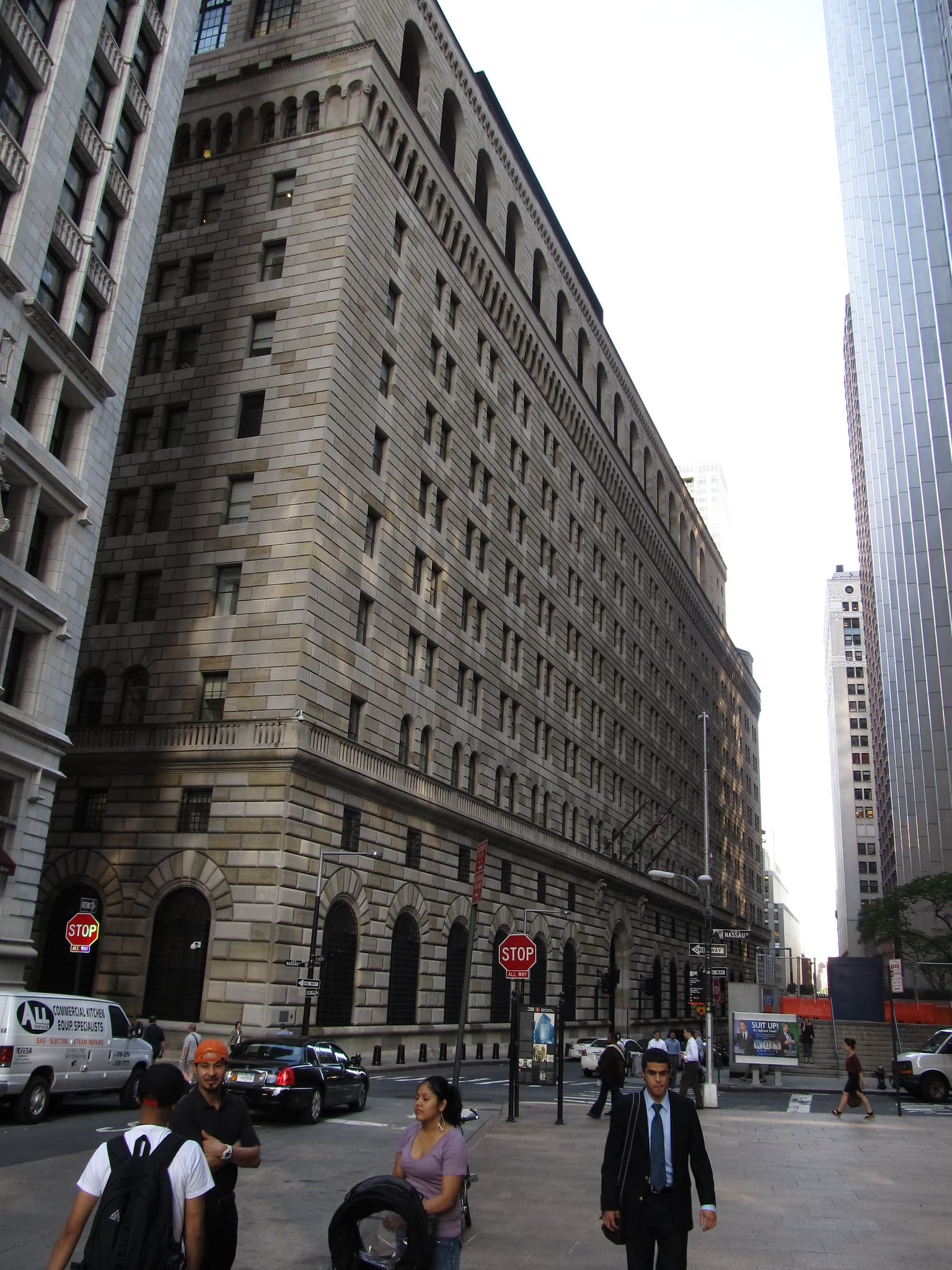
Federal Reserve Governor Christopher Waller delivered a significant address at the Brookings Institution today, focusing on the ongoing modernization of reserve bank operations. Waller underscored that while monetary policy decisions often capture headlines, the underlying operational infrastructure of the Federal Reserve is paramount to the effective transmission of those policies and to maintaining broader financial system stability. His remarks highlighted the necessity for central bank operations to evolve continually, adapting to technological advancements and an increasingly complex financial landscape, ensuring the Fed remains agile in its core functions of payment processing, financial supervision, and emergency lending capabilities. The speech provided a rare institutional glimpse into the often-overlooked plumbing of the U.S. financial system, stressing that operational resilience directly impacts the Fed's ability to execute its dual mandate.
Against a backdrop of broader market consolidation, with major U.S. equity indices seeing slight declines—the S&P 500 finished down 0.6 percent at $7,064 and the Nasdaq Composite fell 0.6 percent to $24,260—Waller’s remarks on operational resilience offered a counterpoint of long-term stability. Bond markets, the ultimate arbiter of long-term economic expectations, exhibited limited immediate reaction, with Treasury yields remaining largely range-bound throughout the session. This muted response reflects the speech's focus on foundational operational enhancements rather than immediate monetary policy shifts or inflation data. The dollar index also saw minimal movement, suggesting market participants viewed the operational discourse as a long-term positive for systemic stability without triggering short-term repricing across asset classes, a testament to the speech's strategic, rather than tactical, implications.
Historically, central banks have consistently adapted their operational frameworks to meet the demands of evolving financial systems. From the establishment of the Federal Reserve in 1913 to address banking panics and standardize currency, to the advent of electronic payments and real-time gross settlement systems, each era has presented unique operational challenges. The current push for modernization echoes past efforts to ensure efficiency and security, particularly in the wake of significant technological shifts and the lessons learned from the 2008 global financial crisis and the 2020 pandemic-induced market dislocations. Waller's emphasis on streamlining processes and leveraging new technologies aligns with a long tradition of central bank innovation aimed at fortifying the financial system against unforeseen shocks and enhancing the efficacy of policy implementation in volatile periods.
From the Federal Reserve’s perspective, Waller’s detailed discussion on operational modernization reinforces Chair Jerome Powell’s consistent message regarding the importance of the Fed’s tools and capabilities. A central bank can only effectively implement its monetary policy decisions—whether through interest rate adjustments or quantitative measures—if its operational machinery is robust, secure, and efficient. This focus on the nuts and bolts ensures that policy signals translate smoothly into market actions, preventing friction or delays that could undermine the Fed's objectives. Waller’s comments suggest a proactive stance by the central bank to future-proof its operations, acknowledging that technological disruption and evolving market structures necessitate continuous adaptation to maintain the integrity and effectiveness of monetary policy transmission, which is foundational to economic stability.
For fixed-income investors, the implications of a modernized and more resilient central bank operation are significant, albeit indirect. A more efficient payments system, for example, reduces operational risk for financial institutions, potentially leading to tighter credit spreads across corporate and municipal bonds as the systemic risk premium diminishes. Enhanced operational resilience at the Fed means a lower probability of financial market dislocations due to technical failures or cyber threats, thereby reducing tail risk for long-duration assets. This commitment to operational excellence underpins the stability of the entire financial ecosystem, fostering greater confidence in the central bank’s ability to manage future crises and execute its mandate, which can subtly lower the market’s duration risk premium over time by anchoring inflation expectations more firmly through reliable policy execution.
Across asset classes, a more robust and modernized central bank operation serves as a systemic positive. For equities, particularly large-cap technology firms like Microsoft, which saw a 1.5 percent gain to $424.16, and Amazon, up 0.7 percent to $249.91, a stable financial backdrop reduces uncertainty and supports long-term growth prospects by ensuring capital markets function smoothly. In the digital asset space, while Bitcoin traded down 0.7 percent to $75,762 and Ethereum declined 0.9 percent to $2,319, the broader trend towards institutional integration of cryptocurrencies relies heavily on efficient and secure financial plumbing. Waller’s focus on payment system modernization, while not directly addressing digital assets, creates an environment where future integration efforts could be more seamlessly accommodated, benefiting the long-term maturation of the crypto ecosystem and potentially leading to more consistent capital flows.
Looking ahead, Waller’s speech sets the stage for continued discussions within the Federal Reserve on leveraging emerging technologies like distributed ledger technology and artificial intelligence to enhance operational efficiency and security. The Fed’s ongoing research into digital currencies, while distinct from operational modernization, is closely related, as any future central bank digital currency would require an entirely new operational framework. Upcoming data releases, particularly inflation metrics and employment figures, will still drive immediate monetary policy expectations, but the foundational work Waller outlined today ensures that the Fed’s infrastructure remains capable of implementing those policies effectively. The market will closely watch for further details on specific initiatives and timelines for these modernization efforts, as they represent a critical, long-term investment in the stability of the U.S. financial system.
The bottom line from Gokhshtein Media’s perspective is clear: Governor Waller’s address underscores that the bedrock of effective monetary policy is not merely the decision-making process, but the operational infrastructure that supports it. In an increasingly complex and interconnected global financial system, a central bank’s ability to execute its mandate hinges on its operational agility and resilience. This focus on modernization is a crucial, often underappreciated, factor that contributes to long-term financial stability, compresses systemic risk premiums for fixed-income assets, and ultimately provides a more secure foundation for growth across equities and the evolving digital asset landscape. It is a strategic investment that will pay dividends in sustained market confidence and policy effectiveness for years to come, solidifying the Fed’s role as the indispensable anchor of the U.S. economy.


