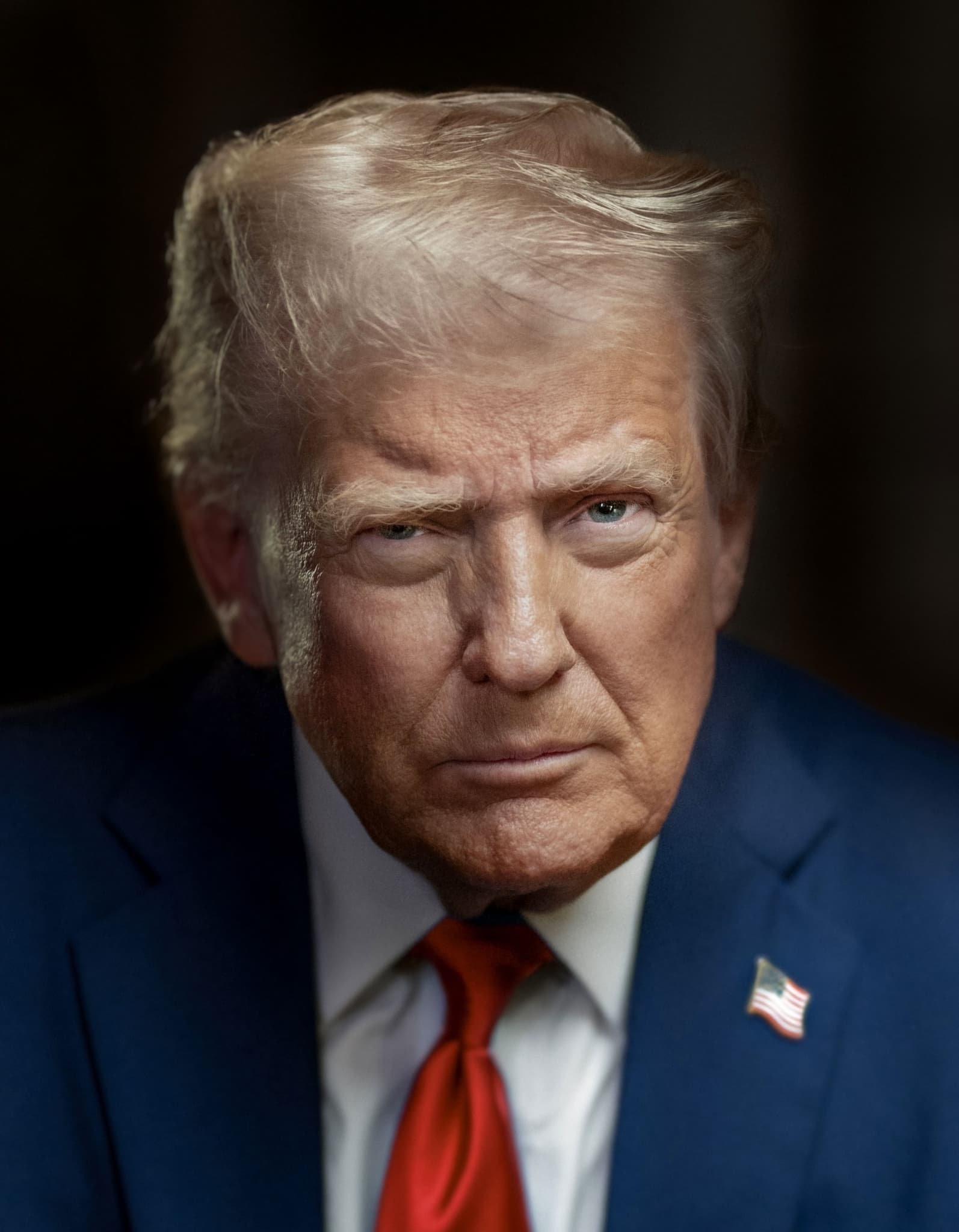
President Trump today extended the Iran ceasefire, citing what the White House described as a “fractured” Iranian government. This executive action, rather than an immediate escalation or a new diplomatic push, effectively maintains the existing pressure while avoiding a direct confrontation. The move reflects a nuanced geopolitical strategy aimed at exploiting internal divisions within Tehran, preventing a rapid destabilization of the Middle East that could send shockwaves through global commodity markets.
Financial markets reacted with a subtle easing of geopolitical risk premium, though broader economic concerns dominated the day's trading. The S&P 500 closed down 0.6 percent at $7,064, while the Nasdaq also saw a 0.6 percent decline to $24,260, and the Dow Jones fell 0.6 percent to $49,149. The Russell 2000, representing smaller cap stocks, dropped 1.0 percent to $2,765. In the crypto markets, Bitcoin traded at $75,572, down 0.7 percent over 24 hours, and Ethereum was at $2,313, a 0.5 percent decline, with the Crypto Fear & Greed Index registering 33, indicating fear. The ceasefire extension likely prevented a sharper downturn driven by geopolitical uncertainty, offering a fragile ceiling against further volatility.
This extension underscores the administration’s continued reliance on a strategy of diplomatic pressure and targeted sanctions, rather than a military option or a comprehensive new nuclear agreement. The decision sidesteps a contentious debate in Congress over the future of the Iran Sanctions Act, where factions advocate for both stricter enforcement and more flexible engagement. President Trump's executive authority under the International Emergency Economic Powers Act (IEEPA) provides the legal framework for this action, granting the White House significant unilateral power in foreign policy sanctions. This approach allows the administration to exert influence without requiring immediate legislative consensus, a challenge in a divided Congress.
The beneficiaries of this extended pause include multinational corporations seeking predictability in global supply chains and energy companies that benefit from stable, rather than dramatically volatile, oil prices. Defense contractors, while always attentive to regional tensions, see a temporary de-escalation that shifts the focus from immediate conflict to sustained strategic competition. Conversely, hardline congressional blocs, who advocate for more aggressive sanctions or even regime change, find their legislative efforts stalled by the President's executive discretion. Lobbying groups representing various interests, from the Aerospace Industries Association to human rights organizations, continue to press their agendas in Washington, shaping the ongoing, behind-the-scenes policy discussions.
The financial industry faces continued rigorous compliance requirements due to the persistent sanctions regime. Major financial institutions and crypto exchanges must maintain robust Anti-Money Laundering (AML) and Know Your Customer (KYC) protocols to prevent illicit financial flows that could violate U.S. Treasury Department regulations. Companies like Coinbase and other regulated entities operating in the digital asset space must remain vigilant, as any perceived breach of sanctions could result in severe penalties. U.S. tech firms and other businesses largely remain barred from engaging with the Iranian market, limiting their potential for expansion into a significant, albeit restricted, economy.
Legally, President Trump's use of IEEPA to extend the ceasefire reinforces the executive branch's broad authority in conducting foreign policy, particularly concerning sanctions. This action establishes a precedent for a more patient, strategically ambiguous approach to adversaries perceived as internally weak, prioritizing de-escalation over a definitive resolution. The ongoing compliance burden for financial institutions, including banks and digital asset platforms, remains substantial. Navigating the intricate web of U.S. sanctions demands significant investment in compliance technology and personnel, with the threat of hefty fines from the Treasury Department serving as a powerful deterrent against non-compliance.
Looking ahead, the immediate focus shifts to monitoring the internal dynamics within Iran for signs of further political fragmentation or consolidation, which could trigger a policy recalibration from Washington. While Congress may attempt to introduce new legislation related to Iran, the President's current stance suggests he will likely maintain executive control over the existing policy framework, making legislative overrides improbable. The international community, particularly European allies and key regional powers in the Middle East, will closely observe U.S. actions, with coordinated diplomatic efforts likely to be a central theme at the upcoming G-7 summit in June.
Gokhshtein Media understands this extension as a pragmatic, tactical move by President Trump. It leverages perceived Iranian weakness to preserve a delicate status quo without committing to a new, comprehensive deal or escalating conflict. The decision prioritizes short-term geopolitical stability, reflecting a calculated foreign policy approach that values strategic patience over immediate, high-stakes confrontation. For financial markets, the implication is clear: a continuation of existing risk parameters, with no immediate seismic shifts but a sustained requirement for investors to monitor geopolitical developments for their ongoing impact on global trade, energy prices, and asset valuations.


