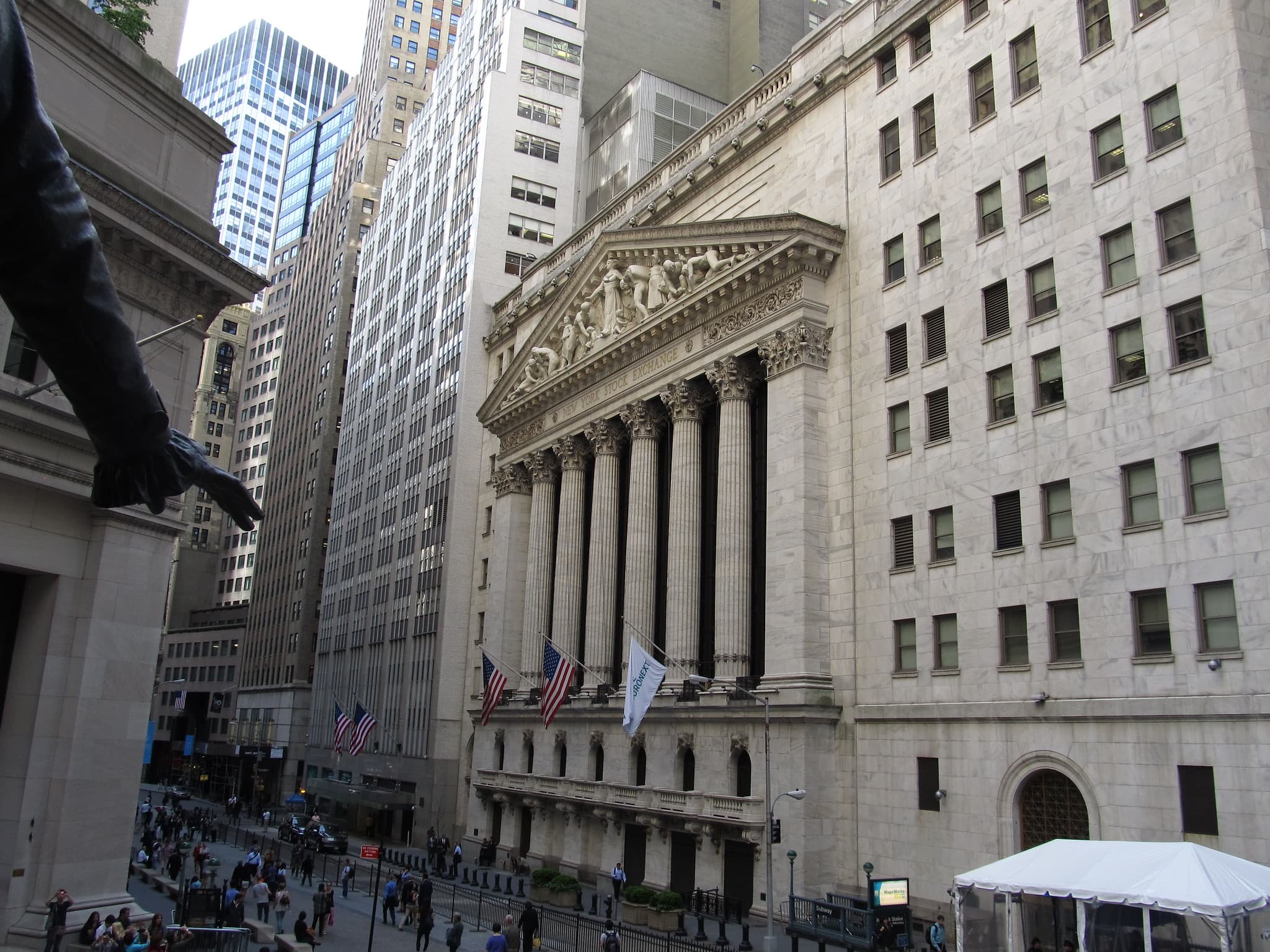
U.S. equity markets opened the week under a cloud of geopolitical uncertainty, with major indices recording declines after President Trump announced an extension of the existing ceasefire with Iran. This move, intended to de-escalate tensions, has instead prolonged a period of ambiguity, causing Asia-Pacific markets to fall and setting a negative tone for the U.S. trading session. The Dow Jones Industrial Average is down 0.6 percent, the S&P 500 has shed 0.6 percent, and the Nasdaq Composite is also off by 0.6 percent, with the Russell 2000 leading losses, down 1.0 percent, as investors grapple with the implications of an unresolved standoff.
The market reaction demonstrates a clear shift in risk appetite. Sectors highly sensitive to global trade and energy prices are feeling the immediate pressure. While a direct military confrontation has been avoided for now, the continued state of flux in the Middle East introduces an enduring risk premium into global supply chains and commodity markets. Energy stocks face increased volatility, and companies with significant international operations, such as Apple, are closely watched for potential disruptions to their manufacturing or consumer demand. Investor sentiment is leaning towards caution, reflected in the broad-based declines across market capitalization segments, indicating a systemic de-risking rather than a sector-specific rotation.
Historically, extended periods of geopolitical uncertainty have often proven more challenging for markets than swift, decisive events. While an immediate conflict can trigger sharp sell-offs, the absence of a clear resolution allows anxiety to fester, impacting long-term investment decisions and corporate planning. Markets have previously shown resilience to isolated shocks, but persistent geopolitical overhangs, particularly those involving critical energy-producing regions, tend to dampen growth expectations and increase the cost of capital. This current environment echoes past episodes where the specter of instability, rather than outright conflict, drove cautious positioning among institutional investors.
Wall Street analysts are increasingly factoring geopolitical risk into their models, revising outlooks for companies with significant international exposure. While some defense contractors may see a boost, the broader consensus points to a cautious stance on growth-oriented sectors that rely on stable global trade flows and predictable consumer behavior. Fund managers are reportedly evaluating their portfolio allocations, with some increasing cash positions or rotating into more defensive sectors and assets traditionally seen as safe havens. The prolonged uncertainty makes it difficult for institutions to confidently forecast earnings, leading to a general tightening of investment criteria and a preference for companies with strong balance sheets and resilient domestic operations.
From a fundamental perspective, the ceasefire extension directly impacts corporate earnings visibility. Companies like Apple, with intricate global supply chains spanning the Asia-Pacific region, face potential manufacturing delays and increased logistics costs if regional tensions escalate. Energy giants will contend with heightened oil price volatility, affecting both exploration and production budgets. Even technology stalwarts like Microsoft and Alphabet, while seemingly insulated, rely on a robust global economy for enterprise software sales and advertising revenue. Tesla’s global manufacturing footprint and reliance on international consumer demand also place it squarely in the crosshairs of prolonged geopolitical ambiguity, potentially impacting delivery targets and profitability margins.
The broader market implications are significant, potentially triggering a sector rotation away from high-beta growth stocks into more stable, value-oriented companies. Risk appetite across the U.S. market is clearly diminishing, evidenced by today's declines across all major indices. This environment also puts pressure on the Federal Reserve, led by Chair Jerome Powell, as geopolitical instability can complicate monetary policy decisions, particularly concerning inflation and economic growth forecasts. Should the uncertainty persist, it could lead to increased correlation between different asset classes, as investors seek safety across the board, reducing the diversification benefits typically found in a stable market environment.
Looking forward, investors must closely monitor any further statements from President Trump or developments in the Middle East, as these will serve as primary catalysts for market direction. The technical levels for major indices, particularly the S&P 500's support around the 7,000 mark, become critical areas to watch for signs of stabilization or further breakdown. Upcoming corporate earnings calls will also be scrutinized for management commentary on geopolitical risks and their potential impact on forward guidance. Companies that offer clarity on their supply chain resilience and demand outlook in an uncertain world will likely be rewarded by the market.
The bottom line for sophisticated investors is clear: the current geopolitical landscape demands heightened vigilance and strategic agility. While President Trump's ceasefire extension has prevented an immediate crisis, it has replaced it with a prolonged period of uncertainty, which markets fundamentally dislike. This is not a time for complacency. Investors must reassess their exposure to global risks, consider defensive positioning, and prioritize companies with strong fundamentals and demonstrated resilience. The market will continue to trade on headlines until a definitive resolution emerges, making active portfolio management paramount to navigating these turbulent waters.


