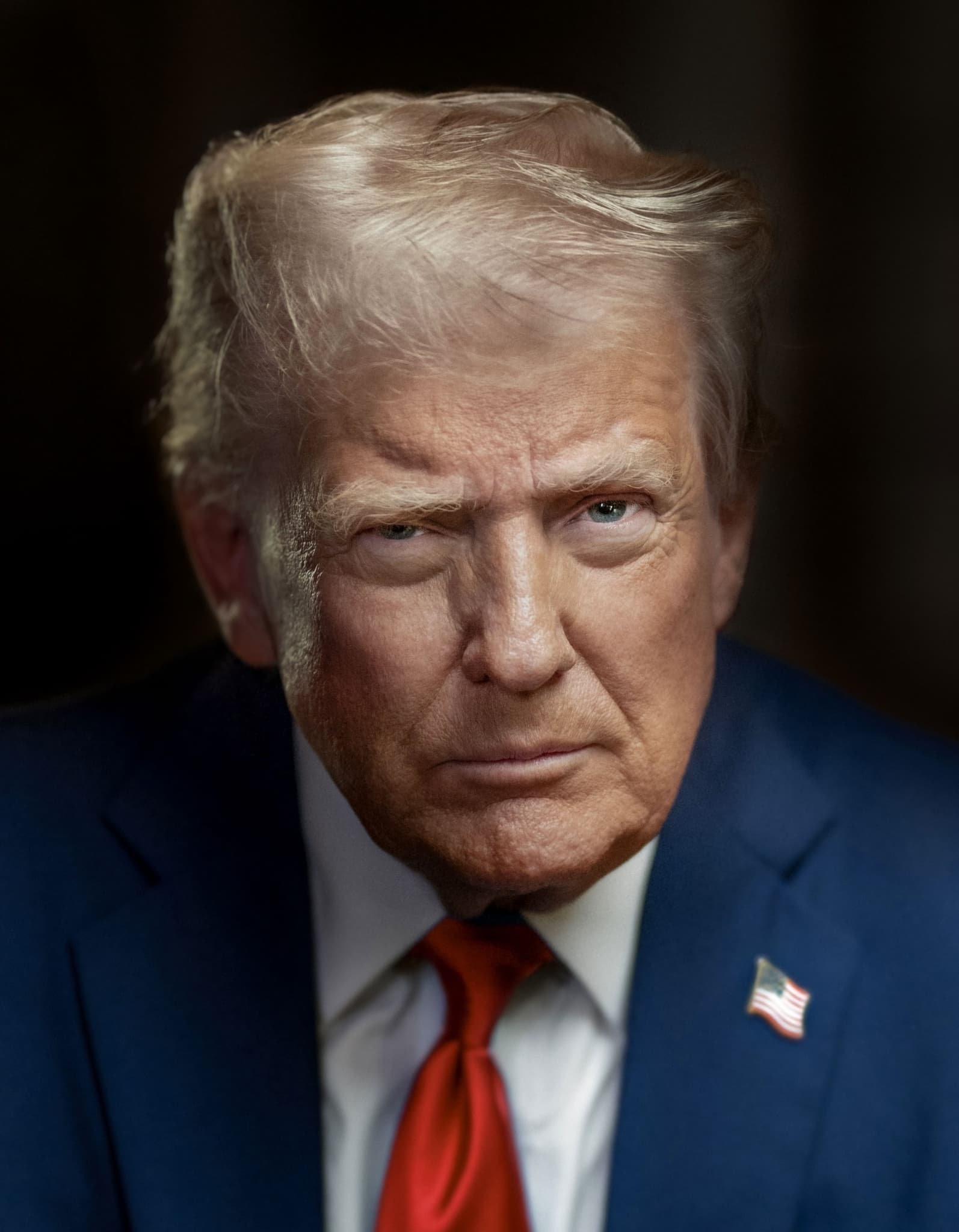
A significant dip in President Donald Trump’s approval ratings among Catholic voters, following recent remarks by Pope Leo, introduces a fresh layer of political uncertainty into Washington’s already volatile landscape. This erosion of support, revealed in a new poll, directly impacts the President’s political capital at a critical juncture, potentially slowing down or even derailing key legislative priorities related to economic policy and financial regulation. For markets, this development translates into heightened risk as investors weigh the stability of the administration’s agenda, particularly regarding the long-anticipated framework for digital assets and the future of critical financial reforms.
While the broader equity markets showed resilience today, digesting the news without immediate panic, the political undercurrents are undeniable. The S&P 500 closed at $7,030, the Nasdaq at $24,063, and the Dow Jones at $48,516, all recording modest gains of 0.1 percent or 0.2 percent. However, the Russell 2000, often a bellwether for domestic economic sentiment, edged down 0.1 percent to $2,711, reflecting some cautiousness among smaller cap investors. In the crypto sector, Bitcoin held steady at $74,274 with a 0.1 percent gain over 24 hours, while Ethereum saw a slight dip of 1.2 percent to $2,323, both trading against a backdrop of the Crypto Fear & Greed Index registering at 23, indicating extreme fear. These mixed reactions suggest markets are processing the potential long-term implications of weakened presidential leverage, rather than reacting to a sudden economic shock.
The legislative context for this political tremor is particularly sensitive for the financial industry. The Trump administration has been pushing for a more streamlined regulatory environment, with a particular focus on areas like stablecoin legislation and a comprehensive framework for digital assets that balances innovation with consumer protection. A decline in the President’s political capital threatens his ability to rally congressional support for these complex bills, which often require delicate bipartisan negotiations. Without strong executive backing, proposals that benefit the burgeoning crypto sector, such as clear tax guidelines or a robust legal definition for various digital assets, could face significant delays or even be shelved indefinitely, leaving market participants in a prolonged state of regulatory limbo.
The Catholic voting bloc has historically been a crucial component of President Trump’s electoral coalition, and any perceived alienation could have far-reaching political consequences. Although the specific content of Pope Leo’s remarks remains a subject of widespread discussion, their impact on a significant demographic is clear, compelling the White House to potentially reallocate resources to shore up support. This shift in political dynamics could embolden opposition parties, making it harder for the administration to secure votes on contentious issues. Lobbying groups representing traditional finance, technology giants, and the crypto industry — including heavyweights like the Blockchain Association and the Chamber of Digital Commerce — are undoubtedly scrutinizing these poll numbers, understanding that a less powerful White House translates into a more challenging legislative environment for their favored policies.
The direct industry impact of this political development is concentrated in sectors highly sensitive to regulatory clarity and government stability. For the digital asset industry, which has seen significant growth following the approval of Bitcoin spot ETFs in January 2024 and Ethereum spot ETFs in May 2024, regulatory certainty is paramount. Companies like Coinbase, Circle, and the various asset managers offering these ETFs, including BlackRock, Grayscale, and Fidelity, rely on a predictable policy landscape to build and expand their offerings. A weakened presidential hand could prolong the wait for a clear stablecoin framework, directly impacting firms whose business models are centered on fiat-backed digital currencies. Beyond crypto, broader financial services and large technology firms, which often lobby for specific regulatory carve-outs or tax incentives, could find their influence diminished if the administration struggles to command congressional allegiance.
From a legal analysis perspective, the erosion of presidential political capital can lead to fragmented enforcement and increased compliance costs. If Congress remains gridlocked on critical financial legislation, agencies like the Securities and Exchange Commission, under Chair Paul Atkins, and the Federal Reserve, led by Chair Jerome Powell, may be left to interpret existing laws in a vacuum, leading to inconsistent enforcement actions. This lack of clear legislative guidance forces companies to navigate a patchwork of regulations, significantly increasing their legal and compliance burdens. Firms operating in the digital asset space, already grappling with complex jurisdictional questions, could face even greater uncertainty, potentially stifling innovation and driving capital to more predictable regulatory environments outside the United States.
Looking forward, the White House must now strategize on how to regain lost ground among a vital demographic, a task that could divert focus and resources from its legislative agenda. This political setback could force the administration to temper its ambitions for the remainder of 2026, potentially prioritizing issues with broader, less controversial appeal over complex financial reforms. The looming congressional midterm elections will undoubtedly be influenced by the President’s standing, and any sustained decline in support could reshape the legislative landscape significantly. For the crypto industry, the path to comprehensive regulation now appears even more arduous, as the political will required to push through such transformative legislation faces an unexpected headwind.
The bottom line for investors and industry stakeholders is clear: political capital is the true currency of Washington, and its ebb and flow have tangible financial consequences. The poll indicating President Trump’s declining support among Catholics after Pope Leo’s remarks is not mere political theater; it is a significant tremor that signals a potential shift in the balance of power. This development could slow the pace of critical financial legislation, particularly for the burgeoning digital asset sector, and inject further uncertainty into the regulatory environment. Gokhshtein Media asserts that market participants must now account for this increased political risk when evaluating investment strategies and forecasting policy outcomes, as the road to clear, consistent regulation just became considerably more winding.


