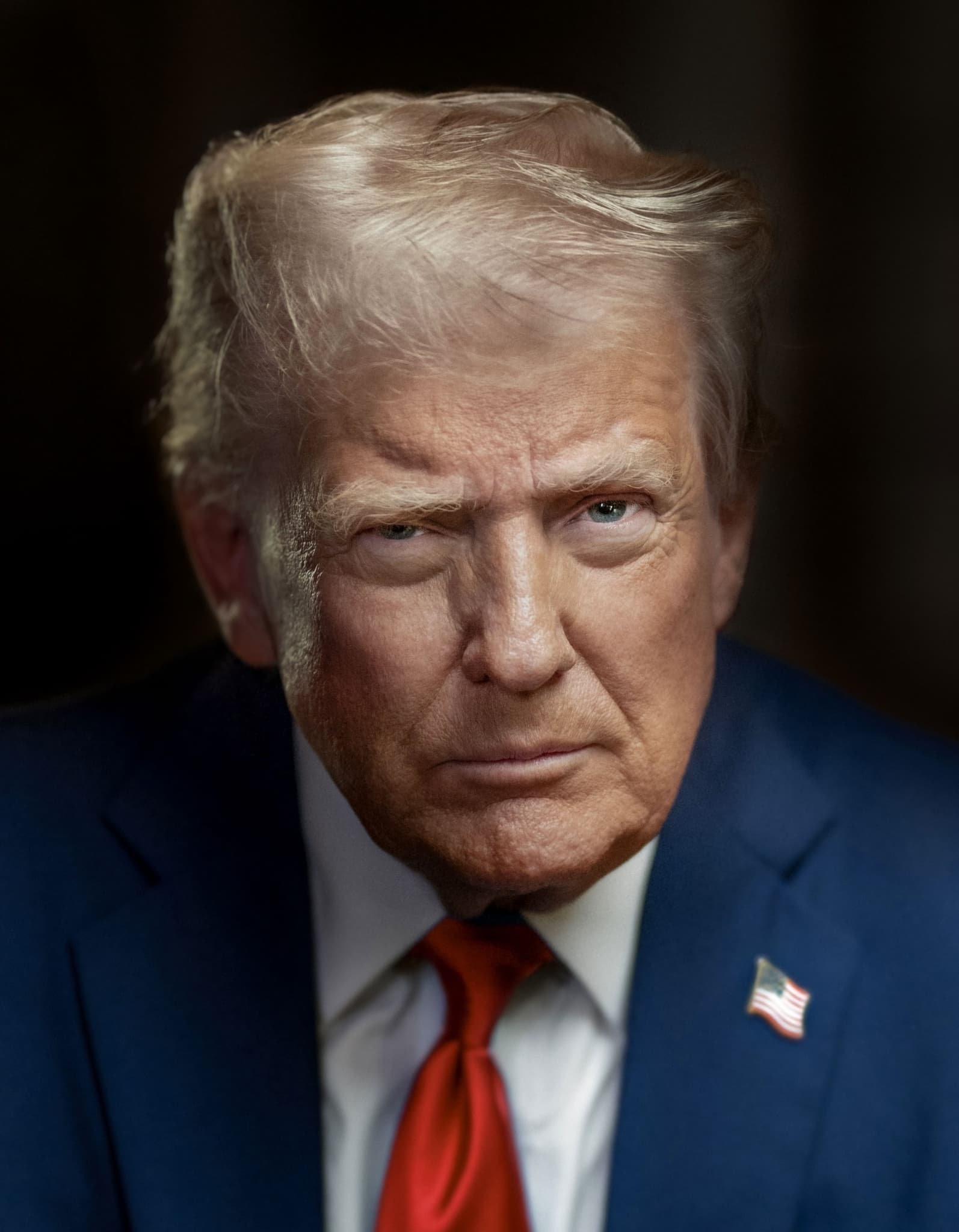
WASHINGTON — President Donald Trump announced a decisive shift in U.S. military posture in the Middle East today, saying the United States would "clean out" the Strait of Hormuz, a critical global oil chokepoint. The aggressive declaration immediately sent ripples through global markets, signaling potential military intervention that could severely disrupt energy supplies and international trade routes.
The president's direct language underscores an administration intent on asserting U.S. power, a move that traders interpret as a significant escalation in geopolitical risk. The declaration directly impacts the cost of doing business for countless corporations reliant on stable shipping lanes and predictable energy prices. The immediate market reaction reflects deep investor anxiety over the potential for conflict and its far-reaching economic consequences.
This stance marks a clear departure from previous administrations' more cautious rhetoric surrounding the region, placing a premium on defense and energy security in Washington's foreign policy calculus.
Global financial markets responded with a visible shift toward caution and a flight from risk assets, although the impact varied across sectors. Bitcoin, often seen as a barometer for global instability, traded down to $70,949, a 2.9 percent drop over 24 hours, while Ethereum fell 3.3 percent to $2,188.
Major U.S. equity indices reflected this unease; the Dow Jones Industrial Average closed down 0.6 percent at 47,917, and the S&P 500 dipped 0.1 percent to 6,817. The tech-heavy Nasdaq, however, showed resilience, climbing 0.4 percent to 22,903, perhaps reflecting a belief in the sector's insulation from direct geopolitical energy shocks.
The broader market sentiment, as indicated by the Crypto Fear & Greed Index registering 16, or "Extreme Fear," underscores widespread investor apprehension following the president's assertive remarks.
This executive pronouncement, while not a direct legislative act, carries immense weight within the broader framework of U.S. foreign policy and defense spending. Congressional leaders will undoubtedly scrutinize the president's authority to commit military forces without specific legislative approval, setting the stage for potential clashes over war powers.
It also aligns with the administration's stated objective of projecting American strength globally and securing vital economic interests. The president's rhetoric frequently emphasizes a strong national defense and energy independence, and this statement reinforces those core tenets, suggesting a willingness to use military force to achieve economic and strategic objectives.
This move could also influence upcoming defense budget allocations and international trade negotiations, as allies and adversaries alike reassess the U.S. posture in critical regions.
The president's declaration creates clear winners and losers across various economic sectors. Energy companies stand to benefit from potential spikes in oil prices, as any disruption in the Strait of Hormuz—through which roughly one-fifth of the world's oil supply passes—would immediately drive up crude costs. Lobbyists for the oil and gas industry have long advocated for robust U.S. presence in the region to ensure stable supply lines.
Conversely, global shipping companies and airlines face significant operational challenges and increased insurance costs. Consumers, particularly in energy-dependent nations, would bear the brunt of higher fuel prices. Defense contractors, while not directly named, typically see an uplift in investor confidence during periods of heightened geopolitical tension, anticipating increased government spending. Nations heavily reliant on Middle Eastern oil, particularly in Asia, will be closely watching, as their economic stability hangs in the balance.
The ripple effects of such a military commitment extend deep into the global economy, impacting multiple industries. Companies like Apple, Amazon, Microsoft and Alphabet, which rely on intricate global supply chains and stable consumer spending, face potential headwinds from increased shipping costs and broader economic uncertainty.
Tesla, with its focus on electric vehicles, might see mixed effects, as higher traditional fuel prices could boost EV demand, but overall economic slowdowns could curb consumer spending. The tech sector, while showing some resilience today, is not immune to a sustained period of geopolitical instability. In the crypto space, while some view digital assets as a hedge against fiat instability, the immediate reaction indicates that broader market fear can still trigger sell-offs, particularly from institutional investors who manage diverse portfolios.
Legally, the president's statement raises significant questions about the scope of executive power concerning military action. The War Powers Resolution of 1973 requires the president to notify Congress within 48 hours of committing armed forces to military action and limits the duration of such action without Congressional authorization. Any military engagement in the Strait of Hormuz would likely trigger intense debate over these constitutional limits.
Furthermore, such actions carry complex implications under international law, potentially drawing condemnation or support from various global actors. For U.S. companies operating internationally, the legal and compliance costs associated with heightened geopolitical risk, including sanctions regimes and altered trade routes, could escalate significantly, necessitating urgent risk assessments and contingency planning.
Looking ahead, the immediate focus shifts to how the administration plans to operationalize the president's directive and the diplomatic fallout. Congress will undoubtedly demand clarity on the strategic objectives and potential timelines for any military action. International partners and adversaries will closely monitor the U.S. response, potentially leading to a realignment of alliances or increased regional tensions.
Investors will be watching for any further statements from the White House or the Pentagon, as well as the reaction from key oil-producing nations and international bodies. The path forward will likely involve a combination of military posturing, diplomatic negotiations and the potential for a new wave of U.S. sanctions targeting actors perceived as threatening global energy security.
President Trump's declaration on the Strait of Hormuz represents a stark assertion of U.S. power with profound financial ramifications. This is not mere policy theater; it is a direct signal of potential military action that will reshape global energy markets, impact shipping costs and force a re-evaluation of risk across every major asset class. While some sectors, like energy, may see short-term gains, the broader economy faces significant uncertainty.
This move underscores the administration's willingness to use military leverage to secure economic interests, creating a volatile landscape where geopolitical events directly translate into market shifts and tangible gains or losses for investors and corporations alike.


