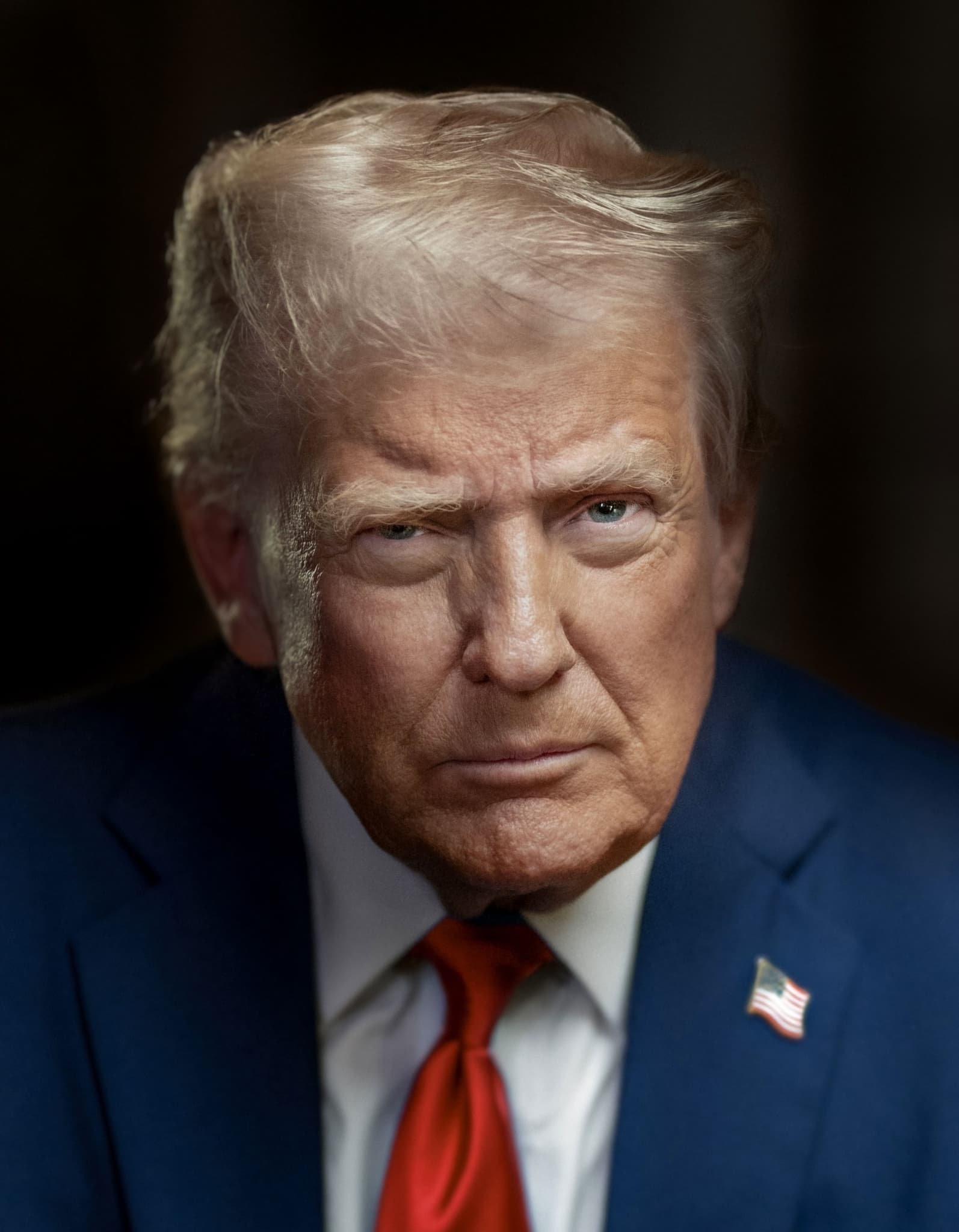
President Trump’s recent directive to ensure continued pay for Transportation Security Administration (TSA) and Department of Homeland Security (DHS) employees, even as questions linger over official appropriations, has thrown Washington into a fresh fiscal crisis, creating immediate economic uncertainty. This move, intended to prevent a shutdown-like scenario for critical national security functions, paradoxically introduces a new layer of confusion regarding federal funding mechanisms and the power of the executive branch. The impending Friday deadline for some employees to receive their final paychecks before potential disruption underscores the urgency and the direct human impact of this high-stakes political maneuver, sending ripples of concern through financial markets already grappling with broader macroeconomic pressures.
While major equity indices like the S&P 500, which closed at $6,825 (+0.6% today), and the Nasdaq, ending at $22,822 (+0.8% today), showed resilience on Wednesday, the underlying uncertainty from this fiscal standoff is a clear and present danger to investor confidence. Cryptocurrency markets, with Bitcoin trading at $72,022 (+1.3% in 24h) and Ethereum at $2,201 (+0.8% in 24h), also demonstrated upward movement, yet the Crypto Fear & Greed Index remains firmly planted in "Extreme Fear" at 14, reflecting deep-seated anxieties that such governmental instability exacerbates. This political brinkmanship, even if not immediately triggering a market correction, introduces significant systemic risk, potentially dampening future gains as investors weigh the stability of federal operations against growth prospects.
This latest fiscal entanglement is a direct challenge to the established legislative process for federal appropriations, highlighting a persistent tension between the executive and legislative branches over the nation’s purse strings. The President's attempts to navigate around congressional budget impasses by seeking alternative payment methods for essential personnel underscore a broader dysfunction that has plagued budget cycles for years. Congress, holding the constitutional power of the purse, has traditionally been the sole authority for allocating federal funds, making any executive action to bypass this process a significant departure from established norms and a potential constitutional flashpoint that could escalate quickly.
Key stakeholders in this unfolding drama include not only the President and his top advisors but also congressional leadership, who must now respond to this executive action and assert their constitutional prerogatives. Federal employee unions, such as the American Federation of Government Employees (AFGE), are mobilizing rapidly, advocating for their members who face the immediate prospect of financial hardship. Lobbyists representing federal contractors, including giants like Leidos and Booz Allen Hamilton, are also closely monitoring the situation, as delayed federal payments could severely impact their cash flow and project timelines. The power dynamics are clear: President Trump is asserting executive authority to maintain critical services, while Congress faces immense pressure to reassert its constitutional role and find a lasting solution.
The industry impact of potential pay disruptions for TSA and DHS personnel is far-reaching, extending beyond just the affected federal workers and their families. The airline industry, including major carriers like United Airlines and Delta Air Lines, relies heavily on fully staffed and functional TSA operations to ensure passenger flow and security, making any disruption a direct threat to their bottom line and flight schedules. Furthermore, government contractors providing services to DHS, ranging from cybersecurity solutions to border patrol support, face significant payment delays, potentially straining their financial models and impacting their workforce. This uncertainty also trickles down to local economies surrounding federal installations, where small businesses depend on the consistent spending power of federal employees.
The legal implications of President Trump's efforts to pay federal employees outside of a formal appropriation are substantial and could set a dangerous precedent for future executive power. Constitutional scholars are already debating whether the President possesses inherent authority to direct funds in this manner, or if such actions constitute an unlawful usurpation of congressional power. Past government shutdowns have seen legal challenges regarding the payment of essential personnel, but a proactive executive directive to bypass the appropriations process entirely pushes the boundaries of established legal interpretations. Any legal challenges, potentially brought by congressional factions or federal employee unions, would undoubtedly land in federal courts, adding another layer of unpredictability to an already volatile situation.
Looking ahead, the immediate future hinges on whether Congress can quickly coalesce around a legislative solution or if the President's directive will be allowed to stand, potentially inviting legal battles that could drag on for months. The pressure on House Speaker Kevin McCarthy and Senate Majority Leader Mitch McConnell to negotiate a pathway forward is immense, especially with a looming election cycle where fiscal responsibility and government stability will be key issues. The outcome of this standoff will not only determine the financial fate of thousands of federal workers but also significantly shape the balance of power between the executive and legislative branches for years to come, influencing future budget negotiations and the scope of presidential authority.
Gokhshtein Media’s bottom line is unequivocal: this is not merely a bureaucratic skirmish but a high-stakes power play with tangible economic consequences. President Trump's maneuver, while framed as a solution to maintain critical services, is a direct challenge to constitutional norms, introducing fiscal instability where clarity is paramount for market confidence. The confusion surrounding federal employee pay signals a deeper governmental dysfunction that investors cannot ignore, injecting an unnecessary layer of risk into an already complex economic landscape. Markets demand stability, and this ongoing legislative brinkmanship delivers the precise opposite, demanding vigilance from every financial actor.


