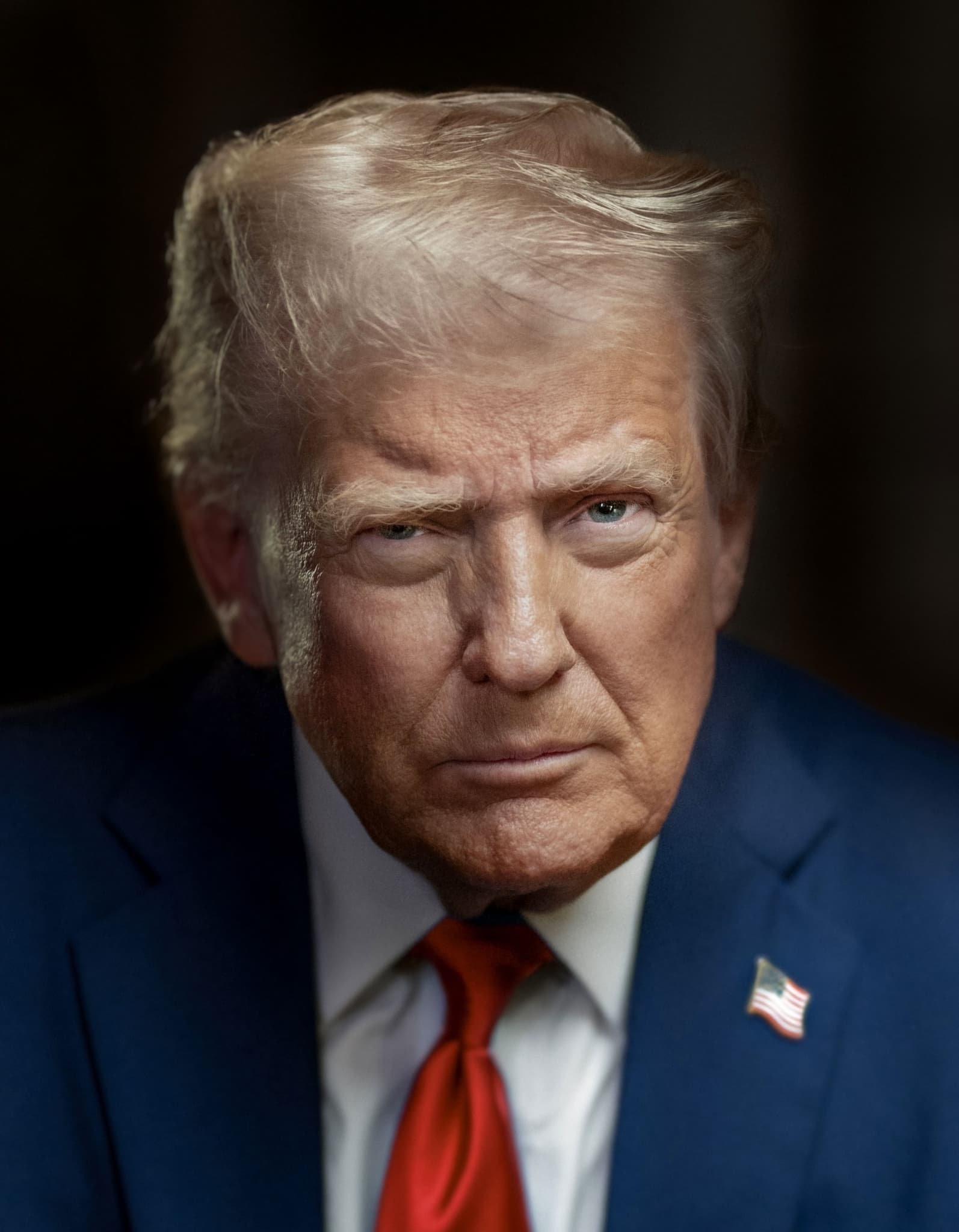
President Donald Trump delivered a chilling warning today regarding Iran, stating that "a whole civilization" could die as a critical deadline approaches. This pronouncement from the White House signals an acute escalation in geopolitical tensions, immediately impacting global financial calculations. While specific policy actions remain unannounced, the President's rhetoric alone carries significant weight, forcing investors and policymakers to rapidly reassess risk premiums across various asset classes, particularly those sensitive to energy market disruptions and international instability.
Markets reacted with a cautious retreat from risk, even as some major indices showed resilience. Bitcoin (BTC) dropped to $68,403, marking a 24-hour decline of 1.5%, while Ethereum (ETH) fell 2.7% to $2,087, reflecting a broader risk-off sentiment within the digital asset space. The Crypto Fear & Greed Index plummeted to 11, indicating "Extreme Fear" among investors. Despite the geopolitical jitters, the Dow Jones held steady at $46,670 (+0.4%), the S&P 500 at $6,612 (+0.4%), and the Nasdaq at $21,996 (+0.5%), suggesting that domestic economic data or other sector-specific news might be offsetting some of the immediate global concerns for traditional equities, though underlying anxiety remains palpable. Energy futures, particularly crude oil, saw directional upward movements, though no specific price is available, as traders priced in potential supply disruptions.
This heightened rhetoric fits into a long-standing legislative and executive framework concerning Iran, primarily centered on economic sanctions and deterrence. Congress has historically passed robust sanctions legislation, granting the Executive branch broad authority under acts like the International Emergency Economic Powers Act (IEEPA) to impose severe penalties on entities dealing with Tehran. The current administration has consistently pursued a maximal pressure campaign, and President Trump's latest statement suggests a potential for even more stringent enforcement or military options, bypassing the usual diplomatic channels and putting further strain on the global financial system that must navigate these complex legal mandates.
Key stakeholders are now recalibrating their positions. Defense contractors like Lockheed Martin and Northrop Grumman often see their stock prices firm up amidst geopolitical tensions, driven by expectations of increased government spending, though specific price movements were not immediately evident today. Conversely, multinational corporations with extensive supply chains in Asia and Europe, or those reliant on stable global energy prices, face significant downside risk. Lobbying efforts from groups advocating for a hard line on Iran, such as the American Israel Public Affairs Committee (AIPAC), are likely to intensify, pushing for even greater pressure, while international trade organizations and some energy sector lobbyists may quietly advocate for de-escalation to protect global commerce and energy flows.
The implications for various industries are substantial, particularly for global financial institutions and the burgeoning crypto sector. Banks, payment processors, and investment firms are already grappling with complex sanctions compliance regimes enforced by the Treasury Department's Office of Foreign Assets Control (OFAC). An escalation with Iran would necessitate even more rigorous due diligence, increasing compliance costs and the risk of penalties for inadvertent violations. For crypto, the challenge is acute: global exchanges and DeFi protocols face heightened scrutiny regarding illicit finance and potential sanctions evasion, pushing platforms like Coinbase and Binance to double down on their Know Your Customer (KYC) and Anti-Money Laundering (AML) frameworks. Any perceived weakness could invite aggressive enforcement actions from regulators like SEC Chair Paul Atkins, who has consistently emphasized the need for robust oversight.
Legally, President Trump's warning underscores the vast discretionary power of the Executive branch in foreign policy and economic warfare. The legal precedent for imposing and expanding sanctions against Iran is well-established, allowing the administration to target not only Iranian entities but also foreign firms engaging in transactions deemed to benefit Tehran. This concept of "secondary sanctions" could further isolate Iran from the global financial system, potentially pushing more illicit trade into less regulated channels, including certain cryptocurrencies. The legal and operational challenges for companies to ensure they are not inadvertently facilitating transactions that violate OFAC rules will intensify, particularly as the lines between traditional finance and decentralized digital assets continue to blur.
Looking ahead, the immediate future holds a period of intense uncertainty and diplomatic maneuvering. The international community, including key allies and adversaries, will be closely watching for the administration's next moves, which could range from targeted economic measures to military posturing. This geopolitical instability could also influence the Federal Reserve's monetary policy decisions under Chair Jerome Powell, particularly if energy price volatility or supply chain disruptions threaten domestic inflation targets or broader economic stability. Congress will undoubtedly be pressed to weigh in, potentially through new resolutions or appropriations bills, further shaping the legislative landscape for US foreign policy and its economic instruments.
The bottom line for Gokhshtein Media readers is that President Trump's direct and unambiguous warning about Iran has injected a significant layer of geopolitical risk into an already complex global financial environment. The real money in this scenario is in the re-pricing of risk across energy, equities, and especially the still-maturing crypto markets. Firms operating globally, from major banks to innovative DeFi platforms, must prepare for an intensified regulatory environment, higher compliance costs, and the very real possibility of disrupted supply chains and capital flows. The power dynamics at play are not merely diplomatic; they are profoundly economic, dictating who profits and who faces existential threats in the high-stakes game of international power projection.


