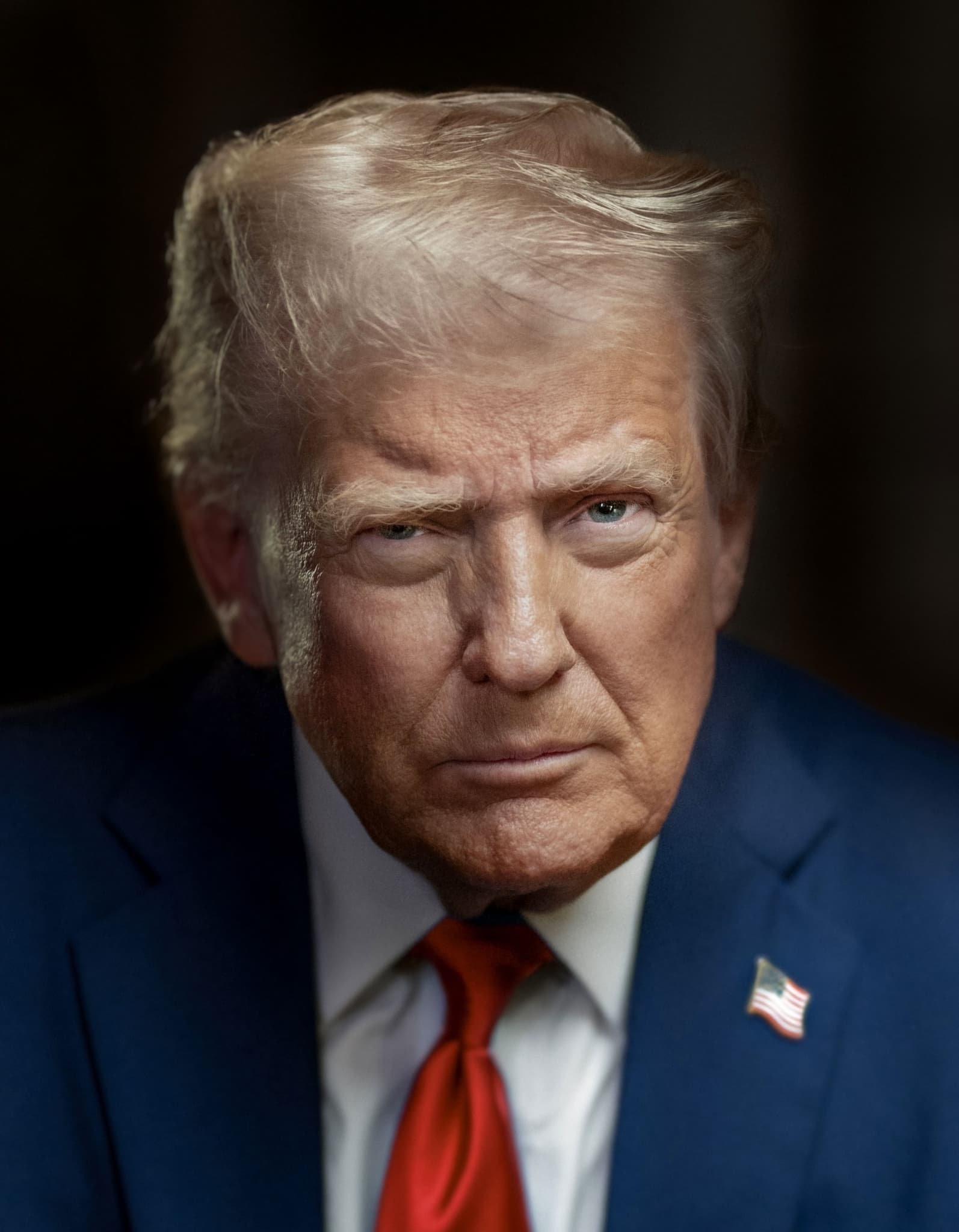
President Trump's unequivocal declaration that "Cuba's a mess, and they're gonna be next" has sent a clear signal across global markets, injecting a fresh wave of geopolitical uncertainty. This direct rhetoric from the sitting President of the United States immediately impacts risk sentiment, a dynamic digital assets cannot ignore. Bitcoin, currently trading at $67,454, and Ethereum, holding $2,065, show marginal 24-hour gains of +0.3% and +0.1% respectively, even as the Crypto Fear & Greed Index registers an alarming 12, squarely in "Extreme Fear" territory. This stark contrast between muted price action and heightened market anxiety demands a closer look at what this means for your positions.
Despite the President's pointed remarks, the immediate market reaction in digital assets appears contained, a testament to the sector's evolving maturity or perhaps a delayed processing of the news. While BTC and ETH nudged slightly higher, the broader equities market showed a mixed bag: the S&P 500 gained +0.1% and the Nasdaq rose +0.2%, yet the Dow Jones dipped -0.1%. Tesla, a bellwether for speculative risk, plummeted -5.4%, suggesting a selective risk-off attitude in traditional tech. Solana holds at $79.89, and XRP trades at $1.3, demonstrating that while macro headlines can certainly ripple, not all assets react uniformly or immediately to geopolitical shifts.
Historically, Bitcoin has often been framed as a "digital gold" or a non-sovereign hedge against geopolitical instability. Recall the market's response to past global crises, where initial volatility was frequently followed by a strengthening of Bitcoin's position as a store of value. This current scenario, with the US President directly addressing a nation with such stark language, echoes those moments where the stability of traditional fiat systems and international relations come into question. Investors who understand Bitcoin's role as a decentralized alternative are positioning for potential long-term shifts in global capital flows.
Institutional players are not merely observing; they are actively integrating these geopolitical risks into their investment frameworks. Firms like BlackRock and Fidelity, with their successful Bitcoin spot ETFs trading since January 2024, are meticulously tracking how such macro narratives influence investor behavior and asset allocation. Analysts from major financial institutions, including Standard Chartered and JPMorgan Chase, consistently publish research on the geopolitical risk premium applied to various asset classes, with digital assets increasingly featured in these sophisticated models. Their long-term conviction, evident in sustained ETF interest post-Ethereum spot ETF approval in May 2024, signals a deeper understanding of crypto's role in a complex world.
On-chain data provides critical real-time insights into market sentiment beyond price. With the Fear & Greed Index deep in "Extreme Fear" at 12, we typically monitor for significant shifts in exchange reserves and wallet flows. While specific inflow/outflow numbers linked directly to this headline are not yet public, sustained accumulation by long-term holders in cold storage continues to be a dominant trend. This pattern suggests that sophisticated investors are using periods of geopolitical uncertainty and fear as opportunities to accumulate, rather than panic sell. They view these moments as confirmation of Bitcoin's original thesis: a decentralized, censorship-resistant asset outside the direct control of any single nation-state.
The regulatory implications of President Trump's strong stance on Cuba are profound for the crypto sector. Increased US pressure on Cuba could easily lead to heightened scrutiny on how digital assets might be used to circumvent international sanctions. SEC Chair Paul Atkins and Treasury officials are undoubtedly monitoring this situation closely, understanding that the narrative of crypto as a tool for financial freedom can intersect with national security concerns. This dynamic will inevitably lead to more robust discussions around KYC/AML compliance, and potentially, targeted sanctions against specific protocols or entities perceived as facilitating illicit finance. The industry must prepare for a more complex regulatory landscape where geopolitical considerations are paramount.
Looking forward, the digital asset market will be keenly watching whether President Trump's statement translates into concrete policy actions against Cuba. Any intensification of economic pressure would inevitably force a global conversation about the utility of decentralized finance in a world grappling with sanctions and sovereign control. Nations are already exploring central bank digital currencies (CBDCs) and alternative payment rails, and such geopolitical rhetoric only accelerates the urgency of these discussions. For digital assets, this reinforces a dual narrative: a potential safe haven from traditional geopolitical risk, but also an increasing target for regulatory oversight from global powers determined to maintain financial control. Smart investors are positioning for both outcomes.
The bottom line is crystal clear: President Trump's blunt declaration on Cuba injects undeniable geopolitical uncertainty into an already cautious digital asset market, as reflected by the Extreme Fear index at 12. While Bitcoin holds $67,454 and Ethereum maintains $2,065, the long-term implications for crypto as a tool for financial sovereignty versus a target for state control are now amplified. Investors must understand that global politics directly impacts digital asset narratives, driving both adoption for resilience and calls for stricter oversight. This isn't just about Cuba; it's about the accelerating future of money in a rapidly shifting, multipolar world. Position accordingly.


