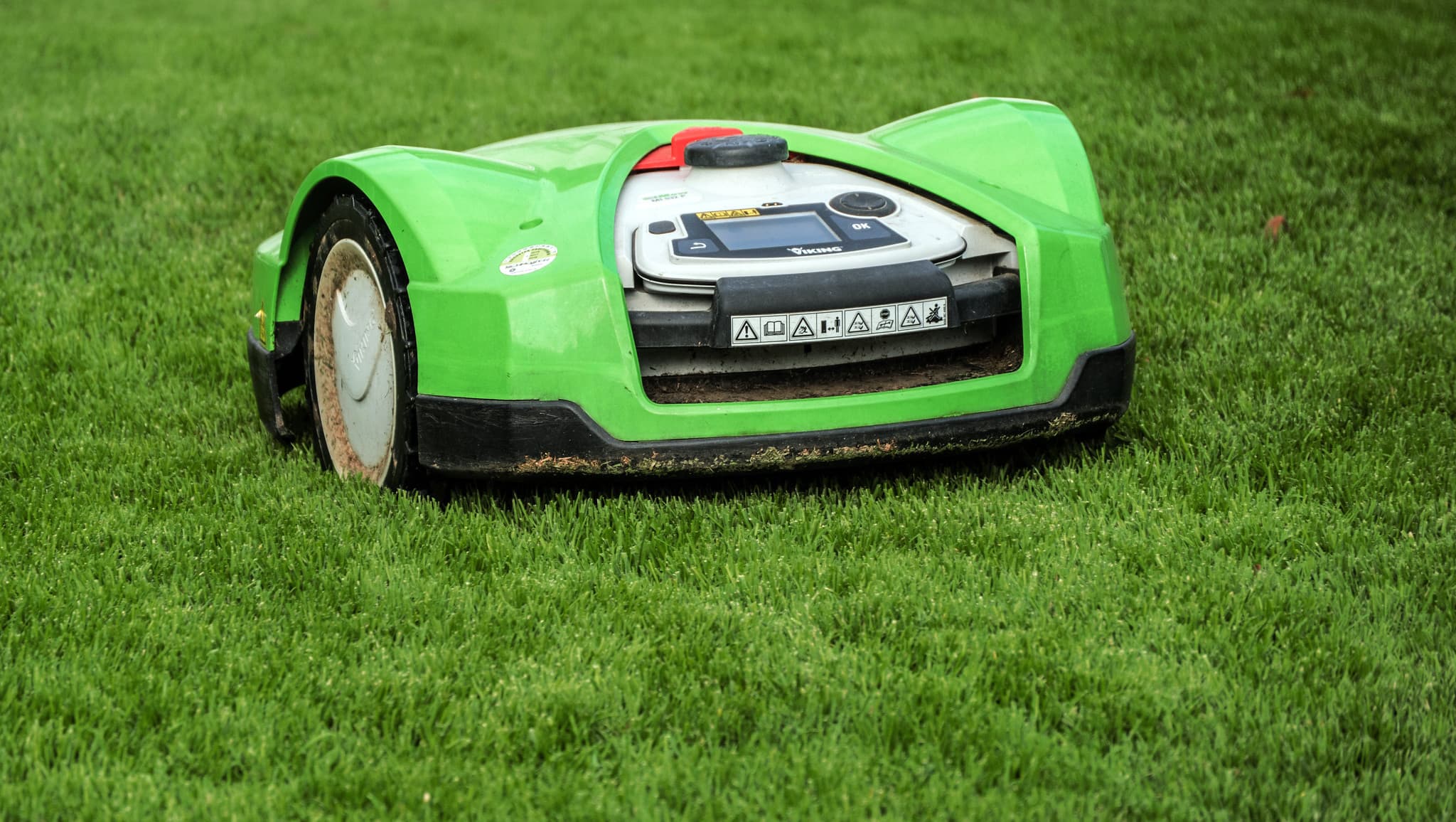
The smart mower market, long perceived as a high-priced gadget for early adopters, is finally hitting an inflection point where product efficacy justifies its premium, signaling a maturation that demands serious consideration from investors. While the initial investment for these advanced units can range from $2,000 to over $10,000, their operational cost efficiency and time-saving proposition are attracting a broader demographic beyond the enthusiast. This shift is translating into robust market growth projections, with analysts at Grand View Research predicting the global robotic lawn mower market will expand at a compound annual growth rate exceeding 15% through 2030, potentially reaching over $5 billion in annual revenue. Key players like Husqvarna, which has been in the space for decades, and newer entrants leveraging advanced AI and sensor technology, are vying for market share in what is becoming a critical segment of the smart home ecosystem.
Market reaction to this maturing category is subtle but significant, particularly among diversified tech giants with existing smart home portfolios. Amazon, which acquired iRobot for $1.7 billion, holds a strategic position, and its stock traded at $209.77 today, reflecting broader market dynamics rather than specific robotic mower news. However, the long-term play for Amazon includes integrating outdoor robotics into its extensive smart home platform, leveraging data and cross-selling opportunities. Publicly traded companies focused solely on this niche are scarce, but venture capital interest is intensifying, with funds like Kleiner Perkins and Lightspeed Venture Partners actively scouting startups that can demonstrate scalable deployment and defensible intellectual property. The broader market sentiment, with the Nasdaq up 0.2% to $21,879 and the S&P 500 up 0.1% to $6,583 today, indicates a stable but competitive environment for tech innovation.
The trajectory of robotic outdoor maintenance mirrors the evolution seen in indoor cleaning robotics, pioneered by products like the Roomba over two decades ago. Early robotic mowers suffered from unreliable navigation, poor battery life, and complex installation requiring perimeter wires, limiting their appeal to a niche segment. However, significant advancements in GPS (including RTK precision), computer vision, and robust battery technologies have overcome many of these limitations, allowing for wire-free installations and more intelligent obstacle avoidance. This historical progression from rudimentary automation to sophisticated, AI-driven autonomy is crucial for understanding the current market's readiness for mainstream adoption and the underlying technological investments that have fueled this shift.
Industry experts emphasize the critical role of software and service integration in defining the winners in this space. Sarah Chen, a partner at Accel specializing in frontier tech, notes, "The hardware is table stakes now; the real moat is built on predictive maintenance, over-the-air updates, and subscription services that unlock advanced features or guarantee uptime." Analysts at Gartner project that by 2028, over 30% of robotic lawn mower revenue will come from recurring software and service subscriptions, a significant shift from a pure hardware sales model. This focus on recurring revenue streams transforms the unit economics, promising higher lifetime customer value and more predictable financial performance, a model highly favored by institutional investors.
From a technical standpoint, the latest generation of smart mowers are less 'robots' and more 'autonomous outdoor platforms.' They incorporate multi-sensor arrays, including LiDAR, ultrasonic sensors, and high-resolution cameras, all feeding data to on-board AI processors for real-time path planning and obstacle detection. NVIDIA's Jetson platform, for example, is increasingly being adopted by advanced robotics manufacturers, leveraging its GPU architecture for complex environmental mapping and decision-making. The shift from rudimentary bump-and-go navigation to precise, zone-based mowing with virtual boundaries represents a significant architectural leap. Companies that can integrate these complex systems into a user-friendly interface, coupled with robust cloud connectivity for diagnostics and feature updates, are establishing strong competitive moats through superior performance and a compelling user experience.
The regulatory landscape for autonomous outdoor equipment is still nascent but will inevitably evolve as adoption accelerates. Safety is paramount, and manufacturers are proactively adhering to stringent international standards like CE and UL certifications, focusing on blade safety mechanisms and collision avoidance. As these devices become more sophisticated, questions surrounding data privacy, particularly concerning integrated cameras that map properties, will likely attract scrutiny from regulators like the SEC under Chair Paul Atkins, especially for publicly traded companies. Local ordinances regarding noise pollution or operating hours for autonomous devices could also emerge, requiring manufacturers to design adaptable and compliant systems, though broad antitrust concerns remain distant given the market's current fragmentation.
Looking forward, the roadmap for smart mowers extends far beyond mere grass cutting. Manufacturers are exploring adjacent revenue opportunities, including autonomous snow removal, leaf collection, and even security patrolling, transforming the device into a year-round outdoor utility. The integration with broader smart home ecosystems, enabling voice control via Amazon Alexa or Google Assistant, and interoperability with other outdoor smart devices, will further enhance their value proposition. With an aging population seeking convenience and a persistent labor shortage in landscaping services, the market opportunity for these intelligent solutions is set to expand rapidly, promising sustained revenue growth and the potential for new platform plays built on outdoor automation.
Ultimately, the 'finally good enough' moment for smart mowers signifies a profound shift from novelty to utility, driven by technological maturity and a compelling economic proposition. For Gokhshtein Media, the investment thesis is clear: companies that successfully blend advanced robotics, robust software platforms, and a recurring revenue model will capture significant value. This isn't just about cutting grass; it's about automating a substantial portion of the $100 billion global landscaping industry. The winners will be those who master not only the engineering challenges but also the long-term customer relationship, transforming an arduous chore into a subscription-based, effortless experience, cementing their competitive moat for years to come.