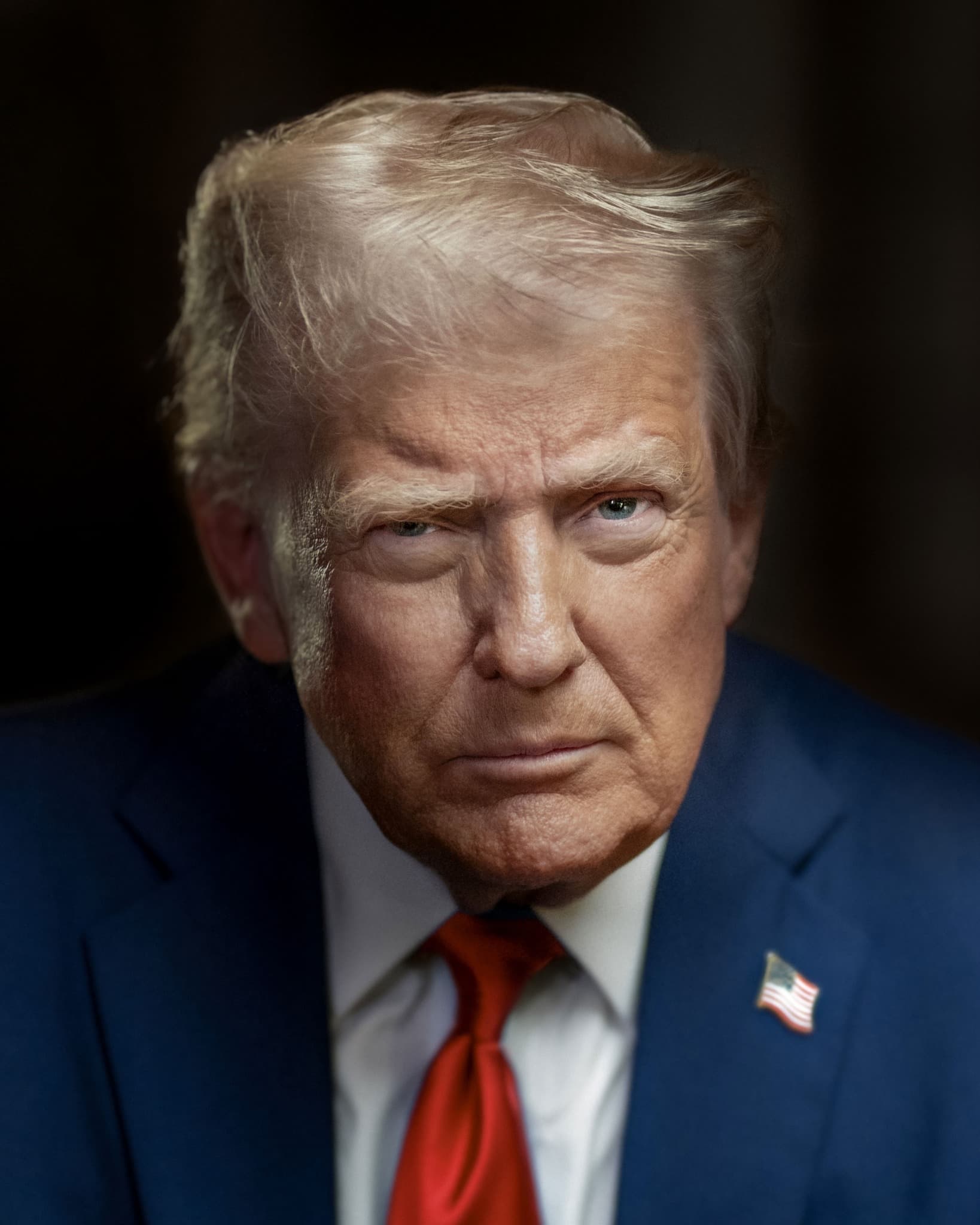
The quiet content changes at the U.S. Holocaust Memorial Museum, signal a deeper, more pervasive shift in Washington: the proactive alignment of ostensibly independent institutions with the executive branch under President Trump. This move, described as "proactively falling in line," is not an isolated incident but a barometer of the administration's overarching strategy to consolidate executive power and reshape the administrative state. While seemingly distant from financial markets, such a subtle yet significant act of institutional deference can ripple through the broader economic landscape, fostering an environment where regulatory predictability is increasingly viewed through a political lens. Investors, particularly those in highly regulated sectors, begin to price in a higher degree of political risk, anticipating that independent bodies might increasingly bend to the will of the White House rather than adhering strictly to established mandates. The long-term implications for governance stability, a cornerstone of market confidence, are substantial.
Direct market reaction to the museum's content changes was not immediately apparent in today's trading, reflecting the indirect nature of this particular political maneuver. The S&P 500 closed up a modest 0.1% at $6,583, while the Nasdaq saw a 0.2% gain to $21,879, indicating a market largely focused on earnings and macro data rather than cultural shifts. However, the underlying anxiety stemming from a politicized institutional environment is palpable, evidenced by the Crypto Fear & Greed Index registering an "Extreme Fear" level at 12, even as Bitcoin traded at $67,300 and Ethereum at $2,055, both down 0.1% today. This disconnect suggests that while specific events may not trigger immediate sell-offs, the cumulative effect of perceived threats to institutional independence contributes to a broader sentiment of caution. Investors in volatile assets, from technology giants like Tesla, which dropped 5.4% today to $360.59, to emerging digital assets, consistently factor in the stability of the regulatory landscape, which is now increasingly under scrutiny. The subtle erosion of institutional autonomy creates a slow-burn risk that can deter long-term capital allocation and foster an environment of uncertainty for innovative industries.
This institutional recalibration unfolds within a legislative and administrative context marked by the Trump administration's persistent efforts to rein in what it terms the "deep state" and assert greater executive control over federal agencies and federally-funded bodies. The push to reduce the power of unelected bureaucrats and streamline regulatory processes, often championed by conservative think tanks like the Heritage Foundation and the Cato Institute, provides the ideological underpinning for such actions. While no specific bill mandates the museum's content changes, the implicit message sent by executive branch appointees and the administration's rhetoric creates a powerful incentive for institutions to "proactively fall in line" to secure funding, maintain political goodwill, or avoid direct confrontation. This broader regulatory landscape prioritizes loyalty and alignment over strict independence, establishing a precedent that could significantly alter how agencies like the SEC, under Chair Paul Atkins, or the CFTC interpret and enforce financial regulations. The ongoing debate surrounding the scope of the Administrative Procedure Act and the Chevron deference doctrine further empowers this executive-led restructuring, suggesting that a more centralized, politically responsive regulatory future is taking shape.
The primary beneficiaries of institutions "falling in line" are undeniably the executive branch and its political allies, who gain increased leverage and a more compliant administrative apparatus to implement their agenda without significant internal resistance. This strengthens the hand of figures like Vice President JD Vance, known for his critiques of bureaucratic overreach, and other administration officials keen to see federal entities reflect the President's vision. On the opposing side are advocates for institutional independence, academic freedom, and non-partisan public service, including various civil liberties organizations and certain segments of Congress, who view such shifts as an erosion of democratic checks and balances. Lobbyists representing industries that thrive on predictable, rules-based governance – such as the traditional banking sector, represented by groups like the American Bankers Association, or large tech firms like Microsoft, which saw a 1.1% gain today to $373.46, relying on stable antitrust environments – express private concerns about politicized regulatory frameworks. These stakeholders fear that a system where regulatory interpretations are fluid and subject to political pressure introduces unacceptable levels of operational risk, making long-term strategic planning and capital investments increasingly hazardous. The quiet nature of the museum's changes underscores the subtle but effective pressure exerted by the current power dynamics in Washington.
The implications of a more politically influenced institutional environment extend broadly across industries, particularly those subject to intense federal oversight and funding. For the burgeoning digital asset sector, this trend introduces a new layer of uncertainty beyond already complex regulatory challenges. Companies like Coinbase and Grayscale, which have successfully navigated the approval of Bitcoin spot ETFs in January 2024 and Ethereum spot ETFs in May 2024, rely heavily on the perceived impartiality and consistency of regulators like SEC Chair Paul Atkins. If the SEC or other financial regulators are seen as increasingly responsive to executive preferences rather than established legal frameworks, it could complicate future product approvals, enforcement actions, and the broader integration of crypto into mainstream finance. Similarly, traditional financial institutions like JPMorgan Chase or Goldman Sachs, which operate under stringent regulatory regimes, face heightened unpredictability regarding compliance costs and market access if rules become subject to political whims. Even major tech players such as Alphabet and Amazon, experiencing slight declines of 0.5% and 0.4% respectively today, could face a less stable antitrust environment, where enforcement decisions are swayed more by political optics than by economic principles.
The "proactive alignment" of institutions like the Holocaust Memorial Museum, while not a direct legal mandate, sets a dangerous precedent for the interpretation of institutional independence and the rule of law. Federal agencies and government-funded entities often operate under charters designed to insulate them from direct political interference, relying on established legal frameworks like the Administrative Procedure Act (APA) to ensure fair and consistent regulatory action. When institutions preemptively adjust their content or policies to align with executive preferences, it signals a weakening of these foundational legal protections, suggesting that the spirit of independence is being voluntarily surrendered. This creates an environment where enforcement actions, particularly from agencies like the SEC, could be perceived as politically motivated rather than purely merits-based, leading to increased litigation and challenges to regulatory authority. For businesses, this translates directly into higher compliance costs, as they must navigate a less predictable regulatory landscape, often requiring increased lobbying efforts and legal counsel to anticipate shifting political winds rather than stable legal interpretations. The long-term erosion of faith in regulatory impartiality could undermine the foundational trust necessary for robust capital markets.
Looking ahead, this trend of institutional alignment suggests a continued push by the Trump administration to consolidate executive authority across the federal landscape. We can anticipate further appointments of individuals aligned with this philosophy to key regulatory bodies, potentially accelerating the pace of institutional "recalibration." Future legislative efforts might focus on explicit reforms to agency independence, challenging the authority of bodies like the Federal Reserve, currently chaired by Jerome Powell, or the Consumer Financial Protection Bureau, under the guise of increasing accountability. The implications for critical financial legislation, such as potential stablecoin bills or comprehensive crypto frameworks, are substantial; these will likely be shaped more by the administration's political priorities than by bipartisan consensus or industry input. Furthermore, the upcoming midterm elections will serve as a crucial referendum on this approach to governance, with the outcome directly influencing the administration's ability to continue its institutional restructuring. The financial sector, particularly those navigating novel technologies like blockchain, must prepare for an environment where political expediency increasingly dictates the regulatory pipeline, demanding agile adaptation and proactive engagement with a highly politicized D.C. landscape.
Gokhshtein Media's take is clear: the quiet shifts within institutions like the Holocaust Memorial Museum are not mere cultural footnotes but potent indicators of a profound reordering of power in Washington, with significant implications for financial markets. This administration's strategy of fostering "proactive alignment" means that the traditional bulwarks of regulatory independence are under sustained pressure, creating an environment where political influence increasingly trumps established legal and administrative norms. For investors, this translates into elevated political risk and reduced predictability, particularly in highly regulated sectors and emerging markets like crypto. While specific market reactions may be muted on any given day, the cumulative effect of a less independent regulatory state undermines confidence and can deter long-term capital formation. The money will flow to those who best understand and navigate this politicized landscape, benefiting well-connected lobbyists and firms adept at anticipating shifts in executive favor. The cost of this reordering is borne by those who rely on fair, consistent, and impartial governance: a less stable, less transparent, and ultimately, a less efficient financial system. This is not policy theater; it is a fundamental power grab that reshapes the economic playing field.


