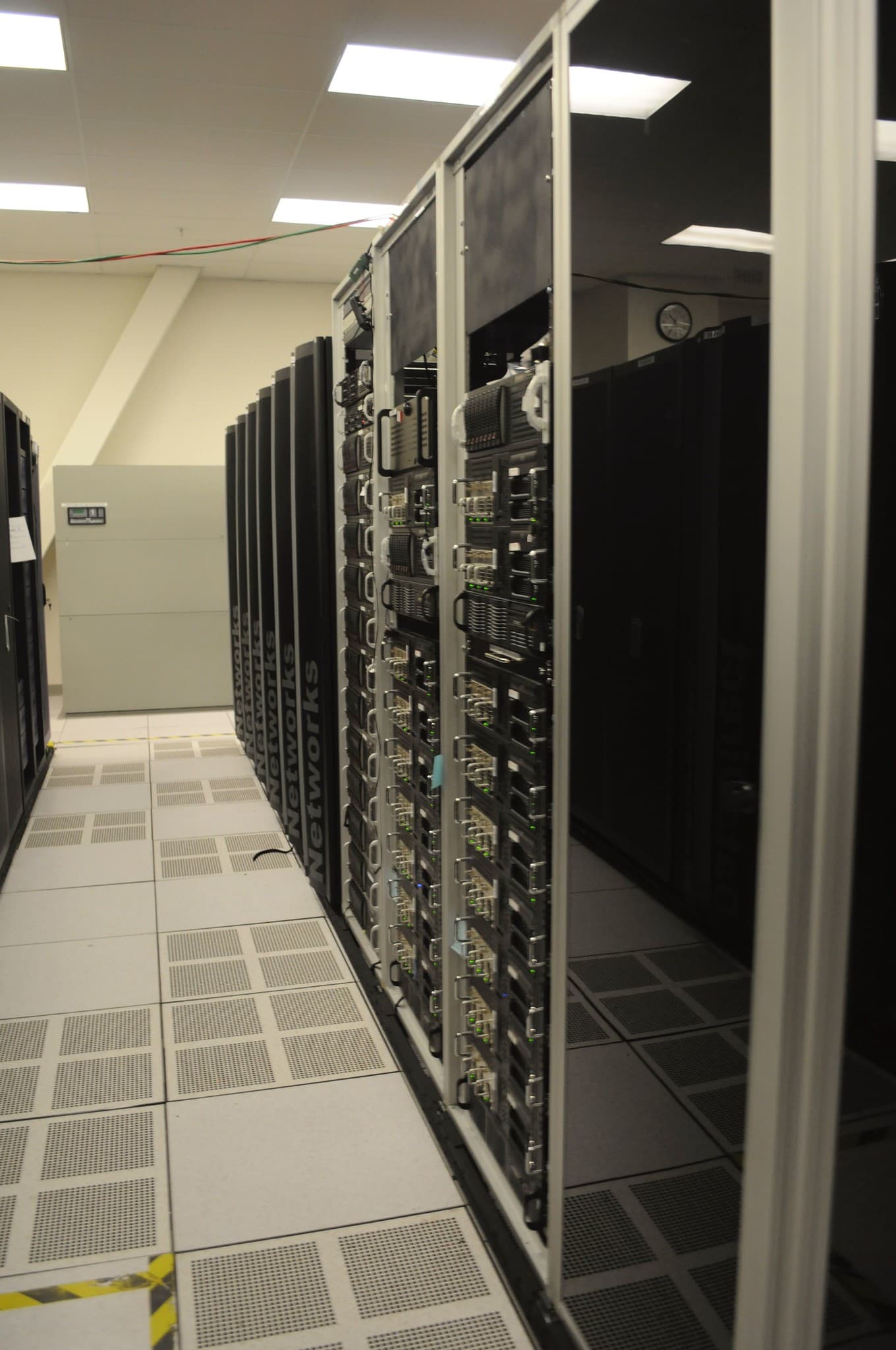
SpaceX is quietly advancing plans for orbital data centers (ODCs), a strategic move to extend compute infrastructure beyond terrestrial limits and unlock new revenue streams. This audacious venture represents a significant capital allocation strategy, aiming to leverage its unparalleled launch and satellite network capabilities to tap into a potentially multi-trillion-dollar global data market. The economics of such a proposition are staggering, requiring immense upfront investment in specialized hardware, redundant systems, and advanced thermal management, all while justifying a private valuation that has consistently hovered north of $150 billion. The core thesis posits that ODCs can offer unique advantages in low-latency processing, enhanced security, and disaster resilience, carving out a specialized, high-margin niche in the ever-expanding cloud computing landscape.
While SpaceX remains a privately held company, the market sentiment surrounding such ambitious, high-capex plays is mixed. Today, the broader equities market shows cautious optimism, with the Nasdaq trading up +0.2% at $21,879 and the S&P 500 gaining +0.1% to $6,583. However, the Crypto Fear & Greed Index registering at 12 (Extreme Fear) underscores investor apprehension in highly speculative assets. Publicly traded cloud giants like Microsoft, currently at $373.46 (+1.1%), and Amazon, at $209.77 (-0.4%), continue to dominate the terrestrial cloud market, demonstrating the scale and capital intensity required to build and maintain global data infrastructure. SpaceX's ODC play is a long-term wager on creating an entirely new market segment rather than directly competing with established hyperscalers on their home turf.
SpaceX's trajectory, from disrupting the launch services industry with reusable rockets to building the world's largest satellite internet constellation with Starlink, provides critical historical context for this pivot. The development of orbital data centers is not a radical departure but a logical, albeit ambitious, extension of its existing infrastructure and technological prowess. By leveraging its Starship heavy-lift launch system and the extensive Starlink network for inter-satellite communication, SpaceX aims to vertically integrate compute capabilities directly into its space-based ecosystem. This strategic evolution mirrors the historical progression of cloud computing itself, moving from on-premise servers to geographically distributed hyperscale data centers, and now, potentially, to an orbital frontier.
Industry experts and venture capitalists, while acknowledging the visionary scope, point to significant technical and economic hurdles. Analysts from firms like Gartner or Sequoia Capital would highlight the challenges of radiation hardening electronics, managing extreme thermal loads in a vacuum, ensuring autonomous operation and maintenance, and the sheer cost-per-compute-unit in orbit. The initial addressable market for ODCs will be highly specialized, likely catering to defense applications, deep scientific research requiring unique environmental conditions, or financial services demanding ultra-low-latency processing for arbitrage opportunities that terrestrial infrastructure cannot match. The high barrier to entry, however, also forms a formidable competitive moat, ensuring that any successful deployment would face limited immediate competition.
From a technical and architectural standpoint, orbital data centers would necessitate a paradigm shift in server design. Miniaturization, extreme power efficiency, and advanced self-healing capabilities will be paramount. Data transfer would rely heavily on Starlink's inter-satellite laser links, offering gigabit-per-second speeds between orbital nodes and potentially to secure ground stations. SpaceX's unique competitive advantage lies in its unparalleled vertical integration, owning both the launch infrastructure and the in-orbit communication network. No other entity possesses the capability to design, launch, and operate such a complex, interconnected orbital compute platform, offering a level of resilience and isolation from terrestrial events that traditional cloud providers cannot replicate.
Regulatory and geopolitical implications for orbital data centers are substantial and complex. The evolving landscape of international space law, coupled with national data sovereignty concerns, presents a significant challenge. Determining which jurisdiction's laws apply to data processed and stored in orbit, and ensuring compliance with privacy regulations like GDPR or CCPA, will require unprecedented international cooperation. Furthermore, concerns over orbital debris, spectrum allocation, and the potential for dual-use technologies will draw scrutiny from global bodies and national agencies, including the FAA and FCC in the United States. President Trump's administration has consistently championed American leadership in commercial space, yet ensuring equitable access and preventing monopolistic control of this new domain will remain a critical focus.
The long-term product roadmap for orbital data centers is likely measured in decades, not years. Initial deployments will target highly specialized, high-value applications, gradually expanding as the technology matures and costs decline. The revenue model will likely evolve from dedicated orbital compute instances to a "space-as-a-service" offering, providing unparalleled security, resilience, and unique environmental conditions for specific workloads. The insatiable global demand for compute, particularly for artificial intelligence and advanced analytics, ensures a market for any platform that can deliver unique advantages, even as GPU leader Nvidia trades at $177.39 today, reflecting broader market adjustments to growth valuations.
The bottom line for Gokhshtein Media is clear: SpaceX's foray into orbital data centers is a quintessential long-term, high-risk, high-reward strategic bet. It leverages the company's unique competitive advantages in launch and satellite technology, coupled with significant capital allocation, to target an entirely new economic frontier. While the technical, regulatory, and economic hurdles are immense, the potential for secure, resilient, and specialized compute services in orbit could be transformative. This is a calculated gamble on future demand, requiring not just technological breakthroughs but also patient capital and unprecedented operational efficiency to justify its lofty valuation. The success of ODCs will ultimately depend on whether SpaceX can turn a visionary concept into a scalable, profitable, and defensible business model, extending its dominance from Earth's orbit to the very fabric of global computation.