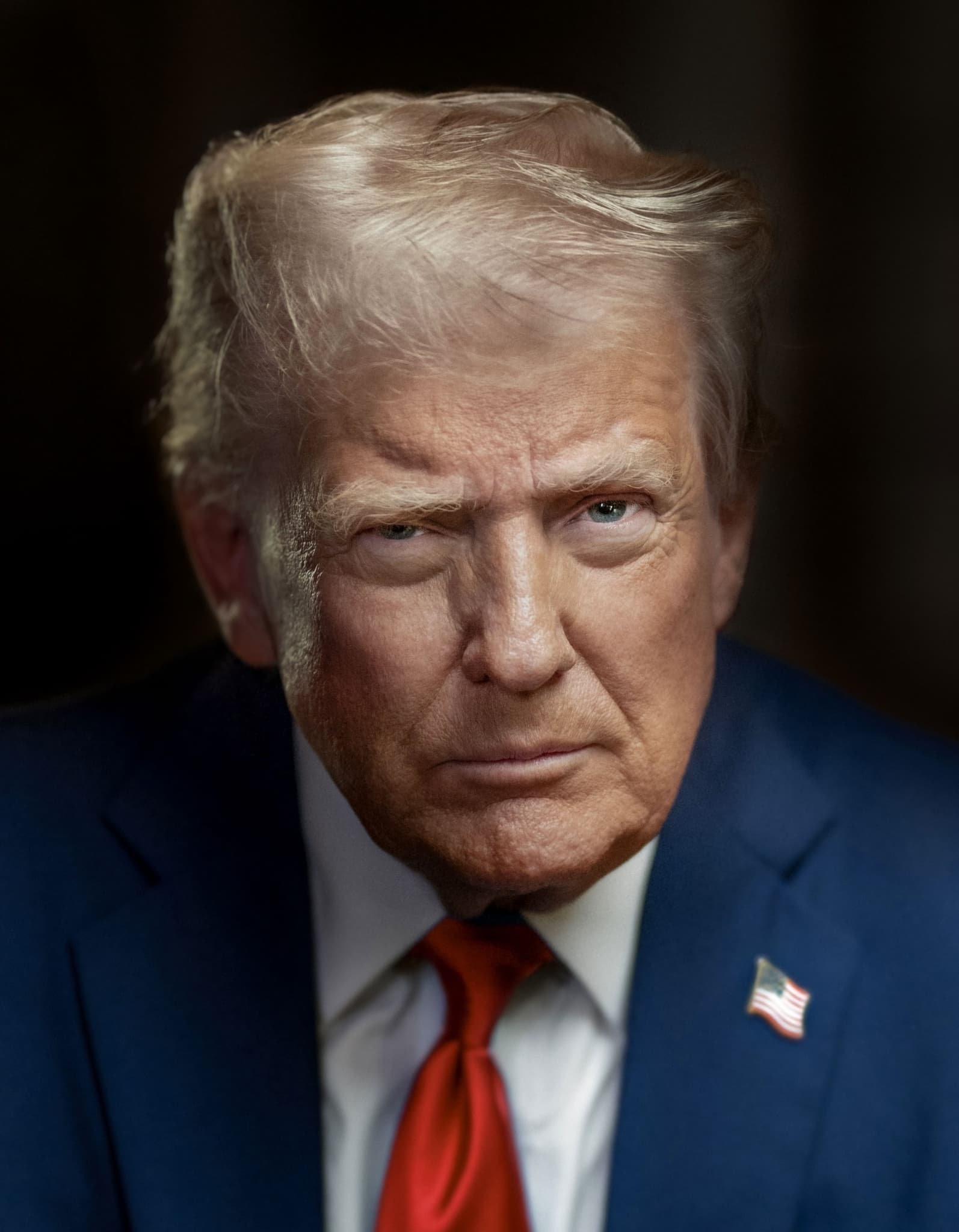
The White House's swift dismissal of reports suggesting an impending ouster of Tulsi Gabbard sent a jolt through Washington, signaling a potential internal power struggle that could ripple across the Trump administration's financial policy agenda. While the official line from the White House labeled the claims "fake news," the mere existence of such reports underscores the persistent jockeying for influence within President Trump’s inner circle, a dynamic closely watched by markets for signs of policy stability and the future of digital asset regulation. Investors and lobbyists immediately began assessing what a high-profile departure, or the lack thereof, means for the regulatory direction on everything from stablecoin legislation to the enforcement priorities of the Securities and Exchange Commission under Chair Paul Atkins. This incident highlights the administration's sensitivity to perceived instability, especially as it navigates complex economic legislation and attempts to project a united front on its pro-innovation yet regulation-conscious approach to the burgeoning crypto sector.
On Wall Street, the initial reaction was subdued but telling, reflecting a market already grappling with mixed signals and an elevated sense of caution. Bitcoin, trading at $67,197, saw a modest gain of 0.7% over 24 hours, while Ethereum also edged up 0.2% to $2,054, suggesting a slight relief that a major shake-up was, for now, averted, preserving the existing regulatory equilibrium. However, the broader equity markets showed a more fractured response; the S&P 500 closed up 0.1% at $6,583, while the Dow Jones slipped 0.1% to $46,505. Tesla, a bellwether for speculative sentiment and often sensitive to political headlines, plunged 5.4% to $360.59, signaling that investor confidence remains fragile and susceptible to any hint of internal discord. The Crypto Fear & Greed Index, stuck at a stark 11 ("Extreme Fear"), further confirms the digital asset sector remains highly sensitive to political instability or uncertainty regarding future regulatory frameworks, making every White House statement a potential market mover.
This political skirmish unfolds against a backdrop of intense legislative efforts shaping the future of digital finance and broader economic regulation, where a stable executive branch is paramount. President Trump's administration has largely adopted a cautious but innovation-curious stance on crypto, balancing calls for robust consumer protection with a desire to foster technological advancement, a position requiring careful internal alignment. Discussions around comprehensive stablecoin legislation, a priority for influential figures in both the House Financial Services Committee and the Senate Banking Committee, could be significantly influenced by the perceived stability and cohesion of the executive branch's leadership. Any perceived internal friction, particularly involving key figures whose influence might sway the administration's digital asset strategy, introduces an element of unpredictability that directly impacts its ability to shepherd preferred bills through a divided Congress and coordinate efforts with agencies like the SEC under Chair Paul Atkins and the Federal Reserve under Chair Jerome Powell. The narrative around White House unity directly affects the perceived viability and momentum of the administration's ambitious economic agenda, aiming to solidify America's position in the global digital economy.
The political maneuvering around Gabbard’s status speaks volumes about the ongoing, high-stakes battle for influence within the administration, where policy positions are often tied to personal power. While her specific role in financial policy isn't always public-facing, sources close to the White House indicate Gabbard has been a vocal proponent of re-evaluating certain global financial alliances and possesses a distinct, often nationalistic, perspective on the role of decentralized technologies within the U.S. financial system. Lobbying firms representing traditional finance giants, such as those working for the American Bankers Association or the Financial Services Forum, often prefer a predictable, established regulatory environment, viewing internal disarray as an impediment to clear policy direction and a threat to existing market structures. Conversely, segments of the crypto industry, particularly those advocating for less stringent oversight and greater innovation, might see a shake-up as an opportunity to push for more favorable appointments or policy shifts, depending on the ideological leanings of potential new entrants. The White House's swift denial of her ouster represents a clear win for those who favor the existing power balance and the administration's current, albeit complex, policy trajectory, ensuring continuity for now.
The implications for financial institutions and innovative crypto protocols are substantial, even from a denied rumor, as market confidence hinges on regulatory clarity and stability. Companies like Coinbase, MicroStrategy, and Ripple, which routinely navigate complex regulatory waters and have significant exposure to digital asset policy, rely on clear signals from Washington to plan long-term strategies, allocate substantial compliance resources, and secure investor confidence. The perceived stability of the administration directly affects their risk assessments for future investments, product launches, and international expansion, particularly in areas like Web3 and tokenized securities. For instance, the ongoing push for clarity on token classifications and the regulatory perimeter, a central focus for SEC Chair Atkins, requires a cohesive White House to provide overarching policy guidance that prevents inter-agency conflicts. Any internal discord, real or rumored, can delay critical policy decisions, increase compliance costs for firms already struggling with regulatory ambiguity, and deter new institutional capital from entering the digital asset space, impacting everything from venture funding for nascent blockchain startups to the performance of publicly traded crypto-native companies and large tech firms like Microsoft, increasingly venturing into blockchain solutions.
From a legal and enforcement perspective, the White House’s public denial, even of a rumor, sets a firm precedent for how the administration intends to manage internal narratives and project an image of unshakeable strength. While not a direct legal action, the assertion of "fake news" reinforces the administration’s control over its messaging, a critical component in maintaining both public and, crucially, market confidence in its ability to govern effectively. This approach impacts enforcement bodies like the SEC, the Treasury Department, and the CFTC, whose effectiveness often depends on a unified executive branch providing clear, consistent policy directives regarding digital assets, anti-money laundering, and financial stability. Legal departments at major financial firms, including BlackRock, Fidelity, and VanEck, which manage significant crypto exposure through products like their Bitcoin and Ethereum spot ETFs, are keenly aware that administrative stability directly correlates with predictable enforcement actions and legislative outcomes, thereby significantly reducing legal and compliance expenditures. The absence of clear directives, often a byproduct of internal strife and policy uncertainty, inevitably leads to increased legal ambiguity, higher operational costs, and potential litigation risks across the entire financial sector.
Looking forward, the White House's forceful denial signals an explicit intent to maintain a stable front as the administration gears up for critical legislative battles and pressing regulatory deadlines that will define the next phase of financial innovation. Congress still faces immense pressure to pass comprehensive stablecoin legislation, a cornerstone of future digital finance, and the fate of various digital asset market structure bills, including those championed by crypto-friendly lawmakers, remains highly uncertain without strong White House backing. This incident, while seemingly minor in its immediate policy impact, underscores the constant political tightrope walk and the administration's need to project an image of unwavering resolve. The Trump administration will likely double down on projecting unity, especially as it seeks to advance its broader economic agenda, which includes further integrating digital assets into the mainstream financial system while asserting U.S. leadership in global financial technology. Expect continued scrutiny of high-level appointments, internal policy discussions, and the public statements of administration officials, as every move from the President's office is now viewed through the lens of political strength and potential policy shifts that could dramatically alter market landscapes.
The bottom line from Gokhshtein Media is clear: the White House’s "fake news" declaration on Tulsi Gabbard’s supposed ouster is far more than mere damage control; it is a calculated assertion of power designed to quash dissent and project an image of unyielding control. This administration understands that perceived internal discord can swiftly paralyze its policy ambitions, particularly in the sensitive and rapidly evolving realm of financial regulation and digital assets, where clear direction is paramount. For the moneyed interests in Washington, from mega-banks to crypto VCs, the denial ensures a continuation of the current, albeit complex, regulatory trajectory, providing a temporary reprieve from deeper market uncertainty and the potential for disruptive policy shifts. While the immediate market impact was muted, the underlying power dynamics remain fiercely at play, and the ongoing struggle for influence within President Trump’s administration will continue to dictate the pace and direction of financial and crypto policy, ultimately determining who wins and who loses in the high-stakes game of Washington influence and who profits from the digital economy's future.


