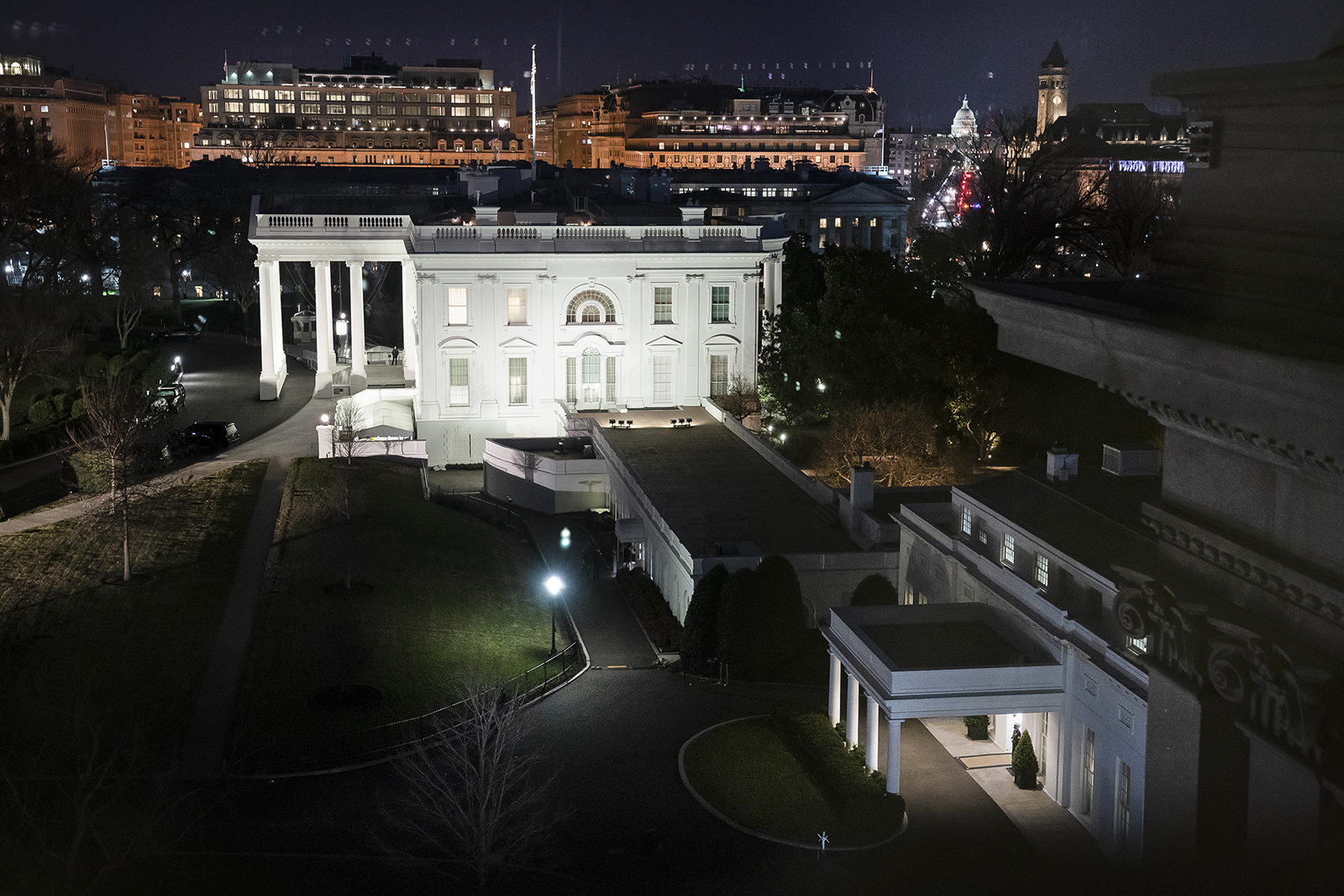
President Trump signed a critical memo directing the Department of Homeland Security (DHS) to ensure all its employees receive pay during the ongoing government shutdown, a move poised to mitigate immediate economic fallout and prevent a deeper erosion of market confidence. This executive action aims to protect approximately 250,000 federal workers across agencies like FEMA, the Coast Guard, and Customs and Border Protection from the financial strain of unpaid leave, thereby staving off a significant hit to consumer spending and local economies reliant on their salaries. The directive, while not a resolution to the broader appropriations battle, serves as a crucial political maneuver to insulate the administration from the direct economic pain typically associated with extended federal closures, offering a temporary balm to a volatile fiscal landscape.
Markets responded with a cautious sigh of relief, reflecting a momentary pause in the escalating uncertainty surrounding federal funding. The Nasdaq Composite saw a modest gain of +0.2% to $21,879, with the S&P 500 also ticking up +0.1% to $6,583, as investors processed the avoidance of a more severe federal worker liquidity crunch. While the Dow Jones Industrial Average registered a slight dip of -0.1% to $46,505, and the broader Russell 2000 gained +0.7% to $2,530, the President's memo largely prevented a deeper market sell-off that would typically follow widespread federal pay freezes. Bitcoin, trading at $66,821 (+0.3%), and Ethereum, at $2,050 (-0.2%), remained largely insulated from this specific domestic political development, though the Crypto Fear & Greed Index still registered an "Extreme Fear" reading of 11, underscoring persistent underlying market anxieties that transcend immediate political fixes.
This executive action unfolds against a backdrop of entrenched legislative gridlock, where Congress has failed to pass all necessary appropriations bills, triggering the current shutdown. The President's memo represents a strategic use of executive authority to circumvent the legislative impasse, a tactic that places immense pressure back on Capitol Hill to find a durable solution rather than relying on stop-gap measures. By ensuring DHS personnel are paid, the administration effectively removes a key point of leverage for congressional factions seeking to weaponize federal worker pay as a bargaining chip in budget negotiations. This move, while providing immediate relief, highlights the deep partisan chasm that continues to plague the federal budgeting process, pushing the burden of fiscal responsibility squarely back onto the legislative branch.
Key stakeholders are clearly delineated into winners and losers by this directive. The most immediate beneficiaries are the hundreds of thousands of DHS employees and their families, who avoid the severe financial hardship of missed paychecks, preserving their purchasing power and economic stability. This also extends to local businesses and communities that depend heavily on federal salaries, preventing a localized economic downturn. Politically, President Trump gains by demonstrating a proactive stance to protect federal workers, effectively shifting blame for the shutdown's economic consequences onto Congress. Conversely, hardline fiscal conservatives within the House, particularly those aligned with the Freedom Caucus, lose significant leverage, as their ability to force spending concessions through a full-scale federal worker pay freeze has been blunted, at least for one critical department. Lobbying groups representing federal employees, such as the American Federation of Government Employees (AFGE), have consistently advocated for such protections, and this memo reflects a partial victory for their ongoing efforts to shield workers from political impasses.
The industry impact extends beyond individual federal employees to a broader ecosystem of contractors and service providers who rely on the stability of government operations. Companies with significant contracts tied to DHS, including defense contractors like Lockheed Martin or cybersecurity firms providing services to federal agencies, face reduced uncertainty regarding payment delays for their services, which could have otherwise ripple-effected their liquidity and operational planning. The memo also prevents a potential "brain drain" from critical agencies like FEMA and the Coast Guard, ensuring continued operational readiness for disaster response and national security functions, which indirectly supports industries ranging from infrastructure development to maritime logistics. While not a direct infusion of capital into specific sectors, avoiding a widespread payroll disruption for such a vital department prevents a significant drag on economic activity and maintains a degree of operational continuity that benefits the broader economy.
From a legal standpoint, the President's memo likely draws on inherent executive powers to manage the federal workforce and maintain essential government functions during a lapse in appropriations. While a comprehensive legal justification from the Office of Legal Counsel (OLC) is expected, the precedent for such actions often relies on interpretations of the Antideficiency Act and the need to preserve critical government operations. This directive avoids the specific legal challenges that would arise from federal employees suing for back pay or lost wages, but it could potentially face scrutiny from Congress regarding the executive branch's scope of authority in reallocating funds without specific legislative approval. However, in the immediate context of a shutdown, the political and operational imperative to maintain critical services and prevent widespread economic hardship often outweighs potential procedural challenges, especially when framed as protecting the workforce.
Looking forward, this memo is a temporary reprieve, not a lasting solution to the budget crisis. Congress must still pass the remaining appropriations bills or another continuing resolution to fully fund the government and avert further shutdowns across other departments. The President's move, while strategically advantageous in the short term, does not alter the fundamental legislative dynamics that created the impasse. Expect continued brinkmanship, with both the administration and congressional leaders using every available lever to push their fiscal agendas. The Federal Reserve, under Chair Jerome Powell, will continue to monitor the broader economic implications of fiscal instability, though this specific memo's impact on monetary policy decisions is negligible. The focus now intensifies on the House of Representatives' ability to reconcile its internal divisions and pass spending legislation that can gain bipartisan support in the Senate.
Gokhshtein Media's take is clear: President Trump's DHS pay memo is a politically astute maneuver designed to defuse immediate economic pain and strategically shift blame, but it is not a solution to the underlying fiscal disarray plaguing Washington. This is a Band-Aid on a gaping wound, momentarily assuaging market fears of a deeper consumer spending crunch but doing absolutely nothing to resolve the fundamental appropriations fight that continues to fester. Investors should view this as a temporary reprieve, not a signal of renewed stability or fiscal discipline. The real battle for fiscal solvency and sustained market confidence continues to unfold in Congress, where actual legislative solutions, not executive workarounds, are desperately needed. The crypto market, with its Fear & Greed Index firmly entrenched in "Extreme Fear" at 11, understands that genuine structural issues, not temporary political fixes, are the ultimate drivers of long-term value and market health.


